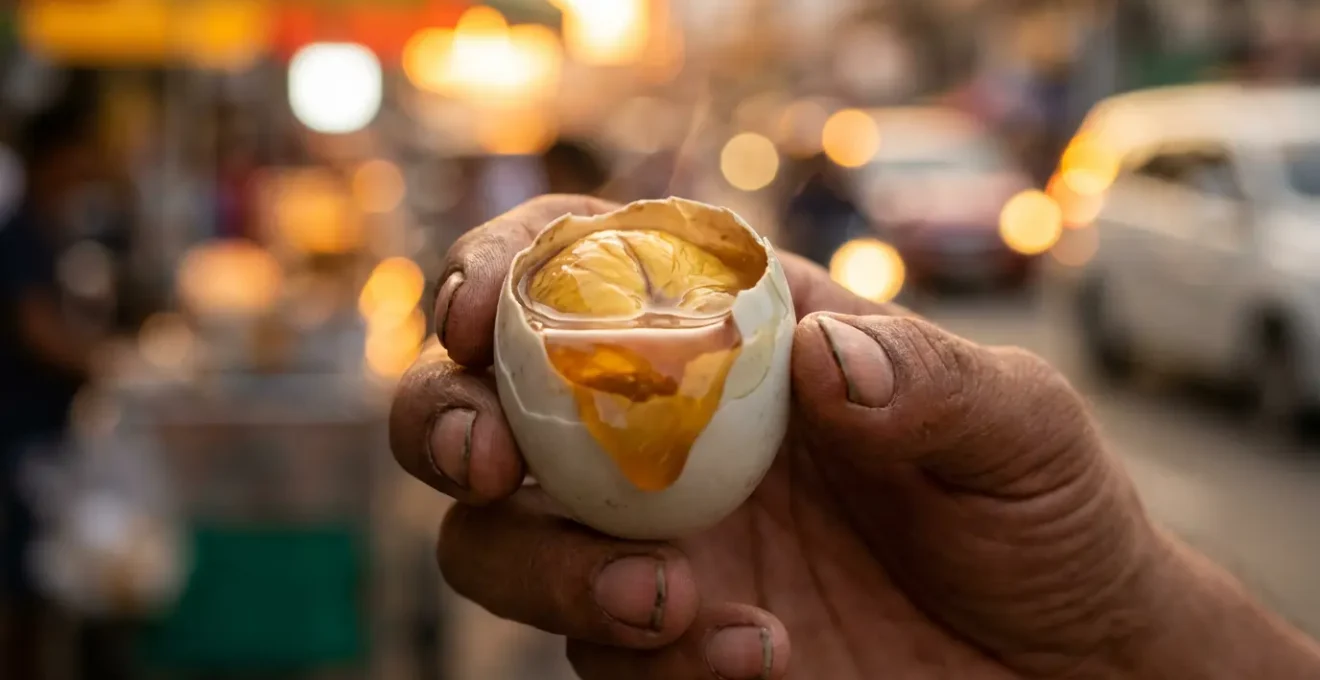
Forget everything you’ve heard. Eating balut and other Filipino street foods isn’t about surviving a gross-out challenge; it’s the ultimate tourist filter. This is your guide to earning real culinary street cred, moving beyond the hype to understand the technique, the culture, and the audacity required to conquer the Philippines’ most legendary eats. This is how you stop being a tourist and start eating like you belong.
So, you’ve heard the whispers, seen the horrified faces on travel shows, and now you’re standing on a street corner in the Philippines, heart pounding. The legend of balut. That infamous fertilized duck embryo, boiled and eaten straight from the shell. Most guides will give you a sterile, apologetic description. They’ll tell you it’s an “acquired taste” and wish you luck. Let’s be brutally honest: that’s boring. This isn’t about just trying a weird food. This is a rite of passage, a culinary gauntlet thrown down to every traveler who claims to be adventurous.
The real question isn’t “Can you stomach it?” but “Do you have the nerve to appreciate it?” The internet is filled with dramatic gags and exaggerated reactions, but that’s just noise. The truth is, there’s a right way and a wrong way to approach this delicacy. Getting it wrong means a slimy, confusing mess. Getting it right? That’s your entry ticket into an authentic local experience. It’s the difference between watching from the sidelines and diving headfirst into the culture. This guide isn’t here to hold your hand; it’s here to be your drill sergeant, mocking you slightly while giving you the pro-level intel needed to conquer not just balut, but the entire spectrum of Filipino street food that separates the contenders from the pretenders.
We’re going to break down the method, decode the bizarre nicknames of street-side barbecue, and even show you the “beginner mode” for the truly faint of heart. We’ll explore the cultural risks of refusing food and demystify why a single dish like adobo can transform every 50 kilometers. Prepare to challenge your palate and, just maybe, earn a little respect along the way.
This article provides a complete roadmap for the brave. We’ll navigate the techniques for eating these challenging dishes, understand the cultural context behind them, and give you the confidence to order from any street vendor with a knowing nod.
Contents: A Challenger’s Guide to Filipino Street Eats
- The Sip, Peel, Bite Method: How to Eat Balut Like a Pro?
- Woodworm or Clam: What Exactly Is the Slimy Delicacy of Palawan?
- Isaw, Betamax, and Helmet: Decoding the BBQ Stick Names
- Balut sa Puti: How to Try Balut Without Seeing the Duckling?
- When do the Balut Vendors Start Yelling in the Streets?
- The Mistake of skipping the “Soup #5” in Chinatown
- The Risk of Refusing Food Offered by a Filipino Host
- White Adobo vs. Dark Adobo: Why Does the Recipe Change Every 50 Kilometers?
The Sip, Peel, Bite Method: How to Eat Balut Like a Pro?
Alright, let’s get down to business. Eating balut isn’t a savage free-for-all; it’s a calculated, three-part ritual. Mess it up, and you deserve the unpleasant experience you’ll get. Do it right, and you’ll understand why it’s a beloved snack, not a dare. First, forget everything you think you know. The goal isn’t just to get it down. The goal is to savor the three distinct textures: the broth, the yolk, and the embryo itself. The quality of your experience starts with the egg itself, with the most prized balut being incubated for a very specific duration; true connoisseurs know the sweet spot is around 17 to 18 days according to research on authentic balut production. Any longer, and the chick’s features become too pronounced for anyone but the most hardcore fans.
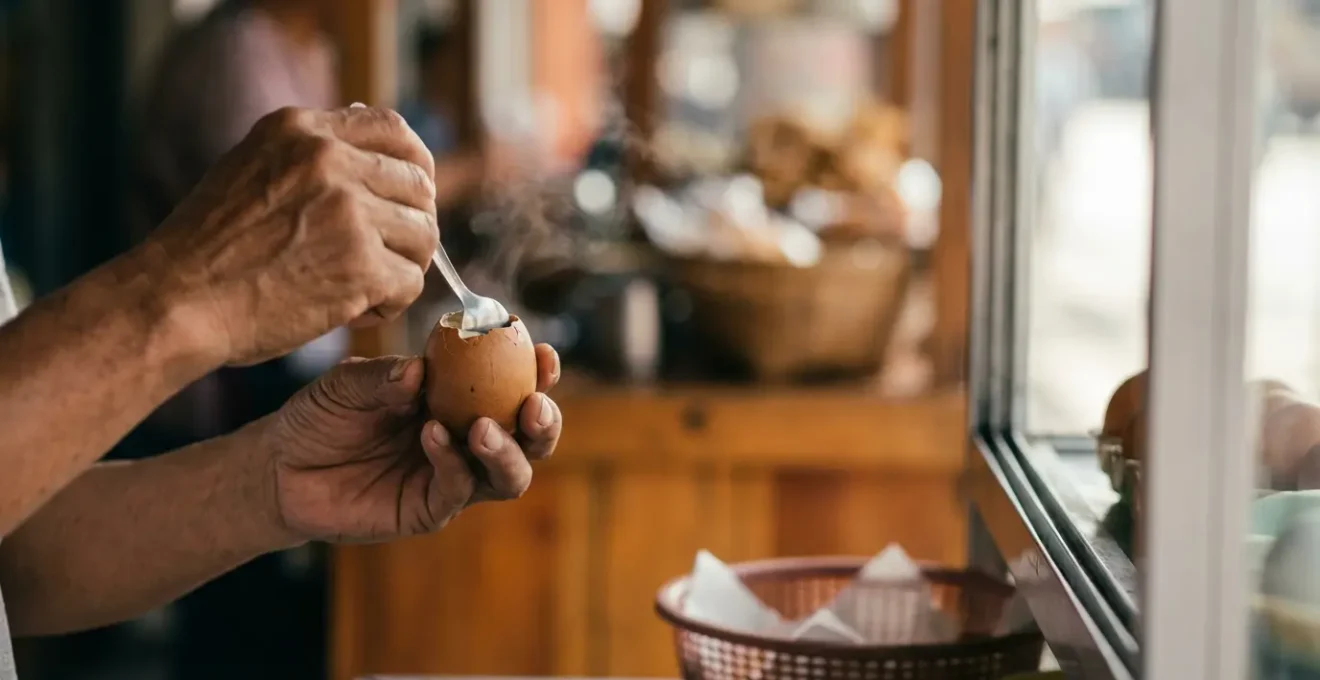
Now, for the method. The “sip, peel, bite” strategy is your key to success. This isn’t just a suggestion; it’s the only way. The following steps separate the amateurs from those who know what they’re doing. It’s a process that requires a little finesse, so pay attention. This is your first test in the culinary gauntlet.
Your Action Plan: The Balut Eater’s Manifesto
- Locate the Air Pocket: Find the wider, rounded end of the egg. This is where the air sac is. Tap it gently on a hard surface, like you’re cracking a boiled egg, but with more purpose.
- Create the Opening: Peel away a coin-sized opening. Crucially, keep the egg upright to avoid spilling the precious broth. Losing the broth is a rookie mistake.
- Sip the Broth (Sabaw): This is the best part. Tip the egg to your lips and slowly sip the warm, savory soup inside. It tastes like a rich, clear chicken or duck consommé. Don’t rush it.
- Season Accordingly: Once the broth is gone, you can add a pinch of salt or a splash of spiced vinegar (the vendor will have it). This cuts through the richness.
- Commit to the Contents: Peel away the rest of the shell to expose the yolk and the embryo. The yolk is rich and creamy, similar to a hard-boiled egg yolk but with a finer texture. The embryo is firm. Eat them together in small, deliberate bites. The verdict on your bravery is decided here.
There you have it. No drama, just technique. If you can handle this, you’ve passed the first and most infamous test. Now you have a little bit of street cred.
Woodworm or Clam: What Exactly Is the Slimy Delicacy of Palawan?
If you thought the textural challenge ended with balut, welcome to Palawan’s star attraction: tamilok. Often sensationally described as “woodworm,” the name alone is a fantastic tourist filter. It conjures images of chomping down on wriggling grubs, but the reality is both more mundane and more fascinating. Let’s clear this up: tamilok isn’t a worm. It’s actually a mollusk, a type of saltwater clam that looks like a long, grey, slimy noodle. Specifically, it’s a shipworm (Teredo navalis) that burrows into the wood of fallen mangrove trees. So no, you’re not eating a bug; you’re eating a naked clam. Feel better? Probably not.
The preparation is key. It’s served “kinilaw” style, which is the Filipino equivalent of ceviche. The tamilok is cleaned, chopped, and marinated in coconut vinegar, calamansi juice, ginger, and chili. As one publication aptly put it:
Tamilok has the same taste profile as, let’s say, kinilaw or kilawin. But it occupies its own space in the halls of strange Filipino food
– Esquire Philippines, Esquire Magazine Philippines
The taste is surprisingly clean and briny, like a fresh oyster, but the texture is the real hurdle. It’s soft, gelatinous, and slides down your throat with minimal effort. This is where your mettle is truly tested. Can you handle the slither? While it’s a must-try for bragging rights, there’s a growing concern. The rising demand for Tamilok as a delicacy has led to overharvesting, threatening the fragile mangrove ecosystems it comes from. So, if you try it, do so with a bit of respect for its origins. It’s a delicacy born from nature, not just a weird thing to post on Instagram.
Ultimately, tamilok is a perfect example of Filipino resourcefulness—finding a delicious food source in the most unlikely of places. It’s a dish that challenges your perceptions and your gag reflex in equal measure.
Isaw, Betamax, and Helmet: Decoding the BBQ Stick Names
Wandering through a Filipino night market, you’ll be hit by the intoxicating smell of barbecue. But when you point at a skewer and ask what it is, the answer might be “Betamax,” “Helmet,” or “Walkman.” No, you haven’t stumbled into a 1980s electronics graveyard. You’ve discovered the wonderfully cryptic, darkly humorous slang of Filipino street food. These names are a classic example of Filipino ingenuity and wit, turning what some might consider “throwaway” parts into beloved, affordable snacks. This isn’t just about grilling meat; it’s a language you need to learn to navigate the streets like a local.

Before you blindly point and chew, you should probably know what you’re getting into. The names are all based on visual resemblance, a kind of inside joke that everyone is in on. For instance, “Adidas” refers to chicken feet, because the three toes look like the brand’s three stripes. “PAL” is chicken wings, named after Philippine Airlines. It’s a playful system, but one that can be intimidating if you’re not in the know. Here’s a quick decoder to help you order with confidence instead of confusion.
| Street Name | Actual Food | Name Origin |
|---|---|---|
| Betamax | Grilled coagulated pork or chicken blood | Resembles black Betamax cassette tapes from the 1980s |
| Helmet | Grilled chicken head | Shape resembles a small helmet |
| Walkman | Grilled pig ears | Flat shape like portable music players |
| Adidas | Grilled chicken feet | Three-toed appearance like the brand’s stripes |
| PAL | Grilled chicken wings | Philippine Airlines acronym – wings that fly |
The most common and arguably most delicious is isaw, or grilled chicken or pork intestines. They’re cleaned thoroughly, boiled, and then grilled over hot coals, basted with a sweet and savory sauce. Don’t be squeamish. When cooked right, they’re smoky, slightly chewy, and incredibly addictive. Dip it in spiced vinegar and you’ll be ordering another stick before you’ve finished the first.
Balut sa Puti: How to Try Balut Without Seeing the Duckling?
Okay, I see you. You made it this far, but the thought of a tiny, recognizable duckling is still making you hesitate. You want the street cred, but your courage has its limits. Is there a way to dip your toes into the balut experience without diving into the deep end? Yes, there is. It’s called “balut sa puti,” which translates to “balut in white.” This is your official, socially acceptable “beginner mode.” It’s not cheating; it’s just being strategic. Many locals prefer it this way, so you won’t lose face.
Balut sa puti is simply a younger balut, typically incubated for only 14 to 16 days. At this stage, the embryo is so underdeveloped that it’s essentially just a tiny speck suspended in the yolk. It hasn’t formed a beak, feathers, or discernible bones. The experience is almost entirely focused on the rich broth and the creamy, luscious yolk. You get all the flavor and nutritional punch without the psychological trauma of a face-to-face encounter with a fetal duck. It’s the perfect compromise for the brave-but-cautious eater.
Case Study: The Stages of Balut Development
The term for balut changes as it matures, reflecting its development. Early on, it’s known as ‘balut sa puti’ (‘wrapped in white’) when the embryo is insufficiently developed to show a beak or feathers. A slightly more developed stage is ‘balut mamatong’ (16-17 days), where the embryo floats on top of the yolk but is still small and soft. This is often considered the ideal stage for beginners. Standard balut (18-19 days) has a more noticeable embryo, while older balut (20+ days) is for seasoned veterans, with a much larger, crunchier embryo and more developed features.
So when you hear the balut vendor’s call, you can confidently ask for the youngest one they have. Ask for “mamatong” or “16-day.” It shows you’ve done your homework. You’re not just a tourist taking a blind dare; you’re making an informed choice. It’s a pro move that lets you join the club without having to stare your meal in the face.
Think of it as working your way up. Master the flavors and textures of the younger egg first. Once you realize the yolk and broth are delicious, the rest of the challenge might not seem so daunting.
When do the Balut Vendors Start Yelling in the Streets?
You won’t find balut at a sunny brunch spot. This is fundamentally a creature of the night. The hunt for balut begins when the sun goes down. The iconic, drawn-out cry of “Baluuuuuut!” is a quintessential sound of the Philippine evening. Vendors, often on bicycles with insulated baskets to keep the eggs warm, begin their routes after dusk and continue through the late night. This timing isn’t random; it’s tied to the culture of the snack itself.
Balut is considered a “pulutan,” a food eaten while drinking alcohol. It’s the perfect, hearty snack to accompany a cold beer with friends. It’s also seen as a source of energy, a potent late-night pick-me-up for everyone from night-shift workers to party-goers winding down after a long evening. This is why you’ll find vendors strategically positioned outside bars, in bustling public plazas, or slowly pedaling through residential neighborhoods long after most other food stalls have closed. The best time to find a vendor is typically between 7 PM and midnight. If you’re out later, don’t despair; some vendors cater to the truly nocturnal, roaming the streets until the early hours of the morning.
While its reputation is firmly rooted in street food, the perception of balut is evolving. It’s no longer just a cheap, late-night snack. As the culinary world takes more notice of Filipino cuisine, this humble egg is getting a makeover. As noted by one food publication:
Balut has recently entered haute cuisine by being served as appetizers in restaurants, cooked adobo style, fried in omelettes or even used as filling in baked pastries
– Food Touring, Southeast Asia Food Guide
This “balut-serye” (a play on “teleserye,” or soap opera) transformation means you might now find sizzling balut on a restaurant menu, a far cry from its humble street origins. But for the authentic experience, nothing beats buying a warm egg from a vendor whose echoing call punctuates the night.
So, keep your ears open after dark. That lonely, melodic shout is your signal. The hunt is on.
The Mistake of skipping the “Soup #5” in Chinatown
If you’re feeling particularly bold after conquering balut, you might wander into Manila’s Chinatown (Binondo) and see “Soup #5” on a menu. Your first thought might be, “What happened to Soups 1 through 4?” Stop right there. This isn’t a sequential menu. “Soup #5” is a classic euphemism, a code for one of the most legendary aphrodisiacs in the Filipino culinary world: a soup made from a bull’s penis and testicles. Yes, you read that correctly. Skipping it might save your squeamishness, but you’d be missing out on a fascinating piece of culinary lore.
This dish, like balut, is steeped in beliefs about vitality and virility. The philosophy comes from traditional Chinese medicine, where it’s believed that consuming a specific animal part can strengthen the corresponding part in your own body. Balut is a powerhouse of nutrients; a single balut packs roughly 188 kilocalories and 14 grams of protein, making it a hearty, satisfying bite that fuels its reputation as an energy booster. Soup #5 operates on a similar, though more symbolic, principle of enhancing “qi” or life force. The name itself is rumored to have come from the fact that it was the fifth item on the menu of the old Manila restaurant that popularized it.
Approaching these foods requires a shift in perspective. It’s not about shock value; it’s about understanding a different cultural approach to food and health. For many, these aren’t “weird” foods but functional ones, packed with protein and steeped in tradition. If you’re truly committed to exploring the culinary gauntlet, you have to engage with these beliefs respectfully.
Your Field Guide to Filipino Aphrodisiacs
- Decode the Euphemisms: Recognize that names like “Soup #5” are intentional codes. Be aware that you’re ordering bull testicle soup in Manila’s Chinatown.
- Understand the ‘Why’: Connect these dishes to traditional beliefs about consuming animal parts to gain vitality, rooted in principles of enhancing life force or ‘qi’.
- Note the Shared Claims: See the cultural parallel between Soup #5 and balut, both of which are famed for their supposed aphrodisiac qualities.
- Appreciate the Belief System: Approach these dishes with cultural sensitivity, viewing them as part of a traditional framework for health and vitality, not just as exotic oddities.
- Engage Respectfully: If you’re offered these foods, understand the cultural context. Your reaction is part of the experience.
So, when you see Soup #5, don’t just snicker and walk away. Acknowledge it for what it is: a potent symbol of a food culture that is fearless, resourceful, and deeply connected to tradition.
The Risk of Refusing Food Offered by a Filipino Host
Here’s a scenario more terrifying than any weird food: you’re a guest in a Filipino home, and your host proudly offers you their best balut. You panic. But in this culture, what you do next matters more than you can possibly imagine. Refusing food, especially a delicacy offered with pride, isn’t just rude—it can be a deep social offense. This is governed by two powerful cultural concepts: “hiya” (shame) and “pakikisama” (smooth interpersonal relations). Flatly saying “no” can cause your host to feel ‘hiya,’ a profound sense of shame or embarrassment for having failed to please their guest. This is a major social blunder.
The Cultural Imperative: ‘Hiya’ and the ‘Tikim’ Strategy
In Filipino culture, offering food is a primary expression of hospitality and care. The practice of sharing something like balut is deeply ingrained in social bonding. Refusing it can be interpreted as a rejection of the host’s generosity, causing them to lose face. To navigate this, the ‘tikim’ strategy is essential. ‘Tikim’ means ‘to taste.’ By taking even the smallest bite—sipping the broth, tasting a bit of the yolk—you honor the gesture and preserve ‘pakikisama.’ You’ve shown willing, and that’s often all that matters.
For many Filipinos, these food experiences are tied to cherished memories and family. It’s not just an egg; it’s a symbol of community. As one person shared about their childhood:
It seemed to me that balut was a way for me and my family in the Philippines to bond. And bond, we did. While many kids in the Philippines were excited about ice cream trucks, my brother and I would be excited for balut.
So, when offered, your best move is to smile, say thank you, and employ the ‘tikim’ strategy. No one expects you to devour the whole thing with gusto (though you’d earn major points if you did). A simple taste is a sign of respect that speaks volumes. It shows you’re a gracious guest, willing to engage with the culture, not just observe it from a safe distance.
This is the final test of the culinary adventurer: not just what you can eat, but how you behave. It’s a social challenge, and passing it is just as important as conquering any exotic dish.
Key Takeaways
- Balut is a ritual: Master the “sip, peel, bite” method to appreciate its distinct broth, yolk, and embryo components.
- Exotic foods have logical origins: “Woodworm” (tamilok) is actually a clam, and cryptic BBQ names (Betamax, Helmet) are based on visual humor.
- There are no excuses: A “beginner mode” exists with “balut sa puti,” a younger egg with a less-developed embryo.
- Hospitality is paramount: Refusing food can cause shame (‘hiya’), so learning to take a small taste (‘tikim’) is a vital social skill.
White Adobo vs. Dark Adobo: Why Does the Recipe Change Every 50 Kilometers?
After navigating the minefield of balut and bull testicles, you might think adobo, the Philippines’ unofficial national dish, is safe territory. You’d be wrong. Ordering “adobo” is like ordering “curry” in India—it means a thousand different things. The most fundamental split is between adobong puti (white adobo) and adobong itim (black adobo), a difference that tells a story of the country’s entire history. This isn’t just a recipe variation; it’s a culinary timeline in a clay pot.
The original, pre-colonial adobo was ‘adobong puti.’ Indigenous Filipinos preserved meat using vinegar, salt, and garlic—a technique born of necessity in a tropical climate without refrigeration. It’s a pure, tangy, and intensely savory dish. The ‘adobong itim’ you’re probably more familiar with, the dark version rich with soy sauce, is a later evolution. It reflects the influence of Chinese traders who introduced soy sauce to the islands. So, white vs. dark isn’t a matter of preference; it’s a statement of historical influence. This same principle of preservation for longevity is what originally drove the development of balut in China, as a way to extend the shelf life of eggs.
But the variation doesn’t stop there. Travel across the archipelago, and the adobo changes with the local landscape and palate. It’s a dish with no fixed recipe, a canvas for regional identity. Every family, every island, has its own “correct” way of making it. The lesson? Never assume you know what adobo is.
| Region | Adobo Style | Key Ingredients | Distinctive Feature |
|---|---|---|---|
| Pre-colonial | Adobong Puti | Vinegar, salt, garlic | No soy sauce – indigenous method |
| Modern standard | Adobong Itim | Soy sauce, vinegar, garlic | Chinese-influenced dark color |
| Cavite | Sweet Adobo | Annatto, sugar | Sweeter profile with red tint |
| Bicol | Adobo sa Gata | Coconut milk | Rich, creamy texture |
| Iloilo | Yellow Adobo | Turmeric | Golden color, earthy flavor |
Now that you’ve been armed with the knowledge to conquer the streets, from balut to Betamax, the final challenge is yours. It’s time to stop reading and start eating. Go out there, find a vendor, and give them a knowing nod. The culinary gauntlet awaits.
Frequently Asked Questions about Balut
Is Penoy the same as Balut sa Puti?
No, Penoy is a sterile, unfertilized egg that’s boiled and eaten, while Balut sa Puti is a very young fertilized balut (14-16 days) with minimal embryo development.
What age of balut is best for beginners?
16-17 day balut (mamatong) is ideal for beginners as the embryo is smaller with undeveloped bones and feathers, focusing more on the broth and yolk flavors.
Do many Filipinos prefer younger balut?
Yes, many locals actually prefer Penoy or younger balut, making it a valid personal preference rather than an inauthentic choice for tourists.