Culture & traditions
Few destinations offer such a rich tapestry of cultural influences as places where East meets West, where ancient indigenous traditions coexist with centuries of colonial heritage, and where spiritual diversity shapes daily life. Understanding these cultural layers transforms any visit from simple sightseeing into meaningful immersion, allowing travelers to appreciate the complex stories written in architecture, festivals, customs and sacred spaces.
Navigating this cultural landscape requires more than curiosity—it demands respect, context and awareness. From the intricacies of religious syncretism to the protocols for visiting tribal communities, from the exuberance of street festivals to the solemnity of sacred sites, each cultural expression carries its own history and etiquette. This comprehensive resource provides the foundational knowledge needed to engage authentically with these traditions while honoring the communities that preserve them.
Understanding the Layers of Colonial Heritage
Colonial history casts a long shadow across architecture, language, religion and social structures. For travelers seeking to understand this complex past, the key lies in recognizing that heritage sites tell multiple stories simultaneously—narratives of power and resistance, adaptation and preservation, trauma and resilience.
Spanish Influence on Architecture and Urban Planning
The most visible colonial legacy appears in urban planning and architectural styles. Plaza-centered town layouts radiate outward from central churches, creating spatial hierarchies that reflected colonial priorities. Stone churches with thick walls, designed to withstand both earthquakes and typhoons, showcase earthquake baroque architecture—a unique adaptation of European styles to local environmental conditions. These structures feature lower, broader proportions and buttressed walls, with decorative elements carved from coral stone that gleams white under tropical sun.
Walking through historic districts reveals how indigenous building techniques merged with Spanish colonial aesthetics. Ancestral houses blend native hardwoods with Spanish-style tile roofs and capiz shell windows, creating hybrid forms that speak to cultural negotiation. Understanding these architectural dialogues helps travelers read buildings as historical documents rather than mere backdrops for photographs.
Navigating Sensitive Historical Sites
Visiting colonial-era sites ethically requires acknowledging uncomfortable truths. Dark tourism destinations—former prisons, execution sites, or locations of historical violence—demand contemplative engagement rather than casual tourism. Before visiting, research the specific history: Who suffered here? Whose stories are centered in official narratives, and whose remain marginalized?
Museums and heritage sites increasingly grapple with preservation challenges while attempting to present balanced historical interpretations. Optimal visits involve:
- Reading contextual information provided by local historians and descendants of affected communities
- Observing photography restrictions, especially at memorial sites
- Supporting restoration efforts through entrance fees that fund conservation
- Engaging local guides who can provide nuanced perspectives beyond colonial glorification
Pre-Colonial Roots and Indigenous Communities
Long before European contact, sophisticated societies thrived with their own governance systems, trade networks, writing systems and spiritual practices. Recognizing this pre-colonial history counters narratives that frame colonization as bringing civilization to empty lands. Today, indigenous communities actively preserve ancestral knowledge while navigating modern realities.
Tribal Customs and Traditional Practices
Each indigenous group maintains distinct customs, from textile patterns that encode genealogies to ritual practices tied to agricultural cycles. Weaving symbolism particularly serves as cultural text—specific patterns, colors and motifs identify tribal affiliation, social status and ceremonial purposes. A textile that appears merely decorative to outsiders may actually represent a family’s lineage or mark an important life transition.
Witnessing rituals ethically requires advance permission and appropriate protocol. Never assume access; ceremonies aren’t performances staged for tourists but living spiritual practices. When communities do welcome respectful observers, expectations typically include:
- Dress codes that cover shoulders and knees as minimum standards
- Photography restrictions or complete bans during sacred moments
- Silence or minimal conversation during ceremonies
- Following guide instructions regarding positioning and participation
- Offering gifts or contributions as culturally appropriate
Supporting Traditional Crafts Authentically
Purchasing traditional crafts directly supports cultural preservation when done ethically. However, travelers must distinguish between authentic pieces and mass-produced imitations, and understand the difference between cultural appreciation and appropriation. Traditional crafts like handwoven textiles, carved woodwork or metalwork represent months of skilled labor using techniques passed through generations.
Ethical purchasing involves buying directly from artisans or certified cooperatives, paying fair prices that reflect time and skill invested, and understanding any cultural restrictions on who may own or use certain items. Avoid illegal heritage trade—antiquities, sacred objects or items made from protected species—which depletes cultural patrimony and funds criminal networks.
Religious Syncretism and Spiritual Diversity
Spiritual life reflects centuries of cultural confluence, creating unique expressions that blend different traditions into distinctive local forms. This religious syncretism appears everywhere from festival celebrations to healing practices to architectural symbolism.
Catholic Traditions and Baroque Architecture
Spanish colonial evangelization created predominantly Catholic populations, but Catholicism itself transformed through contact with indigenous beliefs. Saints’ feast days incorporate pre-Christian festival elements; fiesta patron celebrations honor Catholic saints with processions, but also feature indigenous dance, music and food traditions. Churches built from coral stone construction demonstrate both colonial power and local craftsmanship—massive blocks cut from reef limestone, shaped by indigenous laborers using traditional tools.
The baroque churches, particularly those built in earthquake-prone regions, feature structural innovations that make them architectural marvels. Paoay Church exemplifies this style with its massive buttresses and strategic bell tower placement. Attending mass provides insight into living traditions, though visitors should observe dress codes, remain silent during services, and avoid photography during worship.
Islamic Heritage in Southern Regions
Islam arrived centuries before Christianity through trade networks connecting Southeast Asian archipelagos. In Mindanao and the Sulu Archipelago, Muslim heritage remains vibrant despite marginalization during colonial and post-colonial periods. Understanding Bangsamoro history—the indigenous Muslim peoples’ long struggle for autonomy—provides essential context for respectful visits.
The Pink Mosque in Mindanao and grand mosques elsewhere showcase Islamic architectural traditions adapted to local contexts. Visitors must observe strict protocols: removing shoes, modest dress exceeding general standards (women typically covering heads with scarves), gender-segregated spaces, and timed visits that avoid prayer times unless specifically invited to observe. During Ramadan, additional sensitivity regarding eating and drinking in public demonstrates respect.
Folk Beliefs and Mystical Practices
Beneath and alongside organized religions, folk beliefs and superstitions permeate daily life. Traditional healers practice alongside modern medicine, offering herbal remedies and spiritual treatments for ailments attributed to supernatural causes. Shrines dedicated to local spirits dot landscapes, receiving offerings from believers seeking protection or favor.
Cemeteries function as cultural attractions where elaborate tombs showcase family wealth and devotion, visited not only during memorial days but also during festivals. Understanding these practices without judgment—recognizing them as legitimate cultural expressions rather than primitive superstitions—marks the difference between tourism and cultural immersion.
Experiencing Festivals and Living Traditions
Festivals represent culture in motion—living traditions that adapt while maintaining core elements connecting participants to ancestral practices and community identity. Timing visits for these celebrations offers unparalleled cultural immersion opportunities.
Philippine Fiestas and Community Celebrations
Nearly every town celebrates an annual fiesta honoring their patron saint, transforming communities into open-air festivals featuring processions, street dancing, communal feasts and cultural competitions. The chaotic joy of Philippine fiestas can overwhelm unprepared visitors—massive crowds, loud music, street closures and spontaneous celebrations require flexibility and patience.
Optimizing festival experiences involves booking accommodation months in advance (rooms disappear quickly), staying safe in dense crowds by securing valuables and maintaining hydration, and sampling festival foods from street vendors offering regional specialties. Understanding festival origins—which saint is honored and why this community claims special devotion—deepens appreciation beyond mere spectacle.
Holy Week Observances
Lenten traditions showcase religious devotion at its most intense, with some communities staging dramatic reenactments including crucifixion rituals where penitents volunteer for actual nailing to crosses. These extreme expressions of faith attract both pilgrims and curious tourists, creating ethical tensions around witnessing suffering as spectacle.
Practical considerations during Holy Week include transport shutdowns on Good Friday, limited restaurant operations requiring advance meal planning, and beach destinations becoming extremely crowded as urban residents travel. The Visita Iglesia tradition—visiting seven churches for prayer—creates both opportunities for architectural tourism and traffic congestion around historic churches.
Cultural Etiquette for Respectful Travel
Navigating social etiquette successfully transforms tourists into welcome guests. Cultural norms around hierarchy, hospitality, communication and behavior differ significantly from Western conventions, and missteps—though usually forgiven—can create awkwardness or offense.
Social Behaviors and Gift-Giving Customs
Hierarchical social structures emphasize respect for elders and authority figures through specific language forms, gestures and protocols. Terms of respect, indirect communication styles that avoid confrontation, and gift-giving customs that cement social relationships all require cultural fluency. When invited to homes, bringing modest gifts (food items, small tokens from your home country) shows appreciation, though overly expensive gifts can create uncomfortable obligation.
Language optimization involves learning basic phrases in local languages beyond tourist-focused English. Even minimal effort attempting local speech demonstrates respect and often opens doors to warmer interactions. Food-related etiquette particularly requires attention—refusing offered food can offend hosts who express hospitality through sharing meals, yet dietary restrictions should be communicated clearly rather than hidden.
Photographing Sacred Sites Responsibly
The ubiquity of smartphone cameras creates constant temptation to document everything, but sacred sites demand restraint. Many churches prohibit photography during mass, indigenous communities may forbid cameras entirely during rituals, and even public religious processions include moments—like the elevation of sacred images—when photography crosses from documentation to disrespect.
Responsible photography involves always asking permission before photographing people, respecting posted restrictions even when others violate them, and recognizing that some moments matter more experienced than documented. Supporting restoration efforts through donations rather than extracting images without contribution demonstrates that appreciation exceeds exploitation.
Understanding culture and traditions as living, evolving expressions rather than static museum pieces transforms travel into meaningful exchange. By approaching heritage sites with historical awareness, engaging indigenous communities with respect, participating in festivals with preparation, and navigating daily interactions with cultural humility, travelers become participants in ongoing cultural conversations rather than mere consumers of exotic experiences. This deeper engagement enriches both visitor and visited, creating connections that transcend tourism’s superficial encounters.
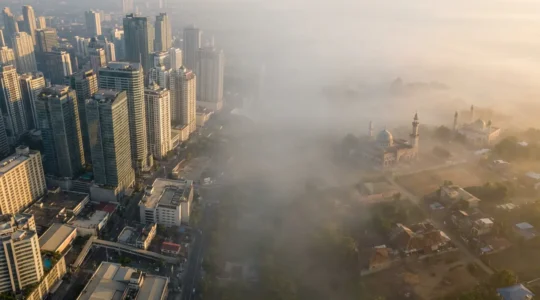
Why Is Halal Food Harder to Find in Manila Than in Mindanao?
The stark difference in Halal food availability between Manila and Mindanao is a direct, edible legacy of colonial history, not just a simple demographic fact. Spanish colonial suppression marginalized Islamic culture and its cuisine in the north, leading to a…
Read more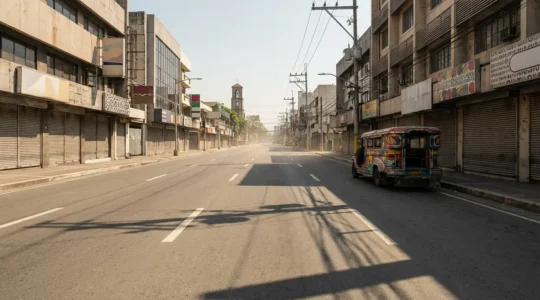
Why Is Good Friday the Quietest Day of the Year in the Philippines?
The profound quiet of Good Friday in the Philippines isn’t a sign of a country on holiday; it’s an active, atmospheric shift where public life is replaced by visible acts of faith and deep-rooted folk traditions. Extreme penance like crucifixions…
Read more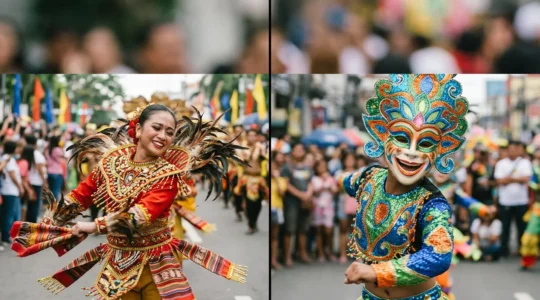
A Photographer’s Field Guide to Capturing Philippine Fiestas
The secret to unforgettable Philippine festival photography isn’t your camera; it’s your ability to master the glorious, vibrant chaos. Success hinges on logistical pre-planning, from booking rooms months in advance to knowing where to stand on parade day. Protecting your…
Read more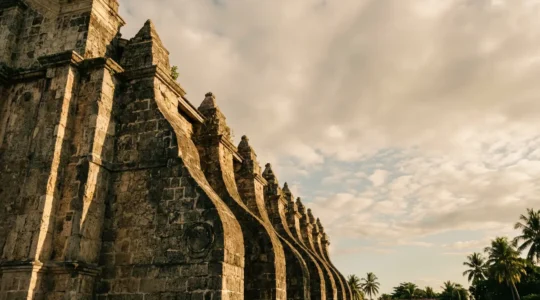
Why Are Philippine Baroque Churches Built With Huge Buttresses?
The defining buttresses of Philippine Baroque churches are a masterclass in structural pragmatism, deliberately sacrificing European aesthetics for seismic resilience. This “Earthquake Baroque” style evolved by combining Spanish design with local engineering ingenuity to withstand the region’s intense tectonic activity….
Read more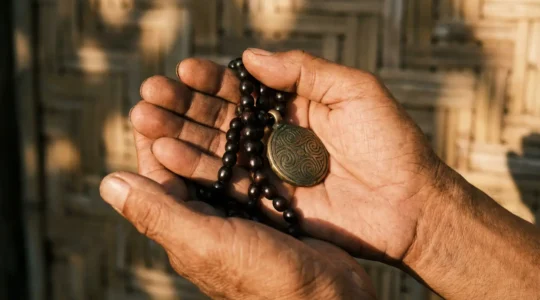
Why Do Filipinos Wear “Anting-Anting” Amulets Alongside Rosaries?
The common sight of a Filipino wearing a pagan anting-anting amulet with a Catholic rosary is often dismissed as mere superstition. This view misses the point entirely. This combination is not a contradiction but a sophisticated spiritual strategy. Filipinos often…
Read more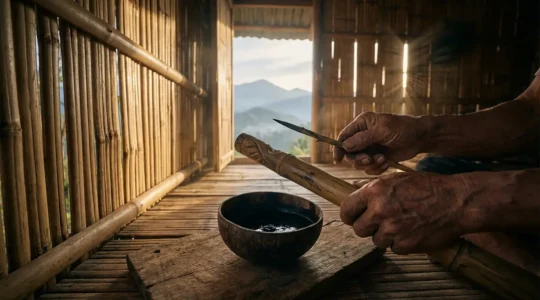
Why Is the Batok Tattooing Tradition of Whang-Od More Than Just Ink?
Viewing a Batok tattoo from Whang-Od as a mere travel souvenir fundamentally misunderstands its essence. This article reframes the journey not as a tourist transaction, but as participation in a living ritual. The tattoo is not a product you acquire;…
Read more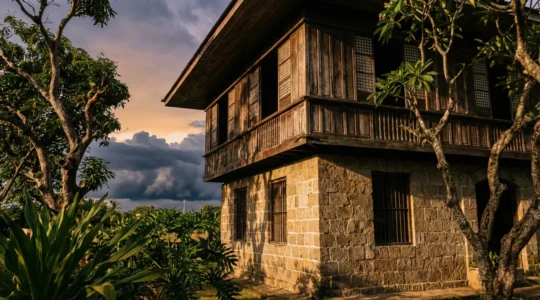
Why Is the “Bahay na Bato” the Perfect Design for Earthquakes and Typhoons?
The Bahay na Bato’s resilience lies not in resisting natural forces, but in its engineered flexibility to move with them, making it a dynamic system rather than a static object. The combination of a heavy stone base for mass damping…
Read more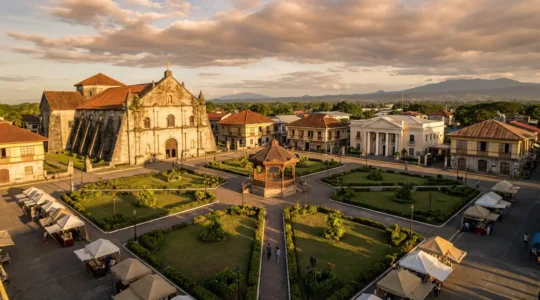
The Colonial Blueprint: Why Every Philippine Town Plaza Looks the Same
The uniform layout of Philippine plazas is not a historical accident but a living colonial blueprint that continues to define Filipino cultural identity and physical space. This blueprint dictated not just urban design but also administrative identity (surnames), social hierarchy…
Read more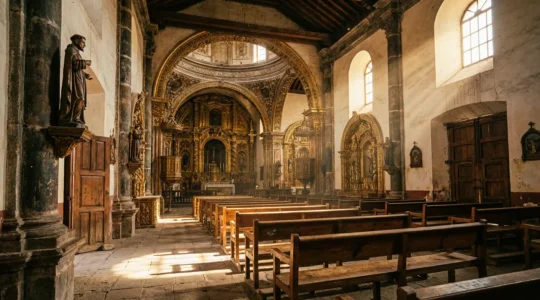
Vigan’s Calle Crisologo vs. Intramuros: Which Colonial Site Is More Authentic?
Authenticity in heritage is not a single standard; it’s a spectrum from the meticulously reconstructed to the organically lived-in. Intramuros offers a powerful, curated authenticity—a resurrected fortress city that feels like walking through a meticulously researched history book. Vigan presents…
Read more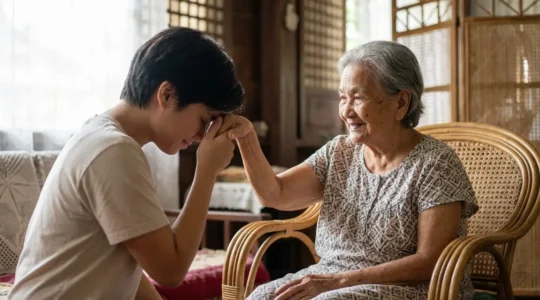
Filipino Etiquette: More Than “Mano Po,” A Guide to True Respect
The key to genuinely showing respect in the Philippines isn’t just learning gestures, but understanding the core cultural values of group harmony (pakikisama) and saving face (hiya) that drive social interactions. Refusing food can inadvertently cause shame (hiya) for your…
Read more