
Achieving a sub-$1500, two-week Philippine vacation is not about aggressive penny-pinching; it’s about eliminating the major financial leaks in your plan.
- Your biggest savings come from strategic decisions on flights and transfers, not from skipping daily luxuries.
- A modern “payment stack” combining cash, a fintech card, and a local e-wallet is non-negotiable to avoid crippling fees.
Recommendation: Focus 80% of your planning effort on avoiding the major cost traps outlined in this guide, and you’ll find the daily budget takes care of itself.
The promise of the Philippines—7,641 islands of pristine beaches, vibrant coral reefs, and emerald rice terraces—often comes with a daunting question: can this paradise be experienced without liquidating your savings? The internet is filled with advice telling you to eat at local carinderias and ride jeepneys. While this is sound advice for daily spending, it completely misses the point. A truly budget-savvy trip isn’t about being frugal; it’s about being a shrewd financial planner for your own adventure.
The common approach focuses on saving a dollar here and there. But what if the real budget-killers aren’t the daily expenses, but the hidden, structural costs you lock in before you even leave? We’re talking about sneaky currency conversion fees, overpriced resort transfers that cost more than a domestic flight, and inefficient itineraries that impose a “travel time tax” on your precious vacation days. These are the financial leaks that can sink your budget by hundreds of dollars before you’ve even had your first mango shake.
This guide takes a different approach. Forget the generic advice. We’re going to apply a financial planner’s mindset to your trip. The core principle is simple: your biggest savings come from avoiding costly mistakes, not from sacrificing comfort. It’s about understanding the system to make it work for you. We will focus on eliminating the major pain points—banking fees, transportation markups, and itinerary flaws—that drain a travel fund. By plugging these leaks, you free up more of your $1500 budget for what truly matters: the experiences.
This article will dissect the specific financial traps unique to the Philippines and provide a strategic framework to navigate them. From choosing the right bank to structuring your island-hopping route, you will learn how to build a robust, value-oriented itinerary that feels premium without the premium price tag. Get ready to travel smarter, not cheaper.
To help you navigate this strategic approach, this guide breaks down the most critical financial decisions you’ll face. The following sections will equip you with the knowledge to sidestep common budget pitfalls and maximize the value of every dollar spent.
Summary: A Strategic Guide to a Sub-$1500 Philippine Trip
- Why You Should Never Rely Solely on ATMs in Provincial Towns?
- DIY Booking vs. Travel Agency: Which Saves More for a Couple?
- The Tricycle Fare Mistake That Costs Tourists Double the Price
- When to Fly to Manila for the Lowest International Fares?
- Hostel vs. Homestay: Which Offers Better Value for Solo Travelers?
- Citibank or HSBC: Which International Bank Has Better Presence in PH?
- The Hidden Transfer Fees That Can Add $500 to Your Resort Bill
- The “Too Many Airports” Mistake That Ruins 10-Day Itineraries
Why You Should Never Rely Solely on ATMs in Provincial Towns?
The first rule of financial planning in the Philippines is acknowledging that cash is still king, especially once you leave major hubs like Manila and Cebu. Relying solely on your debit card is a rookie mistake that leads to stress and wasted time. In popular but less developed destinations, the financial infrastructure is fragile. For instance, according to recent traveler reports, idyllic spots like Port Barton and parts of Siargao may have only one or two ATMs that frequently run out of cash, particularly on weekends or before holidays.
When you do find a working machine, you’re hit with a double whammy of fees: a local ATM access fee (typically PHP 250, or ~$4.50) and your home bank’s foreign transaction fee. These small charges are a classic example of financial leakage; they seem minor individually but can add up to $50 or more over a two-week trip. Therefore, the strategy is not to avoid ATMs, but to use them efficiently.
The solution is to build a diversified “payment stack” before you even arrive. This means treating your money management like a portfolio, balanced for both security and accessibility. The goal is to minimize withdrawal frequency while maximizing your payment options. Always withdraw the maximum amount (often PHP 10,000-20,000) when you find a reliable ATM in a city to reduce per-transaction costs. This cash reserve becomes your lifeline in more remote areas where digital payments are a fantasy and ATMs are myths.
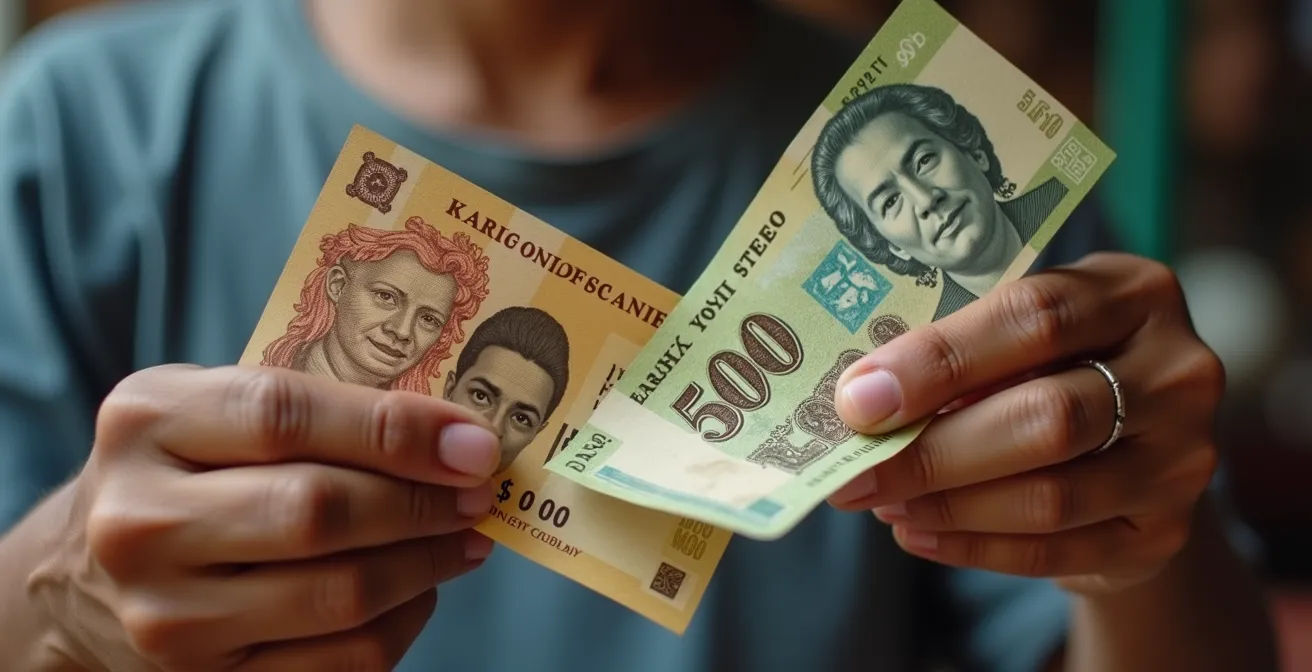
This hybrid approach ensures you’re never caught without funds. Your primary bank card is for large, planned withdrawals in cities, your emergency cash covers you in the provinces, and a digital wallet like GCash (which can be set up by foreigners) handles small, convenient payments where accepted. To make this work, you should adopt a simple three-wallet system:
- Primary Card (70%): Keep the bulk of your budget in your main, low-fee bank card for major city ATM withdrawals and large purchases.
- Emergency Cash (20%): Carry a reserve of around PHP 5,000-8,000 in pesos, split between two secure spots, for use in remote areas.
- Digital Wallet (10%): Load a small amount onto a GCash account for paying at convenience stores, some restaurants, and as a backup.
By preparing this financial toolkit, you transform a potential point of failure into a source of confidence, ensuring your focus remains on the beauty of the islands, not on a desperate hunt for a working ATM.
DIY Booking vs. Travel Agency: Which Saves More for a Couple?
The classic debate for travelers is whether to painstakingly plan everything yourself (DIY) or opt for the convenience of a travel agency package. For a couple traveling to the Philippines, the answer isn’t about which is cheaper, but about where you find the most value arbitrage. A purely DIY approach might seem like the obvious money-saver, but when you factor in the value of your time and the bulk-rate discounts agencies receive, the picture becomes more complex.
Travel agencies often get better rates on domestic flights and island-hopping tours due to their volume. For example, an agency might secure a spot on a popular El Nido tour for $180, while a DIY traveler booking last-minute might pay $200. The agency also absorbs the hassle of coordinating airport transfers, a notoriously inefficient and often overpriced part of Philippine travel. However, you pay a premium for this convenience, especially on accommodation, where agencies typically book 3-star hotels that are more expensive than the budget-friendly guesthouses a DIY planner would find.
Case Study: The Coron Island Hopping Dilemma
A couple recently demonstrated the power of on-the-ground booking. They saved $120 on their Coron island-hopping tours by negotiating directly with local boat operators upon arrival. They paid PHP 1,500 ($30) per person for a tour that was listed at $50 per person on international booking sites. The trade-off? They spent three hours of their vacation time walking between tour offices and negotiating prices, a “cost” that some travelers would gladly pay to avoid.
A hybrid strategy often yields the best results. Use an agency for the most complex or bundled part of your trip—perhaps a 3-day/2-night El Nido to Coron expedition—where their logistical expertise and group rates provide real value. For the rest of your trip, embrace the DIY approach to find unique homestays and book local tours directly, where you have the most leverage to negotiate and save.
To illustrate the trade-offs, data from travel aggregators provides a clear cost comparison for a hypothetical 14-day trip for two, showing that a DIY approach is slightly cheaper but requires a significant time investment.
| Expense Category | DIY Booking | Travel Agency Package | Difference |
|---|---|---|---|
| Domestic Flights (3 segments) | $300-400 | $450 (included) | +$50-150 |
| Accommodation (14 nights) | $420 (hostels/budget) | $490 (3-star hotels) | +$70 |
| Island Tours (4 major) | $200 | $180 (group rates) | -$20 |
| Airport Transfers | $60 | Included ($0) | -$60 |
| Planning Time Value | 20+ hours research | 2 hours booking | Time saved |
| Total Cost | $980-1080 | $1120 | +$40-140 |
The optimal choice is not all-or-nothing. It’s about strategically outsourcing the logistical headaches while retaining control over the experiences that matter most to you, creating a perfect balance of savings and convenience.
The Tricycle Fare Mistake That Costs Tourists Double the Price
The humble tricycle is the lifeblood of transport in most Philippine towns, but it’s also the site of one of the most common and frustrating financial leaks for tourists. The mistake is simple: getting in and stating your destination *before* agreeing on a price. This immediately signals you’re an uninformed visitor, often resulting in a “tourist price” that can be double, or even triple, the local rate. This isn’t a scam in the malicious sense; it’s just an accepted, opportunistic part of the local economy.
The price difference can be staggering. As data from budget travel surveys shows, a short, shared ride that costs a local PHP 10-20 per person can easily be quoted at PHP 100-150 for a tourist chartering the same tricycle for the same distance. Over a two-week trip, these small overcharges can accumulate to $30-50, enough to pay for a memorable activity like a canyoneering tour or a nice dinner.
Avoiding this pitfall requires a simple but firm negotiation script and the confidence to use it. The key is to ask the price *before* you even sit down. A few words in the local language can work wonders, not because the driver will be fluent, but because it shows you’ve done your homework. The goal isn’t to haggle aggressively but to signal that you know the fair price range. If the first driver’s price is too high, simply smile, say “salamat po” (thank you), and walk to the next one. Competition is your best leverage.
For longer journeys or half-day hires, always negotiate a “pakyawan” or charter rate. This is a bulk price for the driver’s time and is almost always cheaper than paying per stop. A fair rate for 4-5 hours of service is typically between PHP 500-800, depending on the location and distance.
Your Action Plan: The ‘Magkano Po?’ Script for Fair Fares
- Initiate Contact: Ask ‘Magkano po papunta sa [destination]?’ (How much to [destination]?) before getting in.
- Polite Pushback: If the price seems high, politely say ‘Mahal naman’ (That’s expensive) and pause to see if they offer a lower price.
- Gather Data: Ask 2-3 other drivers ‘Magkano po ang usual?’ (What’s the usual price?) to establish a baseline.
- Negotiate Bulk Rates: For tours, negotiate a ‘pakyawan’ (charter) rate. Expect around PHP 500-800 for a half-day.
- Clarify Terms: Always confirm if the agreed price is per person or for the entire tricycle (‘per trip’) before you depart.
This small cultural skill does more than just save you money; it earns you a measure of respect and allows for a more authentic interaction with the local community, turning a simple transaction into a moment of genuine connection.
When to Fly to Manila for the Lowest International Fares?
Your international flight will likely be the single largest expense in your $1500 budget, making it the most critical element to optimize. The common advice is to “book in advance” and “fly in the off-season” (June-October). While true, this misses two key strategic levers specific to the Philippines: airport arbitrage and mastering the art of the “Piso Fare” sale.
Firstly, most travelers default to flying into Manila’s Ninoy Aquino International Airport (MNL). However, a significant structural saving can be achieved by considering Clark International Airport (CRK), located about two hours north of Manila. While it may seem less convenient, airline pricing data reveals that flights into Clark can be 20-30% cheaper than those into Manila, especially for travelers originating from the Middle East and other East Asian hubs. This saving of $100-$200 can single-handedly offset the cost of the bus transfer to Manila and then some.
Case Study: The Two-Ticket Strategy
One traveler saved an incredible $400 by thinking outside the box. Instead of booking a direct flight to Manila for $780, they booked two separate tickets: a flight on a major carrier to the regional hub of Kuala Lumpur ($300), and then a separate flight from Kuala Lumpur to Manila on the budget airline AirAsia ($80). While it added 6 hours to their total journey, the savings were enough to cover an entire week’s accommodation and food.
Secondly, the Philippines is home to some of the most aggressive budget airlines in the world, most notably Cebu Pacific and AirAsia. Their legendary “Piso Fare” (one peso) sales are not a myth. While the base fare is indeed negligible, you still pay taxes and fees, but the final price can be 50-70% lower than standard fares. Catching these sales requires a proactive strategy.
- Follow and Engage: Follow Cebu Pacific and AirAsia on all social media platforms and turn on notifications. Flash sales are often announced there first.
- Subscribe: Sign up for their email newsletters, which can provide 24-hour advance notice of upcoming promotions.
- Be Ready to Pounce: Sales often launch at midnight Philippine time on Tuesdays or Wednesdays. Have your passport details, travel dates, and payment information saved and ready to go, as the best deals sell out in minutes.
- Book in Advance: These sales are typically for travel dates 3-6 months in the future, which aligns perfectly with smart travel planning.
This proactive approach transforms flight booking from a passive purchase into an active hunt for value, securing the foundation of your sub-$1500 budget long before you ever pack your bags.
Hostel vs. Homestay: Which Offers Better Value for Solo Travelers?
For solo travelers, accommodation is more than just a place to sleep; it’s a hub for social connection, cultural immersion, and security. The choice between a hostel and a homestay represents a fundamental trade-off between social energy and authentic experience. Deciding which offers better value depends entirely on your personal travel priorities, as the cheapest option isn’t always the best one.
Hostels are the undisputed champions for budget and social opportunities. With dorm beds ranging from $5-$15 per night, they are the most cost-effective option. Their common areas, organized activities, and a constant flow of fellow travelers make them ideal for those looking to meet people and find travel companions. They are typically located in central tourist areas, offering unparalleled convenience for tours and nightlife. However, this often comes at the cost of cultural immersion, as you’re primarily interacting with other foreigners.
Homestays, while slightly more expensive at $10-$20 for a private room, offer a different kind of value: authenticity. Staying with a local family provides a direct window into Filipino culture. The experience is enriched by home-cooked breakfasts, genuine conversations, and insights into daily life that are impossible to find in a hostel. For a traveler seeking a deeper connection to the place they are visiting, this cultural capital can be priceless. The downside is often a less central location and fewer opportunities to socialize with other travelers.
However, the landscape is changing. As a recent report on accommodation trends points out, a new category of accommodation is blurring the lines.
The rise of boutique hostels in Manila, Cebu, and El Nido now offer co-working spaces and private pods for $8-12, bridging the gap between social hostels and homestay privacy.
– Southeast Asia Backpacker Guide, 2025 Philippines Accommodation Trends Report
These “poshtels” cater to digital nomads and solo travelers who want both community and comfort, offering the best of both worlds. They provide the social infrastructure of a hostel with a higher degree of privacy and amenities, often including faster Wi-Fi and dedicated workspaces—a significant value for anyone needing to stay connected.
Ultimately, a savvy solo traveler might use a hybrid approach: starting in a social hostel in a major city to build a network and then transitioning to a homestay in a more rural area to experience authentic Filipino hospitality.
Citibank or HSBC: Which International Bank Has Better Presence in PH?
Travelers have long debated which international bank offers the best service and ATM network in the Philippines. Traditionally, having an account with a bank like Citibank or HSBC, which have a physical presence in major cities, was seen as a strategic advantage. However, this entire question has become largely irrelevant. For the modern, budget-savvy traveler, worrying about a specific international bank’s branch is a classic case of focusing on an outdated problem.
The game has been completely changed by the rise of fintech. As Paul Albano, an executive at the Philippines’ leading e-wallet, noted in a recent interview, the new paradigm makes physical bank presence obsolete for travelers.
The rise of FinTech disruptors like Wise and Revolut has made the physical presence of international banks almost irrelevant for the modern traveler.
– Paul Albano, GCash International General Manager Interview
This is the core of the modern travel banking strategy. Instead of relying on a single, expensive international bank, you should build a flexible and resilient payment stack using specialized financial tools. The goal is to minimize fees at every step: foreign transactions, ATM withdrawals, and currency conversion. Relying on a traditional bank is a guaranteed way to see your budget eroded by financial leakage.
Your ideal banking combo for the Philippines looks less like a single bank and more like a team of specialists working together. This modern approach gives you flexibility, security, and, most importantly, keeps your money in your pocket instead of giving it to the banks.
The ultimate setup involves combining a fee-free debit card with a local e-wallet, effectively creating your own frictionless banking system while abroad.
- The Primary Card: Get a debit card from a provider like Charles Schwab, Revolut, or Wise that offers zero foreign transaction fees and, crucially, reimburses local ATM fees. This is your workhorse for cash withdrawals.
- The Local e-Wallet: Upon arrival, buy a local SIM card and set up a GCash account. You can link your international card to top it up instantly with pesos. This is for small, daily transactions.
- The Best ATMs: When you need to withdraw cash, use ATMs from BDO or BPI, as they have the largest networks and relatively low access fees (around PHP 200-250) for international cards.
- The Emergency Backup: Have the Western Union app on your phone. In a true emergency where cards and ATMs fail, you can send money to yourself for cash pickup at thousands of locations.
By shifting your mindset from “which bank?” to “which tools?”, you sidestep the entire issue of bank presence and take full control of your travel finances.
The Hidden Transfer Fees That Can Add $500 to Your Resort Bill
One of the most significant and least-anticipated budget killers in the Philippines is the cost of transportation between airports, ferry ports, and your hotel. High-end and even mid-range resorts often offer private transfer services that promise convenience but come with an exorbitant price tag. This is a major financial leak that can drain hundreds of dollars from your budget if you’re not careful.
These resorts prey on a traveler’s desire for a seamless experience after a long flight. They charge a massive premium for what is often just a private car or van. For example, a resort’s private transfer from Caticlan Airport to a hotel on Boracay might cost $70, while the DIY option—involving a tricycle, the ferry, and another e-trike—costs a mere $14. The resort’s service isn’t ten times better, it’s just bundled and marketed as “hassle-free.” Across several island transfers, these markups can easily add up to over $250, a significant chunk of a $1500 budget.
Another hidden fee to watch for is Dynamic Currency Conversion (DCC). When using your card at an ATM or a shop, you’ll often be asked if you want to be charged in your home currency or in Philippine Pesos (PHP). Always choose PHP. Accepting the conversion to your home currency allows the local machine’s bank to set its own, unfavorable exchange rate, which financial analysis confirms can add an average 5-10% hidden fee to the transaction.
The savings from opting for DIY transfers are substantial and are a clear example of finding value arbitrage. The table below breaks down the potential savings on three common routes.
| Route | Resort Private Transfer | DIY Option | Savings |
|---|---|---|---|
| Caticlan Airport to Boracay Hotel | PHP 3,500 ($70) | PHP 700 ($14) | $56 |
| Puerto Princesa to El Nido | PHP 6,000 ($120) | PHP 600 bus ($12) | $108 |
| Cebu to Malapascua Island | PHP 5,000 ($100) | PHP 350 bus + boat ($7) | $93 |
| Total for 3 transfers | $290 | $33 | $257 saved |
The key takeaway is to always question convenience that comes with a steep price. Researching the local, public transport options in advance might take an extra 30 minutes of planning, but it can save you enough money to fund several days of your vacation.
Key Takeaways
- Your largest savings come from strategic planning (flights, itinerary) not daily scrimping.
- A multi-tool “payment stack” (fintech card + local e-wallet + cash) is essential to avoid crippling bank fees.
- Always question the cost of convenience; DIY transfers and tours often provide massive savings for minimal extra effort.
The “Too Many Airports” Mistake That Ruins 10-Day Itineraries
In a country of over 7,000 islands, it’s tempting to try and see as much as possible by hopping between airports. This is the single biggest structural inefficiency a traveler can build into their Philippine itinerary. Every domestic flight, while seemingly quick, comes with a hidden “travel time tax.” This isn’t just about the one-hour flight time; it’s about the entire door-to-door process that consumes a full day of your precious vacation.
A comprehensive travel cost analysis shows that the true cost of each domestic flight segment is far more than the ticket price. When you factor in airport transfers at both ends, terminal fees, and the 6-8 hours of lost vacation time, each “cheap” $50 flight actually costs over $100 and a full day of your trip. For a 10 or 14-day vacation, scheduling three or four domestic flights means you’re spending nearly a third of your time in transit, not in paradise.
A much smarter and more cost-effective approach is to think in terms of regional hubs and ferry routes. The Philippines has an extensive and efficient ferry network that is often overlooked by international visitors. By choosing one island group, such as the Central Visayas (Cebu, Bohol, Siquijor) or a specific region of Palawan, you can explore multiple islands using only boats, saving hundreds of dollars and countless hours.
Case Study: The One-Hub Strategy in Central Visayas
A traveler spent 14 days exploring Cebu, Bohol, and Siquijor without taking a single domestic flight after their initial arrival in Cebu. By using ferries, their total inter-island transport cost was a mere $31 (PHP 1,550). A similar itinerary using flights would have cost over $300 and eaten up at least two full days in airport logistics. They used Cebu as a base, taking a ferry to Bohol (4 nights), then another to Siquijor (3 nights), before returning to Cebu, proving the efficiency of a hub-and-spoke model using ferries.
For those who want to see multiple, distant regions (e.g., Luzon and Palawan), the “open-jaw” ticket is the most efficient strategy. This involves booking a multi-city international flight where you fly into one major hub (like Manila) and out of another (like Cebu), completely eliminating the need to backtrack and saving you one domestic flight and a full travel day.
- Book Smart: Use a multi-city search to book a flight into Manila (MNL) and out of Cebu (CEB).
- Go North to South: Start in Luzon (Manila/Banaue), fly once to Palawan for island hopping, then take a ferry to the Visayas (Cebu/Bohol) for your final leg.
- End in the South: Depart from Cebu, saving you a flight back to Manila, at least $100, and 8+ hours of travel time.
By resisting the urge to “see it all” and instead focusing on deep exploration within a region, you not only create a more relaxing and immersive vacation but also make your $1500 budget stretch significantly further.