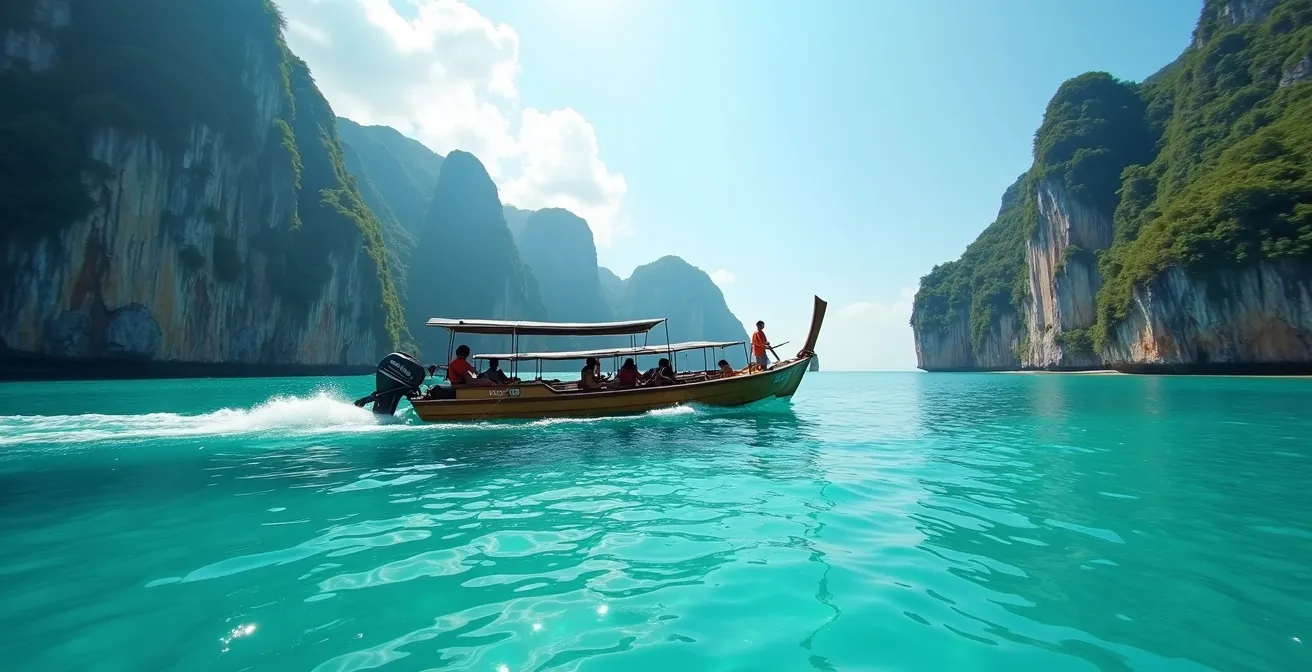
The biggest myth about Coron island hopping is that a private boat is a luxury expense. In reality, for a group of friends, it’s often cheaper than buying individual joiner tour tickets.
- The key is “cost dilution”: a private boat has a fixed rental fee that, when divided by 3-4 people, drops the per-person cost significantly.
- Booking through official boat associations guarantees fair, standardized pricing and safety, removing the risk of overpaying.
Recommendation: Instead of booking a pre-packaged tour, rent a boat from an official association, buy your own food at the local market, and split the costs among your group to unlock a premium experience on a budget.
Thinking about that dream trip to Coron, Palawan, probably conjures up images of crystal-clear lagoons and dramatic limestone cliffs. But then comes the big question: how to experience it? The default for many is the “joiner tour” – a shared boat, a fixed itinerary, and a crowd of strangers. It seems like the budget-friendly choice. The alternative, a private boat, feels like an expensive luxury reserved for special occasions. You want the freedom to set your own pace, to linger in a perfect spot, but your wallet says otherwise.
Most travel guides will tell you private tours offer flexibility but come at a premium. They might suggest haggling at the dock, a vague and often stressful strategy. What they miss is the fundamental math of Coron’s tour system. The secret isn’t about haggling harder; it’s about planning smarter. It’s about understanding that the fixed cost of a private boat, when shared, can actually make your exclusive day on the water cheaper per person than a crowded joiner tour.
But what if the key wasn’t just saving money, but radically increasing the value of your day? Imagine being the first and only boat at Twin Lagoon as the morning sun hits the water. This guide is your local’s blueprint. We’ll dismantle the cost structure of island hopping, show you how to leverage your group’s size using a principle I call cost dilution, and give you the practical steps to craft an exclusive, private adventure for the price of a standard ticket. We’ll cover why Coron is uniquely suited for this strategy, how to ensure your safety, what hidden costs to watch for, and the pro-level gear choices that make all the difference.
This article provides a complete roadmap to mastering Coron’s island hopping scene. From financial breakdowns to practical safety checks and gear advice, you’ll find everything needed to turn your group’s dream trip into an affordable reality.
Summary: Your Guide to a Budget-Friendly Private Tour in Coron
- Tour A, B, C, or D: Which El Nido Circuit Has the Best Lagoons?
- The Safety Check You Must Do Before Boarding a Banca Boat
- Why Leaving the Dock at 7:How to Budget for a 2-Week Dream Vacation in the Philippines Under $1500?
- How to Prevent Seasickness on Small Boats Without Drowsy Medication?
- Dry Bag vs. Ziploc: Which Gear Actually Protects Your Electronics?
- Full Face Mask vs. Traditional Snorkel: Which Is Safer for Open Water?
- When to Visit Donsol to See Whale Sharks Naturally Migrating?
- Tubbataha vs. Coron Wrecks: Which Dive Trip Is Worth the Premium Price?
Tour A, B, C, or D: Which El Nido Circuit Has the Best Lagoons?
When travelers think of Palawan’s lagoons, El Nido’s famous Tours A, B, C, and D often come to mind first. It’s known for a high density of stunning spots packed into tight circuits. However, this density comes with a major drawback: high tourist traffic and significantly higher costs for private tours. While El Nido offers variety in a short time, Coron presents a different, and for a group, a much smarter value proposition. Coron’s iconic lagoons might be more dispersed, but this is precisely what makes a private tour so valuable and, surprisingly, more affordable.
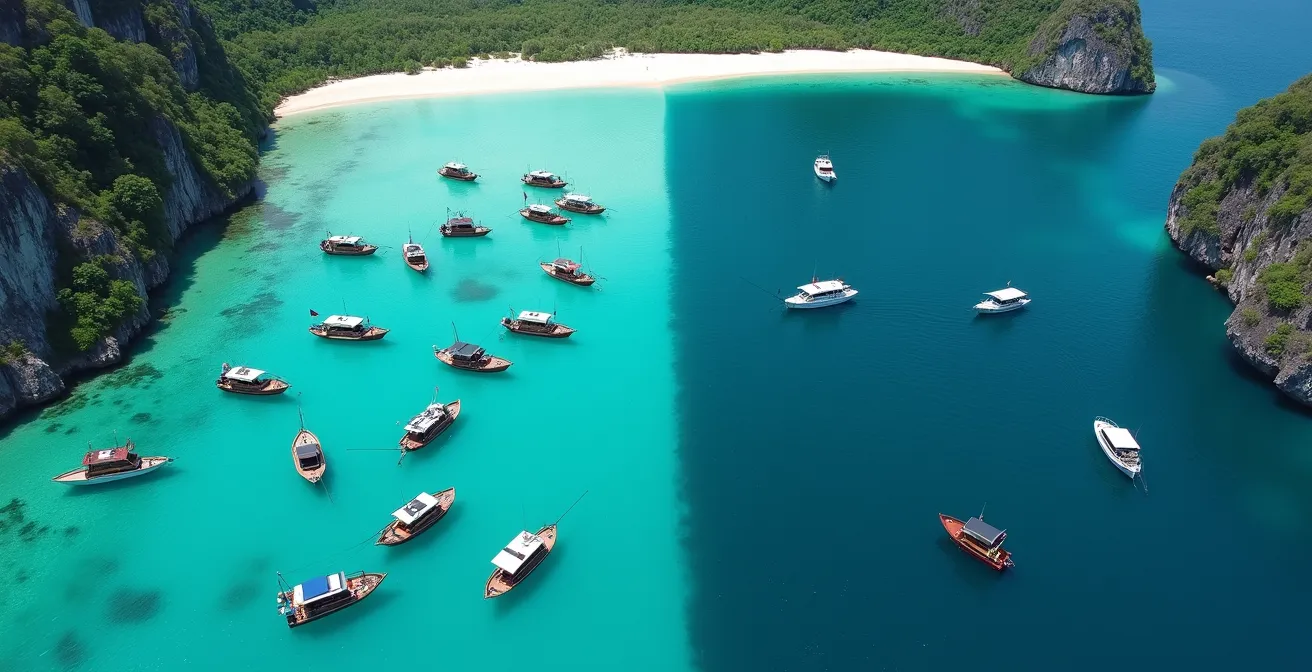
The core difference lies in the economics. In El Nido, a private tour can easily cost over $150 for a small group. In contrast, a private tour in Coron costs only $26.22 USD per person for a group of 3, according to recent traveler experiences. This price gap exists because Coron’s tour structure is built around a flat boat rental fee, making it perfectly suited for the “cost dilution” strategy. While El Nido’s model pushes you towards expensive private options to escape the crowds, Coron’s model invites you to do so affordably.
This table from a comparative analysis of Coron and El Nido tours clearly shows where Coron’s advantage lies for private groups seeking both value and a more exclusive experience.
| Aspect | El Nido | Coron |
|---|---|---|
| Lagoon Density | Many lagoons, close together | Fewer iconic lagoons, more dispersed |
| Traffic Level | High tourist traffic | Potentially more exclusivity with private tours |
| Private Tour Cost | $152.97+ for 3-5 people | $78.65 total for 3 people ($26.22/person) |
| Best For | Variety in short time | Dramatic landscapes, wreck diving pairing |
For groups, the choice becomes clear. Coron offers the chance to experience world-class, dramatic landscapes without the intense crowding and at a fraction of the private tour cost you’d find elsewhere. It’s the ideal location to apply a smart-budget approach.
The Safety Check You Must Do Before Boarding a Banca Boat
Getting a great deal on a private boat means nothing if the vessel isn’t safe. While it can be tempting to haggle with an independent operator on the street, the smartest and safest move is to book through an official organization. In Coron, this means looking for boats affiliated with the Calamian Tour Boat Association (CTBA) or the Coron Boatmen Association (CBOA). These associations provide a crucial layer of security and standardization that protects you.
According to an in-depth look at local operations, the CTBA enforces standardized safety protocols for all its members. This isn’t just bureaucracy; it’s your peace of mind. Member boats must have proper licensing and insurance, undergo regular inspections, and wait for the Philippine Coast Guard’s go-ahead each morning (usually between 8:00 and 9:00 AM) before departing. This regulated system ensures you’re not on a poorly maintained boat with an unlicensed captain.
Before you even step on board, you can perform your own quick inspection. Don’t be shy; a good captain will welcome your attention to safety. Look for the basics: are there enough life jackets for everyone? Does the boat look well-maintained, or are there signs of disrepair hidden under a fresh coat of paint? Asking the captain if they are part of the CTBA or CBOA is a simple, powerful question that filters out many non-compliant operators.
Your 60-Second Banca Seaworthiness Checklist
- Visual Check: Look for fresh paint that might hide rot on the hull and bamboo outriggers. Inspect outriggers for cracks.
- Bilge Check: Verify the bilge is dry. A significant amount of water in the bottom of the boat is a major red flag.
- Association Query: Ask the captain, “Are you a member of the official CBOA or CTBA?” This confirms they adhere to regulated standards.
- Manifest Request: Ask to see the official Philippine Coast Guard manifest document for the day’s trip. This is a legal requirement.
- Life Jacket Count: Confirm there is a visible and accessible life jacket for every single passenger on board before leaving the dock.
By prioritizing safety and booking through official channels, you not only ensure a secure trip but also support the local system that maintains high standards for everyone. It’s the responsible way to explore.
Why Leaving the Dock at 7:How to Budget for a 2-Week Dream Vacation in the Philippines Under $1500?
Here’s the heart of the strategy: making your private tour cheaper than a joiner ticket. The magic is in a concept called cost dilution. A joiner tour has a fixed price per person, say $35-$45. A private boat has a fixed rental fee for the entire day, regardless of whether you have two or five people. As documented by a group of travelers, the economics are compelling. Their private tour for three people cost a total of $78.65 USD (4000 PHP), which breaks down to just $26.22 per person. This was cheaper than a standard joiner tour and included boat rental, all entrance fees, snorkel rental, and lunch.
How did they do it? By understanding the cost structure. The largest single expense is the boat rental (around 2700 PHP). By splitting this cost three ways, the individual burden becomes small. The more friends in your group (up to the boat’s capacity), the cheaper the per-person cost becomes. This is the power of cost dilution.
To execute this, you must be aware of all the potential costs. The boat rental is just the beginning. The real budget mastery comes from knowing the à la carte expenses. Unlike an all-in joiner tour, you’ll be paying for each entrance fee separately. This is a good thing, as it gives you control. You only pay for what you want to see. Here is a typical breakdown of those “hidden” costs to build your budget:
- Mandatory Entrance Fees: Kayangan Lake (300 PHP), Barracuda Lake (200 PHP), and Twin Lagoon (200 PHP) are the most common.
- Gear Rentals: Snorkel gear is typically 150 PHP per set.
- Optional Extras: Kayak rental at certain sites can be expensive (1,300-1,800 PHP), so decide if it’s worth it for your group.
- Crew & Guide: A tour guide fee of 500 PHP is standard for private tours, and budgeting 10-15% of the boat rental cost for a crew tip is a customary and appreciated gesture.
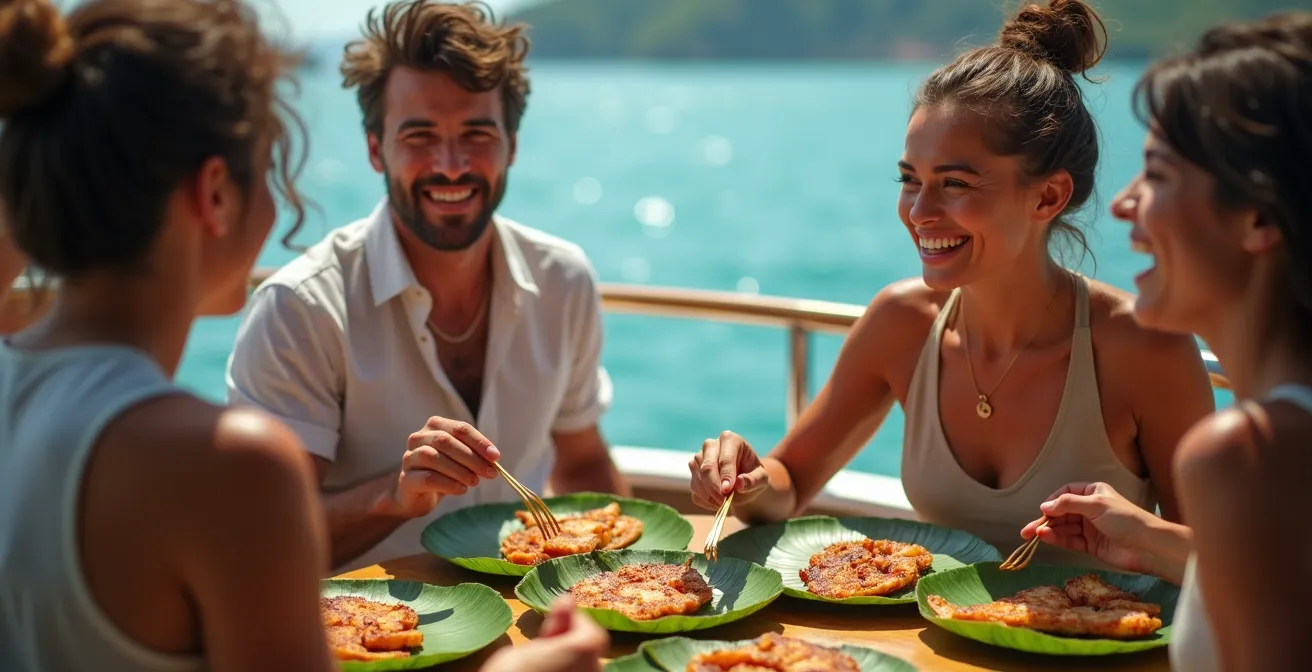
The final hack is lunch. Instead of paying for a tour package lunch, give your boat crew a budget (e.g., 1500 PHP for a group of 4) and a shopping list. They will go to the local market in the morning and buy fresh fish, vegetables, and rice, which they’ll grill for you on an island. It’s fresher, more authentic, and often cheaper than the pre-set tour meal.
How to Prevent Seasickness on Small Boats Without Drowsy Medication?
A perfect day on the water can be quickly ruined by one thing: seasickness. The gentle rocking of a traditional Filipino banca boat, while charming, can be a challenge for some. The good news is that you can dramatically reduce your chances of feeling ill without resorting to drowsy medications, and it all starts with what you do before you even board.
The most critical factor is your breakfast. A greasy, heavy meal is the worst thing you can have. As travel experts who have spent extensive time on these boats recommend, your pre-boarding meal should be bland and built on complex carbohydrates. Think plain rice, toast, crackers, or bananas. Avoid acidic fruit juices like pineapple and skip the heavy Filipino ‘silog’ breakfasts (fried rice, egg, and meat). Eat this light meal about 45-60 minutes before departure to give your stomach time to settle.
Where you sit on the boat also makes a huge difference. A banca has a specific “Zone of Stability.” This isn’t at the front or the back, but mid-ship and low to the floor. This area experiences the least amount of pitch (up-and-down motion) and roll (side-to-side motion). When you board, claim a spot in this central, lower area. Staring at the horizon, not at your phone or a book, also helps your brain sync up with the boat’s motion. If you feel a wave of nausea coming on, a great local remedy is to apply a bit of Efficascent Oil or White Flower embrocation (available in any local pharmacy) to your temples and inhale deeply.
Finally, stay hydrated with small, regular sips of water. Avoid gulping large amounts at once and steer clear of carbonated drinks, which can upset your stomach. By managing your breakfast, your position on the boat, and your focus, you can enjoy the full 8-hour journey in comfort.
Dry Bag vs. Ziploc: Which Gear Actually Protects Your Electronics?
On an island hopping tour, water is everywhere. From splashes while cruising to wading ashore from the boat, your expensive electronics like phones and cameras are at constant risk. Many travelers think a few Ziploc bags will do the trick. This is a classic and often costly mistake. A Ziploc bag might protect against a light splash, but it offers zero guarantees against full immersion or the pressure of being squished in a backpack.
The only real solution is a proper dry bag. A dry bag is made of durable, waterproof material (like PVC or vinyl) and features a roll-top closure system. When sealed correctly (by rolling the top down at least three times and clipping the buckle), it creates an airtight and watertight seal that can withstand being fully submerged. This isn’t just a convenience; it’s essential insurance for your gear.
Let’s talk numbers. A good quality 10L dry bag, which is plenty of space for a phone, wallet, power bank, and a small camera, costs around $20. The cost of replacing a water-damaged smartphone can easily be $800 or more. This means investing in a dry bag is, quite literally, a 40 times cheaper insurance policy. When you consider the value of the electronics you’re carrying, the decision is simple. Don’t risk a thousand-dollar vacation-ender to save twenty bucks.
When choosing a dry bag, look for one with a shoulder strap for easy carrying when you’re swimming to a beach or exploring an island. The 10L or 15L size is the sweet spot for a day trip – big enough for the essentials but not so bulky it becomes a hassle. Forget the Ziplocs; they create a false sense of security. A real dry bag is a non-negotiable piece of gear for any serious island hopper.
Full Face Mask vs. Traditional Snorkel: Which Is Safer for Open Water?
Coron’s underwater world is a primary attraction, so choosing the right snorkel gear is crucial. In recent years, full-face snorkel masks have become popular, promising a wide field of view and the ability to breathe through your nose. However, for the specific conditions in Coron, a traditional mask and snorkel is not only the better choice but also the safer one. Many of the rental full-face masks are cheap knock-offs that can have dangerous issues with CO2 buildup.
Leading dive safety organizations have issued warnings about these budget masks. As dive professionals from PADI and DAN advise, “For the typical Coron island hopping experience with deep dives, free diving, and choppy water, a traditional snorkel is superior.” A traditional snorkel allows you to easily purge water and gives you the freedom to free-dive down a few meters to get a closer look at a coral or a wreck, something that is difficult and often unsafe with a full-face mask due to the large volume of air trapped inside.
The local environment and rental market also point towards the traditional setup. Based on field observations from 2024, rental shops in Coron town almost exclusively offer traditional masks for about 150 PHP. There’s a practical reason for this: the high humidity in the Philippines causes severe fogging issues in full-face masks. Local divemasters have perfected the “baby shampoo method” for defogging traditional masks – a simple trick where a drop of shampoo is rubbed on the inside of the lens and rinsed out, creating a clear view for hours. This local knowledge is a testament to the traditional mask’s reliability.
When you’re swimming above the Skeleton Wreck or exploring the coral gardens, you want gear that is dependable, safe, and allows for freedom of movement. Stick with the classic, time-tested traditional mask and snorkel. It’s what the local pros use for a reason.
Key Takeaways
- Cost Dilution: The fixed cost of a private boat, when split among a group, makes it cheaper per person than a joiner tour.
- The Association Advantage: Booking through official boat associations (CTBA/CBOA) ensures fair pricing and critical safety standards.
- Strategic Timing: An early start (before 8 AM) is the best way to avoid crowds at iconic spots like Twin Lagoon and Kayangan Lake.
When to Visit Donsol to See Whale Sharks Naturally Migrating?
While this question is about Donsol, the principles of its world-famous responsible tourism model hold powerful lessons for having a better experience in Coron. Donsol’s success lies in managing carrying capacity; they limit the number of boats per whale shark, ensuring the animals aren’t stressed and tourists get a quality interaction. You can apply this exact “less is more” philosophy to your Coron tour to create a truly exclusive experience.
The key is leveraging the local knowledge of your private boat captain. As noted by travel writer Kristin Addis, who applied this principle, hiring an experienced, well-connected captain allowed her group to visit stunning locations completely alone. Good captains are part of an informal network; they talk to each other throughout the day, sharing real-time information about which spots are crowded and which are empty. This is your secret weapon.
Instead of rigidly sticking to a “Tour A” or “Tour B” itinerary, talk to your captain. Ask him: “Where can we go right now to avoid the crowds?” This empowers him to use his local intelligence to your advantage. He might suggest visiting a famous spot like Kayangan Lake at an unconventional time (like late afternoon when most tours have left) or take you to a lesser-known but equally beautiful “secret” beach. This flexibility is something you can only get with a private tour.
To put this into practice, follow these responsible tourism steps borrowed from the Donsol model:
- Embrace the Early Start: Leaving before 8 AM is the single most effective way to beat the rush.
- Trust the Network: Actively ask your boatman to use his local network to find less crowded alternatives.
- Respect Small Spaces: At lagoon entrances that can only fit one or two boats, wait your turn and don’t push to get in.
- Support Official Boats: By choosing a captain from an official association, you’re supporting the system that promotes sustainable practices.
By thinking like a responsible tourist, you not only help preserve Coron’s beauty but also directly improve the quality and exclusivity of your own experience.
Tubbataha vs. Coron Wrecks: Which Dive Trip Is Worth the Premium Price?
To truly understand the incredible value Coron offers, it’s useful to compare it to the pinnacle of Philippine diving: Tubbataha Reefs Natural Park. Tubbataha is a UNESCO World Heritage site, a remote and pristine ecosystem that requires a multi-day liveaboard trip and planning almost a year in advance. It is, without a doubt, a premium, PhD-level diving experience. Coron, on the other hand, offers something equally unique but infinitely more accessible: world-class wreck diving that you can literally decide to do this afternoon.
The Japanese fleet sunk in Coron Bay during WWII created an underwater museum. These wrecks are an introduction to wreck diving, with many located in shallow, calm waters. Unlike Tubbataha, which is strictly for advanced divers, Coron’s wrecks are accessible to everyone, including snorkelers. The Skeleton Wreck, a 25-meter ship, has its highest point just 5 meters below the surface, making it a perfect snorkeling spot. The Lusong Gunboat is even shallower, breaking the surface at low tide.
This accessibility is Coron’s ultimate value proposition. It puts a world-class historical and ecological experience within reach of the average traveler on a budget. You don’t need expensive liveaboard fees or advanced certifications to come face-to-face with history. This comparison makes it clear:
| Aspect | Coron Wrecks | Tubbataha Reefs |
|---|---|---|
| Accessibility | Can decide to dive this afternoon | Must plan a year in advance |
| Dive Level | Introduction to Wreck Diving (shallow, accessible) | PhD in Advanced Diving (remote, deep) |
| Snorkeler Access | Lusong Gunboat, Skeleton Wreck accessible | Liveaboard diving only |
| Season | Year-round diving possible | March to June only |
| Historical Value | WWII Japanese fleet wrecks | Pristine reef ecosystem |
Coron democratizes adventure. It proves that you don’t need a premium budget to have a premium experience. The value here isn’t just about being “cheap”; it’s about the high-caliber experience you get for your money, whether you’re a seasoned diver or a first-time snorkeler.
Now that you have the blueprint, it’s time to gather your friends and start planning. By applying the principles of cost dilution, booking through official channels, and using local knowledge, you can craft an unforgettable private tour that respects both your budget and the beautiful environment of Coron.