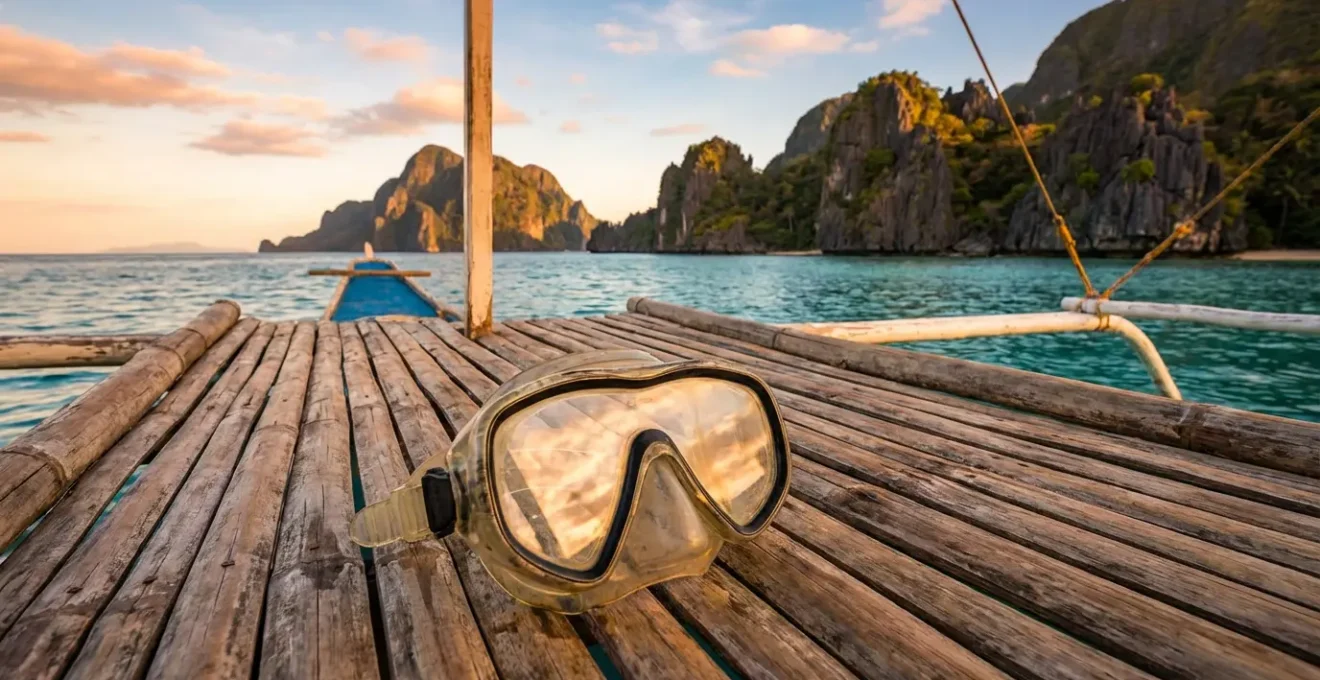
A foggy mask is just the first of many preventable issues that can ruin an otherwise perfect snorkeling trip.
- True preparation involves understanding your gear’s limits, from the CO2 risk in full-face masks to the necessity of fins in open water.
- Respecting wildlife rules and understanding the local environment are as crucial as your equipment for a safe and memorable experience.
Recommendation: Shift your focus from single-fix tricks to building a complete, reliable “gear ecosystem” that allows for a truly immersive and distraction-free underwater adventure.
You’ve made it. The boat anchors in a turquoise cove off a Philippine island, the water is crystal clear, and a vibrant reef waits just below the surface. You pull on your brand-new snorkel mask, take a leap of faith, and… your vision is instantly obscured by a thick layer of fog. It’s a frustratingly common start to what should be a magical experience. Many will tell you the fix is a dab of toothpaste or a quick spit-and-rinse, and while those can help, they only address a tiny fraction of the problem.
The truth is, a foggy mask is just one form of “experience friction”—the small, nagging issues that constantly pull your attention away from the wonders of the marine world. What about the panic of clearing a full-face mask, the exhaustion of fighting a current without fins, or the disappointment of a blurry GoPro shot of a passing sea turtle? These are the real culprits that turn an incredible adventure into a frustrating struggle.
But what if the key wasn’t a collection of disconnected tricks, but a holistic strategy? This guide moves beyond the basics of mask prep to address the entire ecosystem of your snorkeling adventure. We will explore how having the right situational awareness and making informed choices about your gear and behavior are the true secrets to an unforgettable, distraction-free island hopping tour. It’s about ensuring that from the moment you hit the water, your only focus is the breathtaking biodiversity in front of you.
This article will walk you through a complete preparation checklist, covering everything from critical wildlife etiquette to gear choices that have serious safety implications. By understanding the ‘why’ behind each recommendation, you’ll be equipped to handle any situation with the confidence of a seasoned snorkeler.
Summary: Mask Fogging: How to Prep Your New Mask Before the Island Hopping Tour?
- Why You Should Never Touch the Sea Turtles in Apo Island?
- Full Face Mask vs. Traditional Snorkel: Which Is Safer for Open Water?
- The Risk of Snorkeling in Balicasag Without Fins
- How to Take Clear GoPro Photos While Snorkeling in Choppy Water?
- When to Go Snorkeling: Morning vs. Afternoon Visibility in Tropical Waters?
- Dry Bag vs. Ziploc: Which Gear Actually Protects Your Electronics?
- When to Visit Donsol to See Whale Sharks Naturally Migrating?
- Why Is the Philippine Tarsier So Sensitive to Noise and Flash?
Why You Should Never Touch the Sea Turtles in Apo Island?
The rule is simple and repeated by every tour guide in Apo Island: do not touch the sea turtles. But for many, the temptation to connect with these serene, ancient creatures is immense. Understanding the “why” behind this rule transforms it from a restriction into an act of respect for both the animal and yourself. The primary reason is to prevent stress and disruption to the turtles’ natural behaviors like feeding, resting, and surfacing for air. A startled turtle can become disoriented or even injured.
However, the risks extend beyond just the turtle’s well-being. Sea turtles can carry bacteria and other pathogens that are potentially harmful to humans. This isn’t a theoretical risk; it’s a documented scientific concern. For instance, research from a 2023 study shows that 26.3% of nesting leatherback turtles tested positive for Salmonella. Touching them, or even just swimming in close proximity where their waste is present, creates a pathway for zoonotic disease transmission.
This principle is part of a broader concept known as “One Health,” which recognizes that the health of humans, animals, and their shared environment are deeply interconnected. Direct or indirect contact represents a threat to this delicate balance. By maintaining a respectful distance, you are not only protecting the turtles of Apo Island but also safeguarding your own health, ensuring that your memories of the encounter are purely magical, not medical.
Full Face Mask vs. Traditional Snorkel: Which Is Safer for Open Water?
For beginners, the full-face snorkel mask seems like a perfect solution. It promises a 180-degree panoramic view and the ability to breathe naturally through your nose and mouth. However, when it comes to safety in the variable conditions of open water, the traditional mask and snorkel combination often proves superior. The primary concern with full-face models is the potential for carbon dioxide (CO2) buildup. Unlike a traditional snorkel that expels your breath directly into the air, some full-face designs can trap exhaled air, leading you to re-breathe CO2. This can cause headaches, dizziness, and in worst-case scenarios, loss of consciousness.
Another critical safety difference is the ease of clearing water. With a traditional snorkel, a quick, forceful exhale is usually enough to purge any water that gets in. A full-face mask, however, is much harder to clear. If it floods, your entire face is submerged, which can induce panic. The only reliable way to clear it is to completely remove the mask, a difficult and potentially dangerous maneuver in choppy water.
Ultimately, the choice is about understanding the trade-offs within your gear ecosystem. While a full-face mask might feel more comfortable in a calm swimming pool, the traditional setup provides a more reliable and field-tested system for the unpredictable nature of the open sea. This table, based on information from a detailed study on snorkeling safety, breaks down the key differences.
| Feature | Full-Face Mask | Traditional Mask |
|---|---|---|
| Ease of water clearing | Difficult – requires removal | Easy – quick exhale |
| CO2 buildup risk | Higher – rebreathing possible | Lower – direct exhaust |
| Panic response | Harder to remove quickly | Easy to spit out snorkel |
| Field of vision | 180-degree panoramic | Standard forward view |
The Risk of Snorkeling in Balicasag Without Fins
In the calm, shallow waters of a resort pool, fins can feel clumsy and unnecessary. But in the open sea around an island like Balicasag, which is famous for its “wall” that drops off into the deep, going without fins is a serious and underestimated risk. Fins are not about swimming faster; they are a critical piece of safety equipment. Their primary purpose is propulsion efficiency. They allow you to move through the water using your powerful leg muscles with minimal effort, conserving precious energy.
Without fins, you are forced to use your arms and an inefficient flutter kick, leading to rapid fatigue. This becomes incredibly dangerous if you encounter an unexpected current, which is common near reef drop-offs. A gentle current you barely notice at the start can quickly pull you away from your boat or the shore. Fighting it without fins can exhaust you in minutes. This danger is not theoretical; a safety analysis of 204 snorkeling drownings in Hawaii revealed that a staggering 91% of the victims were visitors, many of whom were inexperienced and lacked proper equipment like fins.
Furthermore, tired snorkelers are more likely to make poor decisions, such as attempting to stand on coral to rest. This not only damages the fragile ecosystem but also puts you at risk of cuts and scrapes that can easily become infected in tropical waters. Your fins are your engine and your steering in the water. Choosing to snorkel without them in a place like Balicasag is like trying to drive a car with no engine—you are completely at the mercy of your environment.
How to Take Clear GoPro Photos While Snorkeling in Choppy Water?
You spot a clownfish darting in and out of an anemone, but the surface is choppy, and every photo you take with your GoPro comes out as a blurry mess. The common mistake is to blame the camera settings. In reality, the secret to clear underwater photos while snorkeling has less to do with technology and more to do with your technique in the water. The number one key is achieving neutral buoyancy and body stability.
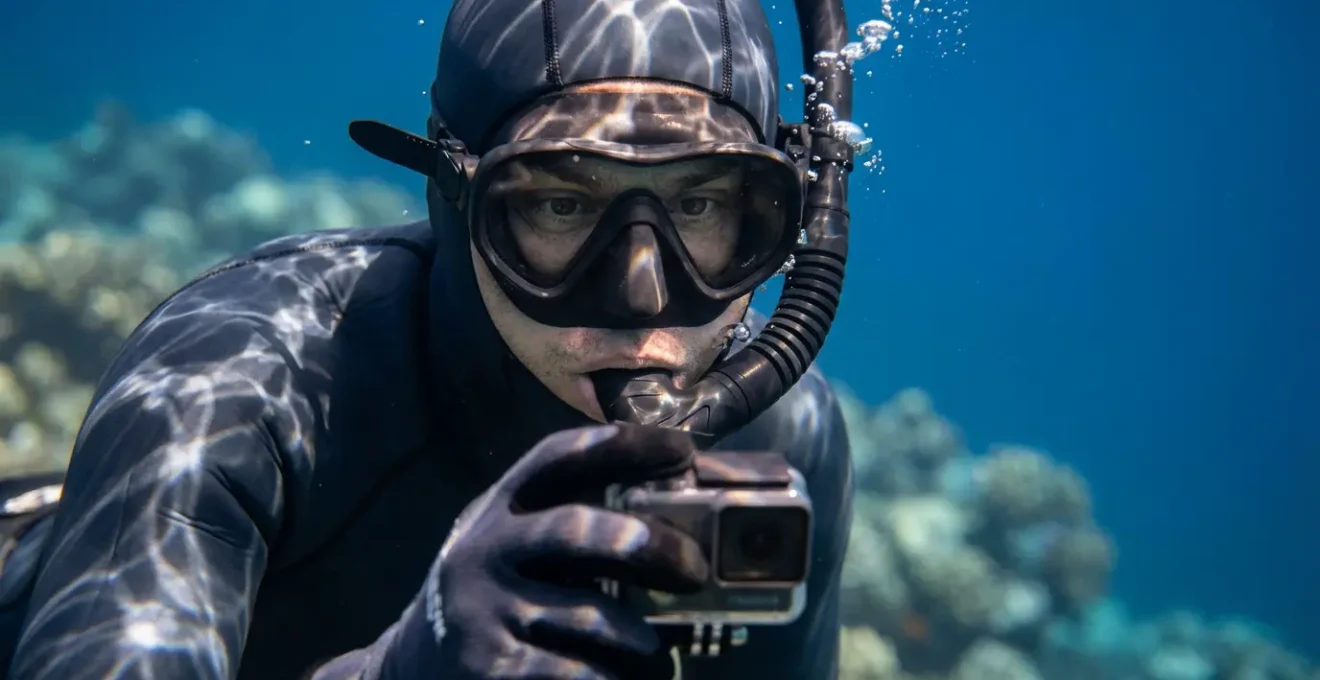
In choppy water, treading water vertically makes you bob up and down like a cork, making any stable shot impossible. Instead, you must get your body horizontal, parallel to the seafloor. This presents a much smaller profile to the surface waves and dramatically increases your stability. Gently kick to hold your position, using your fins for fine-tuned adjustments rather than frantic movements. Think of yourself as a stable tripod, not a shaky handheld camera.
The image below illustrates the ideal body position. Notice how the snorkeler is horizontal, relaxed, and using their core for stability. This allows them to hold the camera steady, even as waves pass over them. Once you are stable, bring the camera as close to the subject as possible. Water reduces color, contrast, and sharpness, so minimizing the distance between the lens and the subject is crucial. Use a short, stabilized selfie stick to get even closer without disturbing marine life. Forget the zoom function—get physically closer for the best results.
When to Go Snorkeling: Morning vs. Afternoon Visibility in Tropical Waters?
You might assume that as long as the sun is out, any time is a good time to snorkel. However, the underwater world operates on its own schedule, and timing your excursion can make the difference between seeing a murky haze and a crystal-clear panorama. In most tropical locations, including the Philippines, morning is almost always better than the afternoon for one simple reason: plankton.
The ocean is filled with phytoplankton, microscopic organisms that form the base of the marine food web. According to NOAA research, these organisms often engage in a daily vertical migration. They tend to remain in deeper water during the night and ascend towards the sunlit surface throughout the day to photosynthesize. This means that as the day progresses, the water becomes increasingly filled with these tiny particles, creating a haze that significantly reduces visibility. Going snorkeling in the morning, ideally before 11 AM, allows you to enjoy the water before the plankton concentration peaks.
Afternoon snorkeling faces other challenges as well. Increased boat traffic throughout the day kicks up sediment from the seabed, especially in shallower areas. Wind also tends to pick up in the afternoon, creating more surface chop which refracts light and further impairs what you can see below. Studies have shown that this combination of factors can reduce afternoon visibility by as much as 40% compared to the early morning. For the best chance of experiencing that “gin-clear” water you see in postcards, set your alarm and be the first one in the water.
Dry Bag vs. Ziploc: Which Gear Actually Protects Your Electronics?
Protecting your phone, wallet, and keys during an island hopping tour is non-negotiable. Many travelers make the mistake of relying on a simple Ziploc bag, believing it’s a sufficient waterproof barrier. While a Ziploc can protect against a light splash, it offers almost zero protection against submersion or even the insidious effects of condensation. A true waterproof solution requires a more robust system, and that’s where a proper dry bag comes in.
A dry bag is designed for a single purpose: to keep water out, even during brief submersion. Its heavy-duty vinyl or nylon material is puncture-resistant, and its roll-top closure creates a genuinely watertight seal. A Ziploc, on the other hand, can be easily punctured by keys or corners of other items, and its press-seal closure is notoriously unreliable under pressure. Furthermore, in a humid tropical environment, condensation is as big a threat as direct water. A phone sealed in a Ziploc on a hot day will “sweat,” creating moisture inside the bag that can damage electronics.
The most effective strategy is a multi-layer system that leverages the strengths of different components. This approach, outlined in various snorkeling safety guides, provides redundant protection against both submersion and condensation. The following table compares the options, but the best answer is to combine them.
| Protection Type | Dry Bag | Ziploc Bag | Combined System |
|---|---|---|---|
| Submersion Protection | Excellent (if properly sealed) | Poor | Excellent |
| Condensation Control | Poor | Good (with desiccant) | Excellent |
| Puncture Resistance | Good | Very Poor | Good |
| Cost | $15-30 | $0.10 | $15-30 |
Action Plan: Implementing the Multi-Layer Protection System
- Place your phone inside a Ziploc bag along with 2-3 silica gel packets (often found in new shoe boxes or electronics packaging) to absorb any moisture.
- Squeeze out all excess air from the Ziploc bag before sealing it tightly.
- Place the sealed Ziploc bag inside your small-capacity (5L or 10L) dry bag.
- Carefully roll the top of the dry bag down at least three full times before clipping the buckle shut to create a watertight seal.
- Perform a quick test in shallow water with a non-essential item like a paper towel inside before trusting the system with your valuable electronics.
When to Visit Donsol to See Whale Sharks Naturally Migrating?
Swimming alongside a whale shark, the world’s largest fish, is a bucket-list experience. Donsol is famous for its ethical, interaction-free approach where boats search for sharks that are naturally migrating and feeding. However, sightings are not guaranteed; they are dependent on natural cycles. To maximize your chances, you need to understand not just the right season, but also the right time of the month.
The peak season for whale shark sightings in Donsol runs from February to April. During these months, warmer waters and abundant plankton create ideal feeding conditions, attracting the highest concentration of sharks. However, a lesser-known pro tip is to time your visit with the lunar cycle. Marine biologists tracking the sharks have documented that the highest success rates often occur in the week following a full moon. The stronger gravitational pull during this phase can lead to more significant plankton blooms, essentially creating a massive buffet that draws the whale sharks closer to the surface. During peak season, trips booked a week after the full moon can see sighting success rates climb as high as 80%.
If you prefer to avoid the crowds, consider the shoulder season from November to January. While the overall number of sharks is lower and the sighting success rate drops to around 45%, you will experience the magic with far fewer boats and tourists. Weekday tours during this period can see 30% fewer people than on weekends. The trade-off is clear: higher probability with more people, or a more intimate experience with a lower chance of a sighting. Either way, always allow a 3-day window for your visit to account for potential bad weather, which can cancel tours.
Key Takeaways
- A foggy mask is a symptom of a larger issue; true readiness involves a holistic approach to gear and situational awareness.
- Understanding the ‘why’ behind safety rules, like not touching turtles or wearing fins, is crucial for protecting both yourself and the environment.
- Your gear (mask, fins, dry bag) is an interconnected system. The failure of one component can compromise your entire experience.
Why Is the Philippine Tarsier So Sensitive to Noise and Flash?
While snorkeling is an underwater pursuit, many Philippine island hopping tours include land-based excursions, such as a visit to a tarsier sanctuary. Understanding the unique biology of these tiny primates is essential for a respectful and safe interaction. The tarsier’s extreme sensitivity is not a behavioral quirk; it’s a direct result of its highly specialized sensory organs, which are finely tuned for a nocturnal, predatory lifestyle.
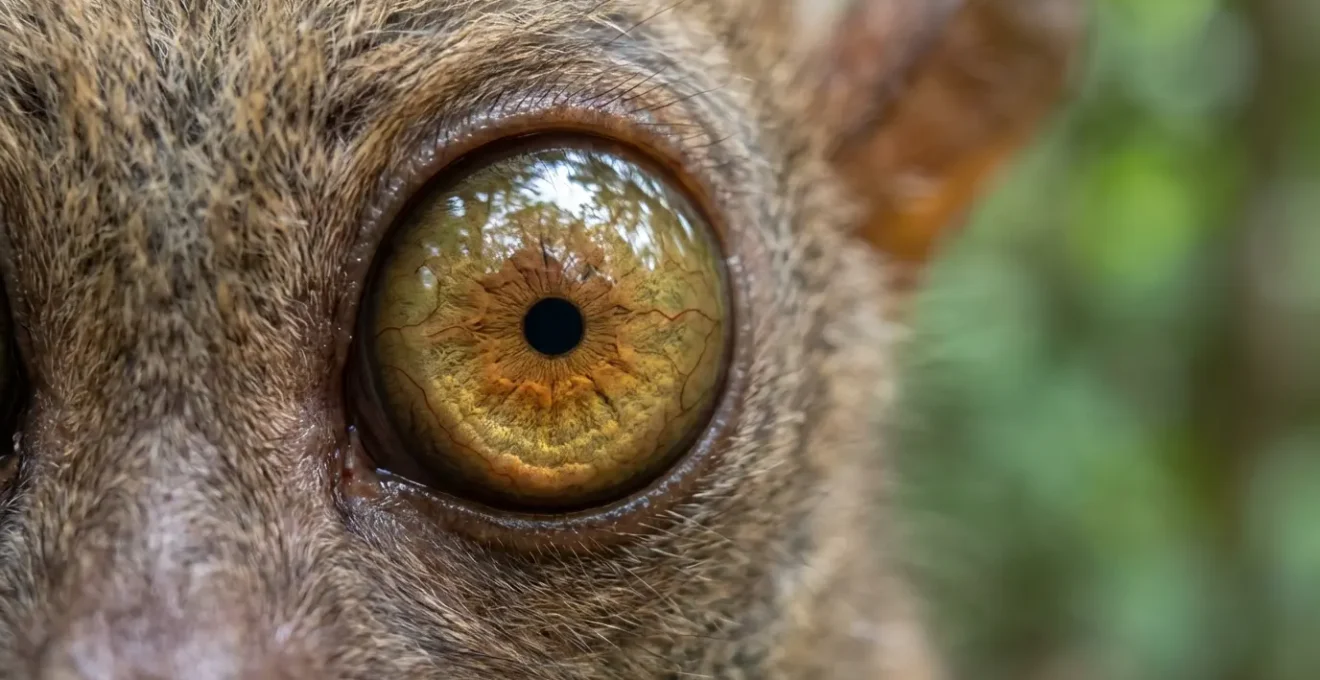
Their most famous feature is their enormous eyes. Relative to their body size, they are the largest eyes of any mammal. These eyes are so large they cannot rotate in their sockets; instead, the tarsier can turn its head nearly 180 degrees. This massive size allows them to gather the maximum amount of light in the low-light conditions of the forest at night. A sudden, bright flash from a camera is not just startling—it’s physically painful and can temporarily blind them, leaving them vulnerable.
Even more delicate is their sense of hearing. They are expert insect hunters who rely on sound to locate their prey in the dark. To achieve this, their hearing has evolved to be extraordinarily sensitive, particularly to high frequencies. As a leading researcher on the topic, Dr. Marissa Ramsier, noted in a study on their auditory capabilities:
Tarsiers can hear frequencies up to 91 kHz, well into the ultrasound range, making human chatter and camera clicks physically painful and disorienting.
– Dr. Marissa Ramsier, Journal of Mammalogy Study on Tarsier Auditory Capabilities
The sounds we perceive as normal background noise—a whisper, a cough, the click of a camera shutter—are amplified into a deafening roar for a tarsier. This sensory overload causes extreme stress, which can lead them to abandon their young or even injure themselves in an attempt to escape. Therefore, silence and the complete absence of flash photography are not just polite requests; they are absolute necessities for the well-being of these incredible creatures.
By moving beyond simple fixes and embracing a mindset of comprehensive preparation, you transform your role from a passive tourist to a confident and mindful adventurer. This approach not only ensures your own safety and enjoyment but also demonstrates respect for the delicate ecosystems you’ve traveled so far to see. Now that your gear is dialed in and your awareness is heightened, you’re truly ready to experience the Philippines’ underwater marvels without distraction.