
Choosing between Palawan and Siargao is less about the postcard image and more about the underlying travel logistics you’re willing to accept.
- Palawan offers iconic, structured beauty but demands more point-to-point travel and presents higher upfront costs to access its famous spots.
- Siargao provides a more relaxed, centralized hub experience focused on surf culture, but often with more rustic infrastructure and seasonal limitations.
Recommendation: Match your tolerance for travel fatigue and your planning style to the right island—structured sightseeing for Palawan, or immersive, hub-based relaxation for Siargao.
The choice between Palawan and Siargao has become a defining dilemma for travelers planning a trip to the Philippines. On the surface, the decision seems simple, often boiled down to a caricature: Palawan for its dramatic limestone karsts and impossibly blue lagoons, and Siargao for its world-class surf breaks and laid-back, bohemian vibe. This dichotomy, perpetuated by countless Instagram feeds, suggests you are merely picking between two different kinds of paradise. But this is a misleading oversimplification.
Most travel advice focuses on the “what”—the sights you will see—but neglects the far more crucial “how.” The real difference between these two archipelagic jewels lies not in their beauty, but in their “travel operating system.” This refers to the entire logistical framework of your trip: the cost and complexity of getting there, the ease of moving around, the reliability of infrastructure, and the type of planning required to have a seamless experience. Choosing the wrong system for your personality can lead to frustration, budget overruns, and wasted time, no matter how stunning the scenery is.
This guide moves beyond the platitudes. We will dissect the practical realities that define a trip to either destination. Instead of asking which island is “better,” we will explore which island’s logistical and financial ecosystem is a better fit for you. We will analyze everything from the granular details of island-hopping economics to the critical errors travelers make when ignoring seasonal weather patterns. By the end, you won’t just have a preference; you’ll have a clear, strategic reason for your choice, ensuring your trip is as smooth as it is spectacular.
For those who prefer a visual introduction, the following video offers a beautiful immersion into the landscapes and atmosphere of the Philippines, perfectly complementing the practical advice in this guide.
To help you navigate this detailed comparison, this article breaks down the essential factors that truly differentiate a journey to Palawan from one to Siargao. Use the summary below to jump to the sections that matter most to your decision-making process.
Summary: Palawan or Siargao: A Practical Comparison for the Modern Traveler
- Why Getting to the Most Beautiful Islands Takes More Than Just a Flight?
- How to Charter a Private Boat to Uninhabited Islands for Under $100?
- The Error of Booking Remote Islands During Amihan Season
- Northern Loop vs. Southern Beaches: How to Route Your 7-Day Island Trip?
- What to Expect When Staying on an Island With Limited Electricity?
- Tour A, B, C, or D: Which El Nido Circuit Has the Best Lagoons?
- Boat Rental vs. Group Tour: How to Explore Balabac Safely?
- How to Plan a Private Island Hopping Tour in Coron for the Price of a Joiner?
Why Getting to the Most Beautiful Islands Takes More Than Just a Flight?
The allure of the Philippines’ most pristine islands often obscures a crucial reality: reaching them is a multi-stage logistical exercise. Unlike destinations with a single international airport, getting to the heart of Palawan or Siargao involves a sequence of flights, land transfers, and sometimes even sea travel. This “last mile” journey is a significant factor in your overall budget and timeline. For instance, a common traveler experience reveals that the journey from Manila to El Nido can take a full 8-10 hours door-to-door if you opt for the more common and affordable route via Puerto Princesa airport, followed by a 4-5 hour van ride.
While direct flights exist to airports like El Nido’s Lio Airport, they often come at a premium, costing 3 to 4 times more than the standard route. This creates your first major decision: do you trade time for money? Siargao presents a similar, albeit slightly simpler, challenge. After flying into Sayak Airport (IAO), you still face a 45-minute land transfer to the main tourist hub of General Luna. These transfers, often via tricycle or habal-habal (motorcycle taxi), are an authentic part of the experience but add a layer of friction. Factoring in potential flight delays, which are common in the region, a built-in buffer day between international and domestic legs is not just a recommendation; it’s a necessity for stress-free travel.
Ultimately, the journey itself becomes part of the adventure, but it demands forethought. Your choice between Palawan and Siargao might start with an image, but it solidifies with an honest assessment of your tolerance for this logistical puzzle. Pre-arranging transfers and downloading offline maps are small steps that pay huge dividends in these beautiful but often disconnected locales.
How to Charter a Private Boat to Uninhabited Islands for Under $100?
The quintessential Philippine experience is island hopping on a traditional outrigger boat, or bangka. While group tours are the most advertised option, the ultimate freedom lies in chartering a private boat. However, initial quotes can be daunting. The dream of a private tour often collides with the reality of high costs, but savvy travelers can find remarkable value by understanding the local market dynamics. This is where you can engage in “value arbitrage”—getting a premium experience for a standard price.
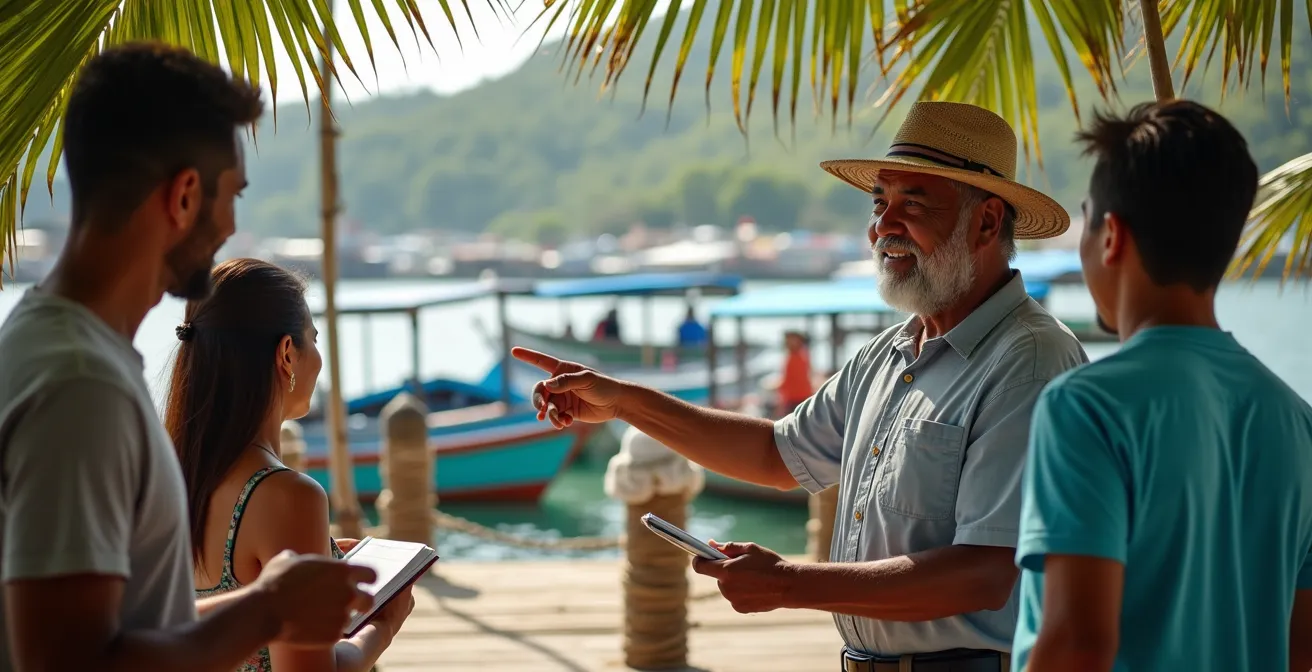
The key is to move beyond the standard tourist offerings and engage directly with the system. While joining a large group tour costs around $20-40 per person, you are tethered to a fixed schedule and a crowd of strangers. A private charter offers total control over your itinerary, letting you visit popular spots before or after the crowds. The trick to making it affordable is either sharing the cost or negotiating smartly. Forming a small group of 4-6 people at your hostel can bring the per-person cost of a private boat down to the level of a group tour. This simple act of social coordination is the single most effective way to upgrade your experience without breaking the bank.
Another strategy is direct negotiation. Approaching boatmen at the pier towards the end of the day (around 3-4 PM) for a sunset tour can often yield discounts of up to 50%, as they look to make one final trip. For the truly adventurous, negotiating a “barebones” charter where you bring your own food and drinks can also significantly lower the price. A recent analysis of charter options highlights these different tiers, empowering travelers to choose the right balance of cost and convenience.
| Charter Type | Cost Range | Best For | Negotiation Tip |
|---|---|---|---|
| Group Tour Boat | $20-40/person | Solo travelers | Book directly at pier for 20% discount |
| Shared Private Boat | $60-100/person (split 4-6 ways) | Small groups | Form group at hostel night before |
| Barebones Charter | $200-300/boat | DIY adventurers | Bring own food, negotiate boat-only rate |
| End-of-Day Special | $150-200/boat | Sunset tours | Approach boatmen at 3-4 PM for 50% off |
The Error of Booking Remote Islands During Amihan Season
Perhaps the single most critical error a traveler can make when choosing between Palawan and Siargao is ignoring the two distinct monsoon seasons: Amihan (Northeast Monsoon) and Habagat (Southwest Monsoon). These weather patterns do not affect the entire country uniformly; they have specific and often opposing effects on the east- and west-facing coasts. Booking an island based on its reputation without cross-referencing the season is a recipe for cancelled tours and disappointment.
The Amihan season, which runs from approximately November to April, is generally considered the “dry season” and brings cooler, more pleasant weather to the Philippines. However, these northeasterly winds create rough seas on east-facing coastlines. This makes it a challenging time for island hopping in Siargao, which is fully exposed to the Pacific Ocean. Conversely, this is the absolute best time to visit Palawan’s destinations like El Nido and Coron, as their western-facing locations are shielded and enjoy calm, clear waters. Many travelers, drawn by Siargao’s surf-and-sun image, mistakenly book during these months only to find their boat tours frequently cancelled due to dangerous sea conditions.
The situation flips during the Habagat season, from May to October. The southwesterly winds now batter the western shores, making this a risky period for Palawan. Rough seas and heavy rainfall can lead to tour cancellations in El Nido and Coron. Meanwhile, Siargao often experiences better, calmer weather during these months, making it a more reliable choice for island activities. Following Typhoon Odette in 2021, Siargao’s infrastructure has been rebuilt with stronger codes, but the island’s fundamental exposure to Amihan winds remains a non-negotiable factor for travel planning. If tours are cancelled, Plan B options like visiting Siargao’s Tayangban Cave Pool or Palawan’s Nagkalit-kalit Falls become essential.
Northern Loop vs. Southern Beaches: How to Route Your 7-Day Island Trip?
How you structure your itinerary is a direct reflection of the island’s “operating system.” Palawan and Siargao encourage fundamentally different travel styles. A 7-day trip in Palawan is often a point-to-point journey, a linear progression from one hub to the next (e.g., Puerto Princesa → El Nido → Coron). This style maximizes sightseeing, allowing you to tick off multiple world-famous destinations. However, it comes at the cost of constant packing, unpacking, and significant travel time between locations, which can lead to travel fatigue.
Siargao, on the other hand, is perfectly suited for a hub-and-spoke model. Its relatively compact size allows you to base yourself in the main town of General Luna and take day trips to surrounding attractions. A typical week might involve a couple of days for local exploration and surfing, a day for the classic island-hopping trio (Naked, Daku, and Guyam Islands), and another for a trip to the northern beaches of Pacifico or the natural pools of Sugba Lagoon. This approach eliminates the stress of moving accommodations and fosters a deeper connection with a single location. You unpack once and truly settle in. The trade-off is a more limited geographic range compared to a multi-stop Palawan trip.
Understanding which of these travel styles you prefer is paramount. Do you want to see as much as possible, even if it means being constantly on the move? Or do you prefer to immerse yourself in one place at a more relaxed pace? The following table breaks down these itinerary philosophies to help you align your travel personality with the right island’s logistical DNA.
| Travel Style | Best For | Sample Route | Pros | Cons |
|---|---|---|---|---|
| Hub-and-Spoke (Siargao) | Relaxed exploration | Base in General Luna, day trips to surrounding spots | No packing/unpacking, deeper local experience | Limited geographic coverage |
| Point-to-Point (Palawan) | Maximum sightseeing | Puerto Princesa → El Nido → Coron | See multiple famous destinations | Constant moving, travel fatigue |
| Single-Hub Palawan | Balanced approach | El Nido only with island hopping tours A-D | Good variety without exhaustion | Miss other Palawan highlights |
| Budget Southern Route | Cost-conscious travelers | Port Barton → Southern beaches | 50% cheaper than main routes | Less developed infrastructure |
What to Expect When Staying on an Island With Limited Electricity?
The concept of an “off-grid” paradise is romantic, but the reality of limited infrastructure, particularly electricity, requires practical preparation. This is a significant differentiator between the more developed parts of Palawan and the more rustic areas of Siargao or remote Palawan islands. It’s not uncommon for travelers to discover that their idyllic beach hut comes with an “infrastructure ceiling.” For many remote areas, it is common to experience 6-8 hours of daily power outages, known locally as “brownouts.”
This reality has a cascading effect on your comfort and daily routine. Most accommodations in affected areas rely on generators, but these often run only during peak evening hours (e.g., 6 PM to midnight). This means no air conditioning during the sweltering heat of the day and, critically, no charging for your electronic devices. Even more fundamentally, no electricity often means no power for the water pump, resulting in a lack of running water. For travelers who rely on medical devices or need to work remotely, these limitations can be deal-breakers. While major hubs like El Nido town and General Luna have more stable power, venturing to more secluded beaches means accepting this trade-off.

The key is to ask the right questions before you book. Don’t assume 24/7 power. Proactive communication with your hotel or host can prevent major surprises. This diligence ensures you’re choosing a level of comfort that aligns with your expectations, allowing you to embrace the rustic charm without unwanted stress.
Your Essential Pre-Booking Accommodation Checklist
- Ask about generator hours: Confirm if they run 24/7 or only for a set period (e.g., 6 PM to midnight).
- Verify AC functionality: Clarify if the air conditioning unit is connected to the generator for operation during power cuts.
- Inquire about device charging: Check for dedicated charging stations or the availability of rentable power banks.
- Confirm water pump system: Ask if the water supply is dependent on the main power grid or has a backup.
- Check payment methods: Verify if they accept credit cards, as ATMs will not function during a brownout.
Tour A, B, C, or D: Which El Nido Circuit Has the Best Lagoons?
For many, a trip to Palawan is synonymous with the island-hopping tours of El Nido. The standardized system of Tours A, B, C, and D is an efficient way to organize the chaos of thousands of daily visitors, but it also creates a paradox of choice. Each tour offers a curated slice of Bacuit Bay’s spectacular scenery, but they are not created equal. Choosing the right one depends entirely on what you prioritize: iconic landmarks, snorkeling, adventure, or solitude.
Tour A is the undisputed blockbuster, featuring the iconic Big Lagoon and Secret Lagoon. It is the quintessential El Nido experience, but this popularity comes at a price: it is by far the most crowded. Tour C is a close second, often hailed as the best for adventure and snorkeling, with highlights like Hidden Beach and Secret Beach. Tour B is a more relaxed, beach-focused option, while Tour D is a quieter, budget-friendly choice that includes the beautiful Small Lagoon. According to a comprehensive breakdown of El Nido tours, the crowd level can vary dramatically, from a 9/10 on Tour A to a 4/10 on Tour D.
| Tour | Key Stops | Best For | Crowd Level | Lunch Quality |
|---|---|---|---|---|
| Tour A | Big Lagoon, Secret Lagoon, Shimizu Island | Iconic landmark seekers | Very High (9/10) | Standard beach BBQ |
| Tour B | Snake Island, Cudugnon Cave, Cathedral Cave | Beach lovers & cave explorers | Moderate (6/10) | Better variety |
| Tour C | Hidden Beach, Secret Beach, Matinloc Shrine | Snorkelers & adventurers | High (8/10) | Premium seafood option |
| Tour D | Small Lagoon, Cadlao Lagoon, Paradise Beach | Budget lagoon lovers | Low (4/10) | Basic but fresh |
| Custom Tour E | Mix of best spots from A-D | Experienced travelers | Very Low (2/10) | Customizable |
However, the savviest travelers know that the secret isn’t just *which* tour you choose, but *how* you do it. A private tour allows you to execute what locals call the “reverse tour” strategy. As one local expert shared in an interview, this simple tactic can transform your experience.
The ‘reverse tour’ strategy works brilliantly – while everyone rushes to Big Lagoon in the morning, we start at the last stop and work backwards, enjoying each spot in relative peace.
– Local boat operator Captain Roberto, El Nido Tourism Board Interview Series
Boat Rental vs. Group Tour: How to Explore Balabac Safely?
Balabac, the southernmost archipelago of Palawan, represents the final frontier of Philippine island travel. Its unbelievably vibrant sandbars and turquoise waters are the stuff of legend, but this remote beauty comes with significant logistical and safety considerations that are absent in more developed areas like El Nido or Siargao. Exploring Balabac is not a casual undertaking; it requires a choice between joining a certified tour operator or attempting a private boat rental, with safety being the paramount concern.
Unlike in Coron or El Nido, where private boat rentals are commonplace, the stakes in Balabac are much higher. The area is vast, cellular signal is non-existent, and certain waters are known habitats for saltwater crocodiles. Furthermore, the region is home to endemic sandflies, which can cause severe discomfort if proper precautions aren’t taken. For these reasons, vetting your operator is not just a good idea—it is an absolute necessity. A reputable tour operator will have a registered boat with the Philippine Coast Guard, carry a satellite phone or marine radio for emergencies, and employ local Tagbanua guides who possess invaluable knowledge of the currents, weather, and safe zones.
A case study of successful eco-tour operators in the region shows that those who partner with local communities not only provide a safer experience but also a more sustainable one. These operators contribute to community development and, in return, gain exclusive access and insights, ensuring guest safety while preserving the fragile ecosystem. Before booking any trip to this remote paradise, a thorough safety audit is essential.
Ultimate Balabac Safety Audit Checklist
- Verify Coast Guard registration and current boat certification, which must be clearly displayed onboard.
- Confirm emergency communication methods: Ensure the boat is equipped with a working satellite phone or marine VHF radio.
- Inspect the first aid kit and ask for the crew’s medical training certification.
- Check life vest supply: There must be one properly fitting vest for every passenger, plus a surplus of 20%.
- Discuss sandfly prevention: Ensure the crew has a clear protocol and necessary repellents or treatments available.
Key Takeaways
- Logistics define the experience: Palawan is often a linear, multi-stop journey, while Siargao is a centralized, hub-based retreat.
- Seasons are non-negotiable: Always check if the Amihan (bad for Siargao) or Habagat (bad for Palawan) season aligns with your travel dates.
- Value is created, not found: Smart planning, like forming private charter groups or self-catering lunches, unlocks premium experiences for a fraction of the cost.
How to Plan a Private Island Hopping Tour in Coron for the Price of a Joiner?
The final piece of the puzzle is realizing that your budget is not fixed; it’s flexible. With a bit of ingenuity, particularly in a place like Coron, you can engineer a private, customized island-hopping experience for the same price as a crowded “joiner” tour. This is the pinnacle of smart travel, blending local market knowledge with simple planning to maximize value. Two primary strategies make this possible: the “Market & Cook” method and smart group formation.
Case Study: The Hostel Group Chat Strategy
A group of backpackers at a Coron hostel successfully used their accommodation’s Facebook group to form a 6-person charter group two days before their intended tour. They pre-booked a private boat for PHP 6,000. By splitting this cost six ways, each traveler paid only PHP 1,000—the exact same price as a crowded 20-person joiner tour—but gained complete freedom over their itinerary, timing, and lunch spots. Many travelers now opt to avoid generic group tours by arranging private day trips, and this collaborative approach is the most effective way to do so affordably.
The second, more hands-on method is the “Market & Cook” approach. Standard tour packages include a catered lunch, but this adds a significant markup. By chartering a boat-only tour and provisioning your own food, you can slash costs while enjoying a fresher, more personalized meal. An early morning trip to the Coron Public Market is an experience in itself. Fresh seafood is abundant and incredibly cheap; market prices show that a feast for 4-6 people, including fish, shrimp, vegetables, and rice, can be purchased for costing only PHP 500-800 ($10-15). Your boat crew will typically have a grill on board and will happily cook your market haul for you on a secluded beach while you snorkel. This not only saves money but transforms your lunch from a standard buffet into a memorable, interactive part of the day’s adventure.
These strategies transform you from a passive consumer of tourism products into an active creator of your own experience. They prove that the best moments on an island are not necessarily the most expensive, but the most thoughtfully planned.
Ultimately, choosing between Palawan and Siargao is the first step. The real art of traveling in the Philippines lies in applying these principles of smart logistics, seasonal awareness, and value creation to craft a journey that is uniquely yours. Start today by matching your travel personality to the right island’s “operating system.”