Sustainable tourism
The way we travel shapes the world around us. Every destination choice, accommodation booking, and activity we engage in creates ripples that extend far beyond our vacation memories. Sustainable tourism represents a fundamental shift in how we explore our planet—moving from passive consumption to active participation in preserving natural environments and empowering local communities.
This comprehensive resource introduces the core principles, practical strategies, and ethical considerations that define responsible travel. Whether you’re planning your first eco-conscious journey or refining your approach to minimize environmental impact, understanding these interconnected elements will transform how you experience the world while ensuring destinations remain vibrant for generations to come.
What Is Sustainable Tourism and Why Does It Matter?
Sustainable tourism balances three essential pillars: environmental protection, economic viability, and social equity. Unlike conventional travel that often depletes resources and disrupts local cultures, this approach ensures that tourism benefits both visitors and host communities without compromising the natural or cultural heritage of destinations.
The environmental dimension addresses carbon emissions from transportation, plastic waste generation, water consumption, and habitat disruption. Economically, it focuses on ensuring tourism revenue reaches local businesses and workers rather than international corporations. Socially, it respects indigenous rights, preserves cultural authenticity, and prevents the commodification of traditions.
Recent studies indicate that tourism accounts for approximately 8% of global carbon emissions, while coastal and island destinations face mounting pressure from over-tourism and waste management challenges. These statistics underscore an urgent reality: travel can either accelerate environmental degradation or become a powerful force for conservation and community development. The choice lies in how we approach each journey.
Recognizing Authentic Eco-Friendly Practices
The tourism industry increasingly uses environmental language to attract conscious travelers, making it essential to distinguish genuine commitment from superficial marketing. Understanding what separates authentic sustainability from greenwashing protects both your values and your investment.
Spotting Greenwashing in Tourism Marketing
Genuine eco-friendly operators provide specific, verifiable information about their environmental practices. They openly share data about energy sources, waste management systems, and conservation contributions. Be skeptical of vague claims like “eco-friendly” or “green” without supporting evidence.
Look for third-party certifications from recognized organizations, detailed explanations of sustainability initiatives, and transparency about challenges they still face. Authentic operators acknowledge that sustainability is an ongoing journey, not a achieved destination. They typically showcase partnerships with local conservation groups and can explain exactly how your visit contributes to environmental protection.
Evaluating Accommodation Choices
Accommodation decisions significantly impact your travel footprint. Consider these factors when comparing options:
- Energy sources: Solar panels, wind power, or renewable energy commitments
- Water management: Rainwater harvesting, greywater recycling, and conservation programs
- Waste systems: Composting, recycling infrastructure, and single-use plastic elimination
- Local sourcing: Farm-to-table dining and partnerships with regional suppliers
- Community integration: Local employment, fair wages, and cultural respect
Small-scale, locally-owned establishments often demonstrate more authentic sustainability than large international chains, though size alone doesn’t determine environmental commitment. Request specific information about their practices—genuine operators welcome these questions.
Planning Your Sustainable Journey
Thoughtful planning transforms good intentions into measurable positive impact. The logistics of eco-conscious travel require considering timing, transportation, and itinerary design to minimize environmental harm while maximizing benefits to local communities.
Timing and Strategic Travel Decisions
When you visit matters as much as where you go. Traveling during shoulder seasons reduces pressure on overtaxed destinations, allowing ecosystems and communities time to recover. This timing often provides more authentic experiences, lower costs, and better opportunities to connect with local residents.
Consider aligning visits with natural phenomena like wildlife migrations or harvest seasons, which allows you to witness destinations at their most vibrant while supporting seasonal economic activities. Conversely, avoid destinations recently affected by natural disasters unless your visit explicitly supports recovery efforts through vetted community organizations.
Minimizing Your Carbon Footprint
Transportation represents the largest environmental impact for most journeys. While eliminating air travel entirely isn’t realistic for many travelers, several strategies significantly reduce emissions:
- Choose direct flights when possible—takeoffs and landings consume disproportionate fuel
- Select airlines with newer, more fuel-efficient fleets and carbon offset programs
- Extend trip duration to justify long-haul flights rather than taking multiple short trips
- Use public transportation, bicycles, or walking for local exploration
- Consider regional destinations accessible by train or bus
Carbon offset programs, while imperfect, can compensate for unavoidable emissions when you verify that funds support legitimate reforestation or renewable energy projects with measurable outcomes.
Protecting Natural Environments
Natural spaces—from coral reefs to mountain ranges—face unprecedented pressure from climate change, pollution, and human activity. Responsible travelers actively contribute to conservation rather than merely minimizing harm.
Wildlife and Biodiversity Protection
Interacting with wildlife requires prioritizing animal welfare over photo opportunities or entertainment. Ethical wildlife encounters maintain natural behaviors, respect habitat boundaries, and never involve feeding, touching, or disrupting animals.
Avoid attractions offering elephant rides, dolphin shows, or opportunities to hold wild animals—these invariably involve cruel training methods and stressful conditions. Instead, support sanctuaries focused on rehabilitation and release, or choose observation-based experiences led by trained naturalists who maintain appropriate distances.
Protecting biodiversity extends beyond charismatic megafauna. Unique ecosystems contain countless species that maintain ecological balance. Simple actions like staying on marked trails, avoiding coral contact while snorkeling, and properly disposing of all waste prevent habitat degradation that affects entire ecosystems.
Responsible Outdoor Activities
Hiking, diving, and nature exploration demand adherence to leave-no-trace principles. This means packing out everything you bring in, including organic waste like fruit peels that can introduce non-native species or disrupt local wildlife diets.
In protected areas, respect regulations about where you can travel and camp. These rules exist to protect sensitive habitats during breeding seasons or prevent erosion in fragile environments. Consider participating in conservation activities like beach cleanups or citizen science projects that contribute directly to environmental monitoring and protection.
Reducing plastic waste during travel requires preparation. Bring reusable water bottles with filtration systems, cloth shopping bags, metal straws, and refillable toiletry containers. Many destinations lack recycling infrastructure, making waste prevention far more effective than disposal.
Supporting Local Communities Ethically
Sustainable tourism succeeds or fails based on its impact on people who call destinations home. Economic benefits, cultural respect, and community empowerment determine whether tourism uplifts or exploits local populations.
Economic Empowerment and Fair Distribution
Tourism’s economic sustainability depends on ensuring revenue reaches local families rather than distant shareholders. Prioritize these approaches to maximize community benefit:
- Book accommodations, tours, and transportation through locally-owned businesses
- Hire local guides who possess deep knowledge of ecosystems and cultural heritage
- Eat at family-owned restaurants sourcing ingredients from nearby farms
- Purchase crafts directly from artisans rather than intermediary shops
- Understand that slightly higher prices for ethically-produced goods represent fair compensation
Be aware of land rights issues that affect many tourism destinations. Some resorts or attractions occupy land claimed by indigenous communities or displace traditional residents. Research the history of destinations and support operators who work in genuine partnership with original inhabitants.
Cultural Respect and Participation
Meaningful cultural exchange requires humility and willingness to learn. Participate in community projects that welcome visitor involvement, such as traditional farming techniques, craft workshops, or language exchange programs. These experiences provide deeper understanding than passive observation while supporting skill preservation.
Approach cultural learning with respect for context and consent. Not all traditions are meant for tourist consumption, and some communities reasonably restrict access to sacred sites or ceremonies. Honor these boundaries and seek experiences explicitly shared with visitors.
Understanding the economic impact of tourism on specific communities helps you make informed choices. In some destinations, tourism provides essential income diversification from declining traditional industries. In others, it creates inflation and resource competition that disadvantages residents. Awareness of these dynamics shapes how you spend money and engage with communities.
Sustainable Practices During Your Stay
Daily decisions accumulate into significant environmental impact over the course of a trip. Implementing conscious practices during your stay extends sustainability principles from planning into action.
Choose accommodations powered by solar energy or other renewables when available. These properties demonstrate commitment beyond basic efficiency measures and help prove demand for sustainable infrastructure. Even in conventional hotels, simple actions like declining daily towel changes, turning off air conditioning when absent, and minimizing water usage reduce resource consumption.
Food choices carry substantial environmental weight. Farm-to-table dining reduces transportation emissions, supports local agriculture, and typically provides fresher, more authentic meals. Seek restaurants that source seasonally and regionally, avoid endangered seafood species, and minimize food waste by ordering portions you’ll finish.
Water scarcity affects many popular destinations, particularly tropical islands and arid regions. Optimize consumption by taking shorter showers, reusing towels, and avoiding activities that waste water unnecessarily. In regions where water is imported or desalinated, conservation becomes even more critical.
Reject activities that exploit animals for entertainment. This includes avoiding facilities offering swimming with captive dolphins, visiting zoo-like attractions with inadequate habitats, or participating in activities where animals perform unnatural behaviors. Your choice not to support these operations reduces demand and encourages development of ethical alternatives.
These interconnected practices—from recognizing authentic eco-operators to supporting community empowerment—form the foundation of sustainable tourism. As you explore specific aspects of responsible travel, remember that perfection isn’t the goal. Each conscious decision contributes to a tourism model that preserves the extraordinary diversity of our planet while honoring the people who share it with us. Your journey toward more sustainable travel benefits every destination you’ll visit and every traveler who follows.

How to Travel the Philippines for 3 Weeks With a Low-Impact Carbon Footprint
True low-carbon travel in the Philippines isn’t about reusable straws; it’s a strategic mission to actively counteract the unavoidable impact of your long-haul flight. Prioritize your mitigation hierarchy: choosing low-carbon ferries over inter-island flights has a vastly greater impact than…
Read more
Homestay with the Aetas: Is It Exploitation or Cultural Exchange?
Most travelers believe supporting indigenous communities means buying crafts or volunteering. This article argues that true ethical engagement goes deeper, challenging the very power dynamics of tourism. It’s not about what makes you feel good; it’s about shifting economic control…
Read more
How to Build a Zero-Waste Travel Kit for the Philippines Under 1kg?
In summary: Building a sub-1kg zero-waste kit for the Philippines requires a strategic system, not just a collection of eco-gadgets. Prioritize items with the highest impact-to-weight ratio, focusing on water purification, a versatile food kit, and a “pack-out” pouch. Complement…
Read more
Why Is the Philippine Tarsier So Sensitive to Noise and Flash?
The Philippine Tarsier’s extreme sensitivity isn’t a weakness, but a hyper-evolved predatory tool that makes it fatally vulnerable to human disturbance. Their enormous eyes and acute hearing are precision instruments for hunting in total darkness, rendering them defenseless against the…
Read more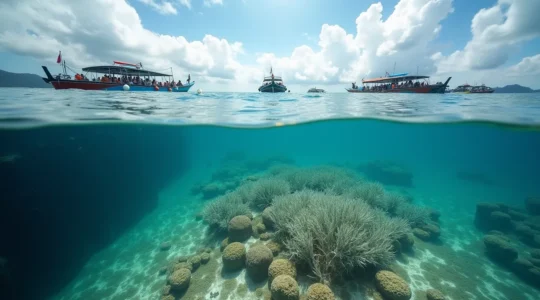
Why Does Mass Tourism Threaten the Philippine Ecosystems More Than You Think?
True sustainable travel in the Philippines goes beyond reusable straws; it requires actively challenging the tourism model that harms local communities and ecosystems. Many “eco-tours” are a form of greenwashing that exploit both wildlife and local guides. The most impactful…
Read more