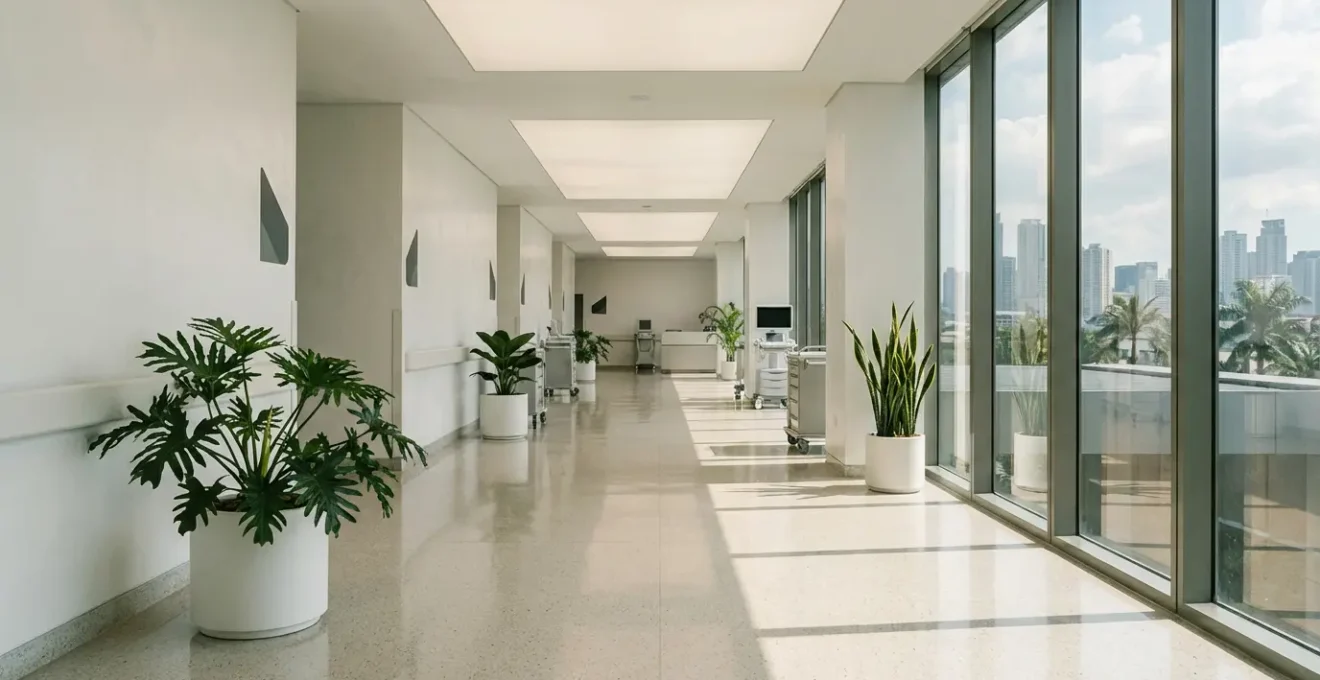
Manila’s affordable, high-quality medical care isn’t a coincidence; it’s the result of an ecosystem combining US-standard training and accreditation with the Philippines’ unique economic structure.
- World-renowned accreditation bodies like the Joint Commission International (JCI) ensure “accreditation parity” with top US hospitals.
- A significant portion of Filipino medical professionals are trained in the US, creating a deep “human capital pipeline” of expertise that returns to the Philippines.
Recommendation: Focus on JCI-accredited facilities to guarantee you receive care that meets global standards while benefiting from the structural cost advantages.
The sticker shock of a US medical bill is a familiar story. For many, the cost of quality healthcare has become a source of significant financial stress, prompting a search for viable alternatives. This search often leads to medical tourism, a rapidly growing sector where patients travel abroad for procedures. The Philippines, and Manila in particular, has emerged as a leading destination, but a lingering question often gives potential visitors pause: how can the quality possibly be the same when the price is so dramatically different?
Many articles will offer simple reassurances about English-speaking doctors and modern buildings. While true, these are surface-level observations. They fail to address the core concern of a medical tourist, which is a question of trust and standards. The real answer lies not in simple cost-cutting, but in understanding the fundamental economic and educational “ecosystem arbitrage” that exists. The Philippine medical tourism market is projected to grow substantially, with a market size of $1.5 billion in 2024 alone, a testament to its increasing global trust.
This guide moves beyond the platitudes. We will dissect the systemic reasons—from international accreditation parity to the human capital pipeline from the US—that allow Manila to offer this unique value proposition. The key is recognizing that the savings come from a different cost structure (labor, real estate, insurance), not from compromising on the quality of care, equipment, or expertise. As a prime example, leading institutions like The Medical City in Manila have consistently proven their adherence to global benchmarks, which in 2024 achieved its 7th consecutive JCI accreditation, the same standard applied to top-tier US hospitals. This article will provide the comparative insights and practical advice needed to navigate a medical trip to Manila with confidence, covering everything from the healthcare itself to the nuances of daily life that ensure a comfortable stay.
To help you navigate this comprehensive overview, this article breaks down the key aspects of living in the Philippines during your medical journey. The following sections address the practical questions and strategic considerations every medical tourist should be aware of, from daily logistics to long-term planning.
Summary: A Medical Tourist’s Comprehensive Guide to Life in Manila
- Where to Find US Grocery Brands When You Are Homesick?
- The Mistake of Assuming Condo Fire Codes Are Strictly Enforced Everywhere
- International School vs. Local Private School: Is the Tuition Gap Justified?
- Citibank or HSBC: Which International Bank Has Better Presence in PH?
- Tipping Etiquette: When to Tip Like an American and When to Hold Back?
- The Risk of Underestimating Inflation in Major Philippine Cities
- When to Apply for a Long-Stay Visa Before Your Trip Begins?
- Why Are Malls the Center of Community Life in the Philippines?
Where to Find US Grocery Brands When You Are Homesick?
While recovering or settling in, the comfort of familiar food can be a significant morale booster. Manila’s cosmopolitan nature means you’re never too far from the tastes of home, but you need to know where to look. Standard local supermarkets will carry some international products, but for a true American-style grocery run, your best bets are membership clubs like S&R Membership Shopping or Landers Superstore. These are the direct Filipino equivalents of Costco, offering a vast selection of imported US brands, from Kraft Mac & Cheese and Skippy peanut butter to USDA-grade steaks and Kirkland Signature products.
For more accessible, non-membership options, the “gourmet” or “marketplace” versions of major supermarket chains like Rustan’s Supermarket, The Marketplace, and SM Supermarket’s “Snacks and Treats” sections have dedicated aisles for imported goods. While a home-cooked diet using local ingredients is incredibly affordable, be prepared for a significant price jump for imported comforts. An expat guide estimates that an import-heavy diet can cost between $400 and $500 per month, compared to a budget of $150-$250 for cooking with primarily local goods. This premium is the cost of logistics, not a lack of availability.

These stores are more than just places to buy food; they are cultural touchstones for the expat community. Planning a weekly or bi-weekly trip to one of these locations can be a comforting routine during your stay. It’s a small but important way to maintain a sense of normalcy and comfort while navigating a new environment during your medical journey.
The Mistake of Assuming Condo Fire Codes Are Strictly Enforced Everywhere
When selecting accommodation for a medical stay, safety is paramount. Manila boasts a skyline filled with modern condominium buildings that offer excellent amenities. However, it is a critical mistake to assume that all buildings adhere to the same rigorous safety standards, particularly concerning fire codes and maintenance. While the Philippines has a comprehensive Fire Code, the strictness of its enforcement can vary between property management companies.
High-end developers with strong international reputations (such as Ayala Land Premier, Rockwell Land, or Shang Properties) typically have an excellent track record for maintenance and safety compliance. They understand their market includes discerning expatriates and medical tourists who prioritize security. In contrast, some other buildings may cut corners on regular maintenance for systems like fire alarms, sprinklers, and emergency generators. The risk is not necessarily in the initial construction but in the ongoing upkeep.
Therefore, personal due diligence is non-negotiable. Before signing a lease, especially for a multi-month stay, you must act as your own safety inspector. This proactive approach provides peace of mind, ensuring your chosen residence is a sanctuary for recovery, not a source of potential risk. The following checklist outlines the key points to verify during a site visit.
Your Condo Safety Assessment Plan
- Elevator & Generator Logs: Check the condition and date of elevator maintenance certificates posted in the lobby. Observe the frequency and documentation of generator testing schedules.
- Plumbing & Structural Integrity: Look for visible water damage from plumbing issues on walls and ceilings in common areas and inside the unit.
- Staff Professionalism: Assess the professionalism and attentiveness of building security and maintenance staff. A well-trained staff is often a sign of good management.
- Fire Safety Equipment: Verify the accessibility and condition of fire exits on your floor—ensure they are not blocked. Check if fire extinguishers in the hallways have current inspection tags.
- Official Compliance: Request to see the building’s official fire safety compliance certificates from the Bureau of Fire Protection (BFP). A transparent management will provide this readily.
International School vs. Local Private School: Is the Tuition Gap Justified?
For medical tourists planning a longer stay that involves family, schooling becomes a major consideration. Manila offers a tiered system of private education, and the significant cost difference between top international schools and elite local private schools can be confusing. The tuition gap is indeed justified, but the “better” choice depends entirely on your long-term goals and your children’s needs.
International schools like the International School Manila (ISM), British School Manila (BSM), or Brent International School operate on a global curriculum (like the International Baccalaureate or a US-based system). Instruction is entirely in English, and the student body is a mix of expatriates from around the world. This environment is ideal for families who plan to move to another country afterward, as it ensures a seamless educational transition. The high tuition funds world-class facilities and a faculty of internationally recruited teachers. The downside can be a transient community, as many families are in the Philippines for short-term assignments.

Conversely, top-tier local private schools such as Xavier School, Immaculate Conception Academy, or Ateneo de Manila University’s grade school offer an exceptional education at a fraction of the cost. They provide deep integration into Philippine society, fostering local connections and cultural understanding. While the curriculum is rigorous and often bilingual (English and Filipino), it is geared towards the Philippine university system. This path is excellent for families considering a permanent or very long-term stay who want their children to build a strong local network. The following table breaks down the key differences.
| School Type | Annual Tuition Range | Key Benefits | Considerations |
|---|---|---|---|
| International Schools (ISM/BSM/Brent) | $12,000-$25,000 | Global curriculum, international network, English-medium instruction | High cost, transient community |
| Top Local Private Schools | $2,000-$5,000 | Deep local connections, Philippine society integration, quality education | Filipino/English mix, local curriculum |
| Progressive/Specialized Local | $3,000-$8,000 | STEM/Arts focus, innovative methods, cultural integration | Varying accreditation standards |
Citibank or HSBC: Which International Bank Has Better Presence in PH?
For seamless international fund transfers and managing finances in your home currency, having an account with a global bank is a logical step. When comparing Citibank and HSBC in the Philippines, the question of “better presence” has evolved. Historically, both had a strong physical branch network in Metro Manila’s business districts. However, recent strategic shifts have changed the landscape. Citibank, for example, has sold its consumer banking business in the Philippines to a local bank, UnionBank, which now services its accounts.
While you can still leverage their international networks for transfers, focusing solely on these two banks misses the bigger picture of modern Philippine finance. The optimal strategy for an expat or medical tourist is not to pick one bank, but to create a three-tiered banking system. This approach provides both global connectivity and local convenience.
The three essential components are:
- An International Bank: Maintain your existing Citibank or HSBC account in your home country. This will serve as your primary vehicle for transferring larger sums of money (in USD or your home currency) into the Philippines with lower fees than a standard wire transfer.
- A Top-Tier Local Bank: Open an account with a leading domestic bank like BDO (Banco de Oro) or BPI (Bank of the Philippine Islands). Their key advantage is an enormous network of ATMs and branches across the entire country, making cash withdrawals and local transactions effortless. They also have robust online and mobile banking apps.
- A Digital Wallet: It is impossible to overstate the importance of getting a GCash account. This mobile wallet app has become the de facto standard for cashless transactions in the Philippines. From paying for coffee and groceries to settling utility bills and paying for taxi rides, GCash is ubiquitous and essential for daily life.
Tipping Etiquette: When to Tip Like an American and When to Hold Back?
Tipping is one of the most common sources of cultural anxiety for American visitors in the Philippines. The US has a strong, percentage-based tipping culture that is largely absent in Asia. Applying American standards across the board can come across as ostentatious, while not tipping at all can feel impolite. The key is to understand the local context: tipping is appreciated but generally not expected, especially when a service charge is already included.
In most mid-range to high-end restaurants, you will notice a 10% service charge (SC) automatically added to your bill. This amount is distributed among the entire staff. In this situation, no additional tip is required. However, if the service was truly exceptional, leaving an extra 20 to 50 pesos (about $0.40 to $1) in cash on the table is a kind and well-received gesture. It is seen as a personal thank you directly to your server, separate from the mandatory SC.
For services without a formal bill, the rules are different. For a taxi or a ride-sharing service like Grab, rounding up the fare to the nearest 20 or 50 pesos is common practice. For food delivery riders, a tip of 20-50 pesos is standard, but it’s customary to give more (up to 100 pesos) during heavy rain or for late-night deliveries as a sign of appreciation for the difficult conditions. Other service providers, like hotel bellhops or valets, appreciate a small tip of 20-50 pesos for their assistance. Specific scenarios, such as holiday tipping for regular staff, are covered in the FAQ section at the end of this guide.
The Risk of Underestimating Inflation in Major Philippine Cities
When budgeting for a medium or long-term stay in Manila, it’s a common mistake to rely solely on the official Consumer Price Index (CPI) for inflation. While the Philippines has a managed inflation rate, an expat’s personal inflation rate is often significantly higher. This is because a typical expatriate or medical tourist’s spending is heavily weighted towards categories that experience more volatile price increases: imported goods, high-end housing, and electricity.
Electricity is a particularly crucial factor. The Philippines has some of the highest electricity rates in Southeast Asia. Your air conditioning unit will be your biggest utility expense, and a one-bedroom apartment with heavy A/C use can incur costs of $100 to $150 per month. Any fluctuation in global energy prices is felt directly on these bills. Similarly, rent in prime, secure areas like Bonifacio Global City (BGC) or Makati’s central business district is priced at a premium and subject to annual increases.
To avoid financial surprises, a proactive financial strategy is necessary. Rather than being a passive observer of costs, you need to actively hedge against both currency fluctuations (PHP/USD) and your personal inflation rate. Consider the following strategies:
- Monitor and Track: Keep a close eye on both the PHP/USD exchange rate and your own monthly spending. Track your “personal inflation rate” to see how much your specific basket of goods and services is increasing.
- Pre-payment for Rent: If your budget allows, negotiate with your landlord to pay 6 to 12 months of rent in advance. This can often lock in the current rate and protect you from annual increases during your stay.
- Budget for Increases: When planning, proactively budget for a 10-15% annual increase in major recurring costs like international school fees or condo association dues.
- Currency Flexibility: Maintain emergency funds in both a home currency (USD) account and a local PHP account to protect against unfavorable exchange rate swings.
Key Takeaways
- Manila’s medical value comes from US-standard training and accreditation combined with lower local operational costs, not from cutting corners on quality.
- Daily life for a visitor requires a hybrid approach: using both international services (for banking, familiar groceries) and local systems (digital wallets, markets) for a smooth experience.
- Understanding and respecting cultural nuances like tipping etiquette and the central role of malls as community hubs are key to integrating comfortably.
When to Apply for a Long-Stay Visa Before Your Trip Begins?
Visa strategy for the Philippines depends entirely on your intention and expected duration of stay. The country offers a flexible system that can accommodate both short-term explorers and committed long-term residents. The crucial decision is whether to arrive as a tourist and extend your stay, or to secure a long-stay visa *before* you even pack your bags.
For those “testing the waters”—perhaps for a single procedure with a few months of recovery—arriving on a tourist visa is the simplest path. Most nationalities are granted a 30-day visa-free entry, provided they have a valid passport and a confirmed outbound flight ticket. This can be extended incrementally at a local Bureau of Immigration office for up to 36 months. This method offers maximum flexibility but requires regular administrative upkeep.
However, for anyone seriously considering a long-term stay, retirement, or a multi-year medical plan, applying for a long-stay visa in advance is the superior strategy. It provides stability, eliminates the need for constant extensions, and grants privileges like multiple entries without hassle. For retirees, the flagship option is the Special Resident Retiree’s Visa (SRRV).
Case Study: The Special Resident Retiree’s Visa (SRRV)
The SRRV is the Philippines’ premier retirement visa, managed by the Philippine Retirement Authority. It’s designed for foreign nationals seeking indefinite stay. The SRRV Classic, for those 50 and older, requires a monthly pension of $800 for singles or $1,000 for couples, alongside a bank deposit. Another popular option, the SRRV Smile (for ages 35+), has no pension requirement but necessitates a $20,000 bank deposit. This visa is a powerful tool, granting multiple-entry privileges and the right to live, work, and study in the Philippines indefinitely.
The right approach varies by profile. A digital nomad will have different needs than a family with children who require stability for school enrollment. The table below outlines a recommended strategy based on common profiles.
| Profile | Recommended Strategy | Key Considerations |
|---|---|---|
| Digital Nomad Testing Waters | Tourist visa with extensions (30-day increments) | Must have outbound flight within 30 days upon arrival; can extend up to 3 years |
| Retiree (5+ years) | SRRV before arrival | Provides stability, indefinite stay, multiple entry privileges |
| Family with Children | Work visa through employer or SRRV | Needed for school enrollment stability; children can be included as dependents |
Why Are Malls the Center of Community Life in the Philippines?
For a first-time visitor from a Western country, the role of the mall in the Philippines can be astonishing. They are not merely commercial spaces for shopping; they are the de facto town squares, the epicenters of community life. Understanding this phenomenon is key to understanding modern Filipino culture. This centrality is driven by a convergence of three factors: climate, convenience, and security.
In a tropical country with high heat and humidity year-round, the air-conditioned, climate-controlled environment of a mall offers a welcome escape. It provides a comfortable public space where people can gather, socialize, and conduct errands without battling the elements. This climatic reality cannot be overstated. Beyond comfort, malls have evolved into what can be described as “integrated lifestyle hubs.” They are master-planned to be one-stop solutions for nearly every aspect of daily life, a fact highlighted by urban planners.
Malls serve as one-stop-shops for life’s essential errands, housing not just retail but also government satellite offices for passports and driver’s licenses, major banks, utility payment centers, and even chapels.
– Urban Planning Analysis, Manila Development Patterns Study
Finally, in the sprawling and sometimes chaotic urban landscape of Metro Manila, malls offer a predictable, clean, and secure environment. With private security at every entrance, well-maintained facilities, and ample parking, they provide a sense of order and safety that can be lacking on the streets outside. For families with children, it’s a safe space to let kids play. For a medical tourist, it’s a reliable place to find a clean restroom, a reputable restaurant, or a pharmacy. This function as a secure public realm makes the mall an essential and beloved institution in the Philippines.
To ensure your medical journey and extended stay in the Philippines are as smooth and successful as possible, the next logical step is to focus your planning on JCI-accredited facilities and perform thorough due diligence on your accommodation, using the frameworks provided in this guide.
Frequently Asked Questions on Tipping and Service Etiquette
Should I tip if there’s already a service charge on the bill?
Service charges (typically 10%) are common in restaurants. Additional tipping is not expected but a small amount (20-50 pesos) for exceptional service is appreciated.
What’s appropriate for the condo guard at Christmas?
Christmas bonuses for regular service staff like guards are customary. A “13th month” gesture, which could be an amount equivalent to one month’s worth of your usual tips or a flat sum of 500-1000 pesos, is a standard and much-appreciated sign of gratitude.
How much should I tip food delivery riders?
A tip of 20-50 pesos is standard, but consider tipping more (50-100 pesos) during heavy rain or for late-night deliveries as a gesture of appreciation for the extra effort in difficult conditions.