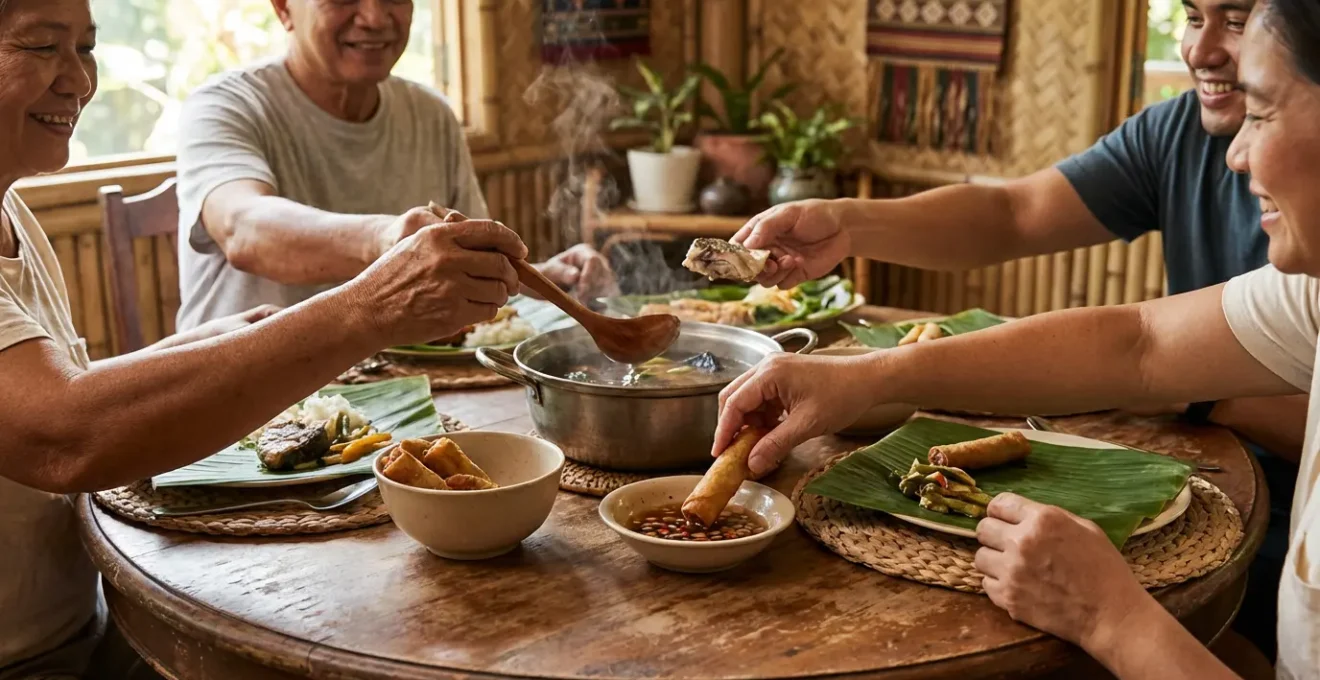
The prominent sourness in Filipino cuisine is far more than a preservation technique for a tropical climate. It is a deliberate gastronomic philosophy designed to stimulate the appetite, provide a sharp counterpoint to rich and fatty flavors, and most importantly, empower the diner. Through the tradition of sawsawan (dipping sauces), each person becomes a co-creator of their meal, using acidity to customize every bite to their personal preference against the neutral canvas of rice.
For any culinary explorer first venturing into Filipino food, a singular question often emerges: why the profound and pervasive sourness? While neighboring Southeast Asian cuisines celebrate a symphony of sweet, spicy, and savory, the Philippine archipelago has a distinct affinity for asim (sourness). Dishes like the world-famous Adobo, braised in vinegar and soy sauce, or the beloved Sinigang, a tamarind-based sour soup, are not exceptions but cornerstones of the national palate. The common explanation points to the tropical climate, where acidic agents like vinegar historically served as natural preservatives before refrigeration. This is true, but it’s only the beginning of the story.
To dismiss this flavor profile as a mere function of food safety is to miss the genius of the Filipino culinary mindset. The sourness is not a background note; it is the protagonist. It serves a crucial gastronomic purpose: to cut through the richness (umay) of fatty meats and fried foods, to cleanse the palate, and, most critically, to stimulate the appetite for the main event: rice. Understanding the role of asim requires looking beyond the cooking pot and onto the dining table, where the true magic of personalization and culinary participation happens.
This article decodes the archipelago’s unique flavor profile. We will analyze the foundational role of rice, explore the interactive art of dipping sauces (sawsawan), and understand how cultural practices like communal eating (kamayan) and frequent snacks (merienda) are all intrinsically linked to this love for sour tastes. By examining regional differences and culinary debates, we will reveal that sourness in the Philippines is not a simple characteristic, but an active, intelligent, and deeply cultural tool.
This guide will navigate you through the foundational elements of the Filipino palate, explaining not just what is eaten, but how and why. From the rice bowl to the communal feast, you will discover the logic and delight behind every sour, savory bite.
Table of Contents: A Journey Through the Filipino Palate
- Unli-Rice: Why Is “Rice is Life” a Literal Motto in the Philippines?
- Sawsawan Guide: How to Mix Vinegar, Soy Sauce, and Chili Like a Local?
- Kamayan: How to Eat With Your Hands Without Making a Mess?
- Merienda: Why Do Filipinos Eat Five Times a Day?
- When to Eat Seafood: Lunch vs. Dinner for the Freshest Catch?
- The Risk of Refusing Food Offered by a Filipino Host
- Why Is Food in Bicol So Much Spicier Than in Manila?
- Pampanga or Negros: Which Province Is the True Culinary Capital?
Unli-Rice: Why Is “Rice is Life” a Literal Motto in the Philippines?
To understand Filipino food, one must first understand rice. It is not a side dish; it is the canvas upon which all other flavors are painted. The phrase “Rice is Life” is not hyperbole. It is a statement of fact reflected in consumption, economics, and language. The Filipino word for “to eat,” kain, is implicitly understood to mean eating with rice. A meal without it is considered a mere snack. This rice-centricity is the primary driver of the cuisine’s strong flavor profiles. Plain, steamed rice requires a powerful companion—an ulam (main dish) that is intensely salty, rich, and, crucially, sour enough to stimulate the appetite and encourage another spoonful.
The numbers confirm this dependency. Recent data shows Filipinos consume 194 kg per person annually, placing them among the highest in the world. On a national scale, the demand is staggering. According to the US Department of Agriculture, the Philippines consumed about 16 million metric tons of rice in the 2022/2023 period. This immense demand makes rice a matter of national security and social stability, far beyond simple nourishment.
The government’s deep involvement illustrates this. Programs are consistently launched to ensure rice remains affordable. A recent example is the P29 rice program, which provides high-quality, subsidized rice to the country’s most vulnerable sectors. This initiative underscores a fundamental principle: the bland, starchy nature of rice is not a flaw but a feature. It is the perfect, neutral backdrop for the robust flavors of dishes like Sinigang or Adobo, allowing the gastronomic counterpoint of sourness to shine and make the entire meal compelling from the first bite to the last.
Sawsawan Guide: How to Mix Vinegar, Soy Sauce, and Chili Like a Local?
If rice is the canvas, then sawsawan (dipping sauces) are the personal paint palette that allows every Filipino to become an artist at the dinner table. This is perhaps the most critical concept for understanding the function of sourness. Unlike many cuisines where the dish arrives from the kitchen as a finished product, a Filipino meal is often a starting point. The final flavor balance is achieved by the diner through their own unique mixture of condiments. The most common components are vinegar (suka), soy sauce (toyo), calamansi (a small native citrus), fish sauce (patis), and chilies (sili).
This practice of flavor customization transforms eating from a passive act into an interactive experience. A piece of fried fish (pritong isda) might be dipped in a sharp vinegar with crushed garlic. A grilled pork belly (inihaw na liempo) might be paired with a mix of soy sauce, calamansi, and chopped onions. The choice is entirely up to the individual, allowing them to adjust the levels of saltiness, sourness, and spice with every single bite.
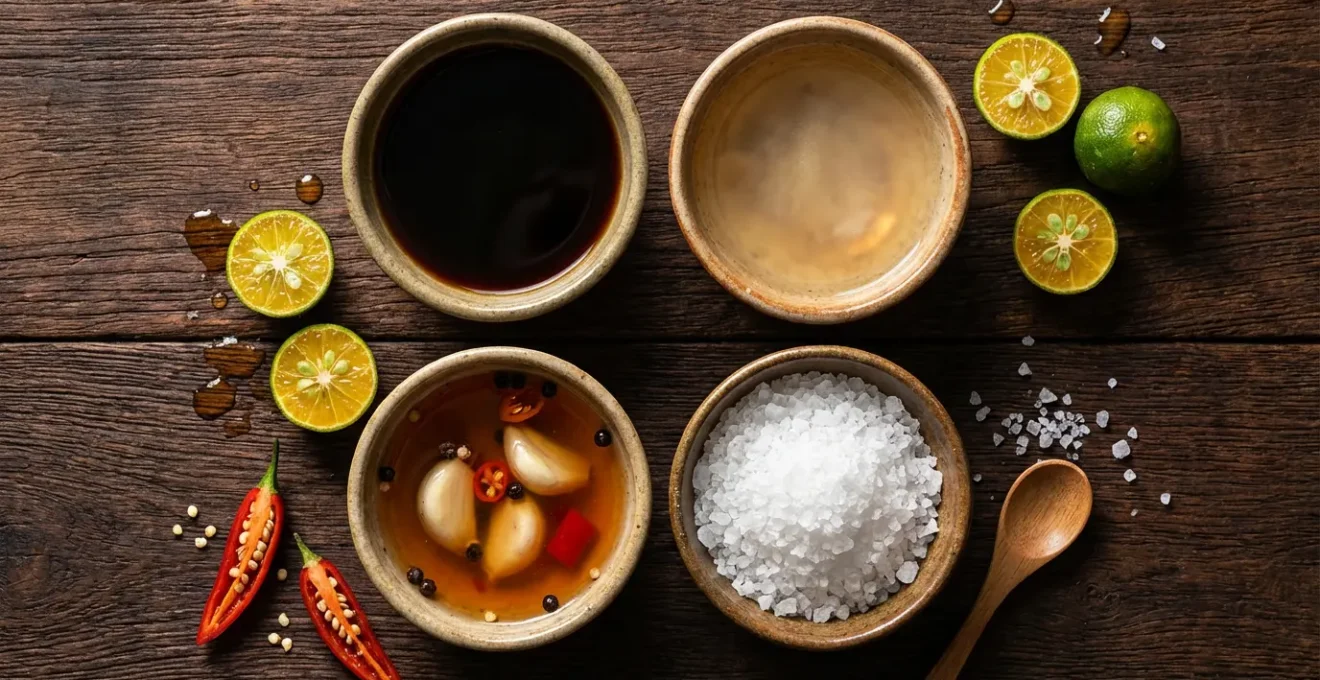
This philosophy of culinary participation is central to the dining experience. As culinary historian Pia Lim-Castillo explained to National Geographic, it is a defining characteristic of the cuisine. She notes:
The ritual of sawsawan (dipping sauce) is an important part of Filipino meals. By adjusting the sauce, the eater partakes in the cooking.
– Pia Lim-Castillo, National Geographic Travel
Therefore, the sourness is not just in the main dish; it’s offered on the side as a tool. It empowers the diner to cut through fat, amplify flavor, or simply create the exact taste they crave at that moment. The ubiquitous presence of vinegar and calamansi on the table is the ultimate expression of this democratic and personalized approach to food.
Kamayan: How to Eat With Your Hands Without Making a Mess?
The practice of kamayan, or eating with one’s hands, offers the most profound insight into the Filipino relationship with food. More than just a traditional eating method, it is a tactile and communal experience that directly connects the diner to their meal. The food is typically served on a large banana leaf, with rice forming a long bed down the center, flanked by various ulam. In this setting, the hands become the primary utensil, and the techniques for eating are both practical and artful. The key is to use only the fingertips of one hand, never the palm, to deftly mix a small portion of rice with a piece of the main dish and its accompanying sauce.
This method enhances the principle of culinary participation introduced with sawsawan. The diner physically feels the texture of the food and has complete control over the ratio of rice to ulam in every mouthful. The thumb is used to gently push the perfectly formed morsel into the mouth. This is not a messy, haphazard affair but a graceful and efficient skill passed down through generations. The banana leaf itself is not merely a plate; when hot rice is placed upon it, it releases a subtle, earthy aroma that adds another layer of flavor to the meal.
For those new to the practice, mastering the technique is key to fully appreciating the experience without creating a mess. It involves a specific set of motions designed for cleanliness and efficiency.
Your Action Plan: Mastering the Art of Kamayan
- Form rice into a small, compact ball using only your fingertips; avoid using your palm to prevent sticking.
- Use a “smushing” motion to mix the rice with a small amount of sauce or ulam directly on the leaf, achieving your ideal starch-to-flavor ratio.
- Pour any shared sawsawan onto your personal space on the banana leaf before dipping; never dip food directly into communal bowls.
- Use your thumb to gently push the ball of food from your fingertips into your mouth, keeping the rest of your hand clean.
- Respect the communal space by eating only from your designated section of the banana leaf to maintain hygiene.
While modern settings may offer utensils, engaging in traditional kamayan reveals the cuisine’s essence: it’s a hands-on, communal, and deeply personal affair where the diner is in full control of crafting the perfect bite.
Merienda: Why Do Filipinos Eat Five Times a Day?
The Filipino eating schedule itself is another clue to understanding the role of sourness. Rather than three large meals, the day is typically structured around five eating occasions: breakfast (agahan), a morning snack (merienda), lunch (tanghalian), an afternoon snack (merienda again), and dinner (hapunan). This frequent eating pattern is not about indulgence but about maintaining energy levels in a hot, tropical climate. The merienda meals are essential bridges, preventing hunger pangs and providing a social or solitary moment of pause.
Interestingly, sour flavors play a prominent role in these in-between meals. While sweet snacks are common, many traditional merienda options are savory and sour. This is because sourness acts as an effective appetite stimulant and a form of refreshment. In the heat, a sharp, acidic flavor can be more invigorating than something heavy or overly sweet. Research has noted that sour foods are a preferred refreshment in tropical climates, a principle Filipinos have integrated into their daily routine for centuries. This explains why a snack of green mango with salty shrimp paste (bagoong) or a bowl of sour rice porridge (lugaw) with calamansi is so popular.
These sour snacks serve to reset the palate and prepare it for the next main meal, ensuring that the appetite remains robust throughout the day. The schedule highlights how different flavors are deployed for specific functions at different times.
| Time | Meal Name | Common Sour/Savory Options |
|---|---|---|
| 10:00 AM | Morning Merienda | Green mango with bagoong, calamansi juice |
| 3:00 PM | Afternoon Merienda | Tokwa’t baboy (tofu and pork in vinegar), lugaw with calamansi |
| 8:00 PM | Evening Snack | Leftover sinigang, vinegar-dipped empanadas |
The merienda tradition demonstrates that the Filipino affinity for sourness is not confined to lunch and dinner. It is a constant thread woven through the entire day, a versatile tool used for refreshment, appetite stimulation, and pure gustatory pleasure.
When to Eat Seafood: Lunch vs. Dinner for the Freshest Catch?
As an archipelago with over 7,000 islands, the Philippines has an intimate relationship with the sea, and seafood is a staple. The methods of preparing fish and shellfish perfectly illustrate the dual function of sourness: as a “cooking” agent and as a preservation method, with the choice often dictated by the freshness of the catch. The timing of when a fish is caught directly influences how it will be prepared, showcasing a deep, practical understanding of food science.
The freshest catch, often from the morning’s haul, is reserved for kinilaw. This is the Filipino version of ceviche, where raw fish is “cooked” not by heat, but by the acid of vinegar or calamansi juice. The acid denatures the proteins in the fish, turning the flesh opaque and firm. This preparation requires the absolute freshest ingredients, as the delicate flavor of the fish is the star. Traditionally, kinilaw is a lunchtime dish, enjoyed just hours after the fish has left the water, showcasing the peak of its quality.
For fish that is not consumed immediately or is from a later catch, other sour-based preparations are used. Across the country, these dishes ensure nothing goes to waste while delivering the signature Filipino flavor. As noted by VERA Files in a feature on asim, sour-flavored dishes include paksiw (fish simmered in vinegar, ginger, and spices) or pinamalhan, a “dry” version where the liquid has almost completely evaporated. In these dishes, the vinegar acts as both a flavoring and a preservative, allowing the fish to be enjoyed later, perhaps for dinner or even the next day. This demonstrates a clear culinary logic: the freshest seafood is celebrated with a quick acid cure for lunch, while other catches are preserved and flavorfully transformed with a longer vinegar simmer for dinner.
The Risk of Refusing Food Offered by a Filipino Host
In the Philippines, food is the primary language of hospitality, generosity, and community. To offer food is to offer welcome and care. Understanding this cultural context is crucial for any visitor, as the social implications of accepting or refusing a meal are significant. When a Filipino host invites you to eat, they are not merely making a polite suggestion; they are extending a genuine piece of themselves and their home. The table is often laden with more food than can possibly be eaten, a symbol of the host’s generosity and their desire to ensure every guest feels honored and well-fed.
To refuse this offer, especially without a very compelling reason, can be perceived as a rejection of their hospitality. It is often interpreted as a slight, suggesting that the guest finds the food or the host’s company undesirable. This social pressure to partake is known as pakikisama, the cultural value of maintaining smooth interpersonal relationships. Even if you are not hungry, the polite and expected response is to at least take a small portion to show appreciation. A common phrase you’ll hear is “Kain na!” (“Let’s eat!”), an enthusiastic command rather than a question.
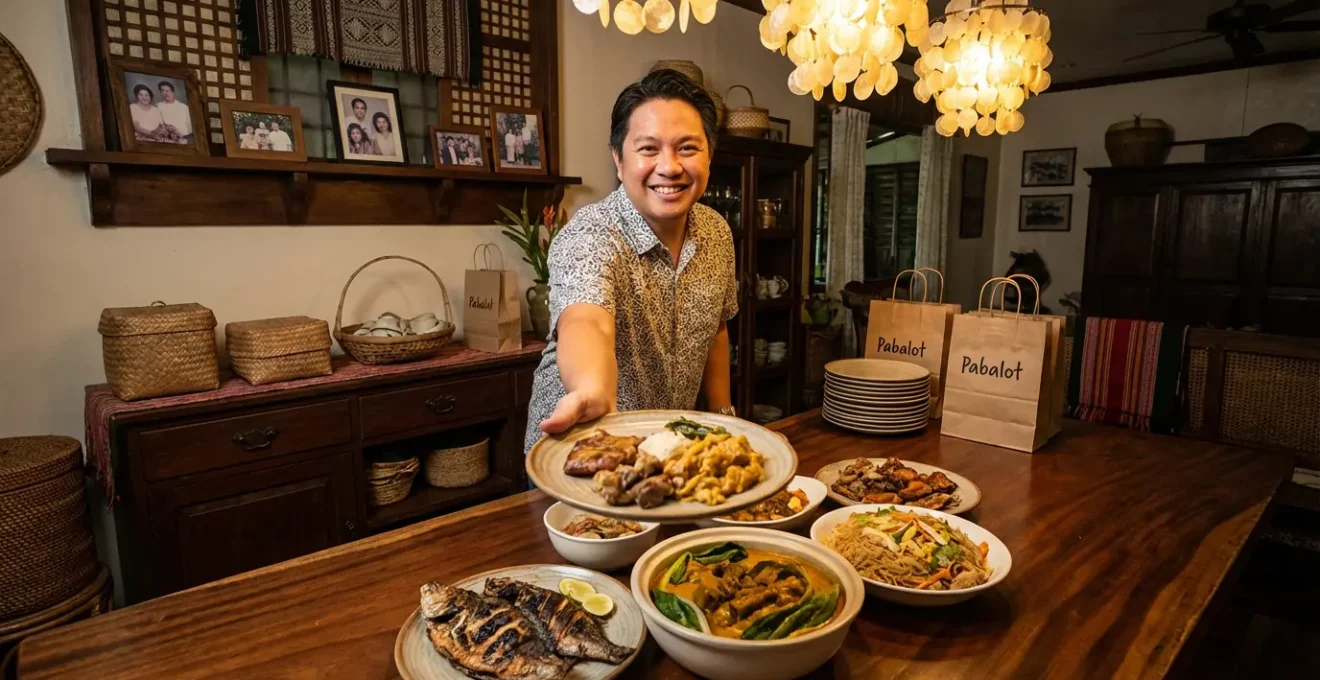
This dynamic is amplified by the practice of pabalot, where guests are expected to take home leftovers. The host insists, packing containers with food to extend their care beyond the duration of the visit. This entire ritual of offering, partaking, and taking home is a powerful social bond built around the shared experience of a meal. Refusing to participate can inadvertently create a social barrier, which is why navigating a Filipino gathering often means eating a little bit of everything offered, no matter how full you are.
Why Is Food in Bicol So Much Spicier Than in Manila?
While sour and salty are the dominant flavors across most of the Philippines, there are important regional exceptions that prove the rule. The most prominent of these is the Bicol Region in southeastern Luzon. Bicolano cuisine is famous for its liberal use of two ingredients that are less common elsewhere: coconut milk (gata) and local chilies (siling labuyo). This gives their food a unique profile that is simultaneously creamy, rich, and intensely spicy. The iconic dish Bicol Express, a stew of pork, coconut milk, shrimp paste, and a formidable amount of chilies, is a world away from the vinegar-based Adobo of Manila.
This regional variation is not an accident but a product of geography and agriculture. The Bicol region is lush with coconut trees and has a long history of cultivating chili peppers, possibly influenced by the Galleon Trade with Mexico. Over centuries, these ingredients became the cornerstone of the local culinary identity. The heat from the chilies is not just for show; it serves to cut through the richness of the coconut milk, performing a similar function to the sourness of vinegar in other regions.
The distinctiveness of Bicolano and another regional cuisine highlights an important fact about the national palate. According to culinary research, spices and heat don’t figure as prominently in traditional Filipino cuisine except in Bicol and Muslim Mindanao. This makes the general Filipino flavor profile stand in contrast not only to its neighbors like Thailand and Malaysia but also to specific regions within its own borders. By understanding where spice thrives, we can better appreciate why the rest of the country has so wholeheartedly embraced asim as its primary gastronomic counterpoint.
Key Takeaways
- Filipino cuisine’s sourness is a deliberate philosophy, not just a preservation method.
- Rice is the neutral foundation that demands strong, appetite-stimulating flavors like sour and salty.
- The practice of sawsawan (dipping sauces) empowers the diner to customize every bite, making them an active participant in their meal.
Pampanga or Negros: Which Province Is the True Culinary Capital?
The debate over the Philippines’ true culinary capital often centers on two provinces: Pampanga in Luzon and Negros (specifically Bacolod) in the Visayas. Both have immensely rich food traditions, but they showcase different philosophies, even within the overarching sour-centric framework. Analyzing their signature dishes reveals the depth and sophistication of regional Filipino cuisine. Pampanga is often hailed as the “Culinary Capital” due to the complexity and labor-intensive nature of its dishes. Kapampangan cooking is known for not wasting any part of an animal, giving rise to creations like Sisig—a sizzling dish of chopped pig’s head, seasoned with calamansi and chilies.
Negros, on the other hand, is celebrated for a more ingredient-focused simplicity that lets the quality of its produce shine. As the “Sugar Bowl” of the Philippines, its cuisine often features a delicate balance of sweet and savory. Its most famous creation, Chicken Inasal, is a perfect example. The chicken is marinated in a mixture of calamansi, vinegar, lemongrass, and annatto oil, then grilled to perfection. The sourness is a key component, but it’s a bright, citrusy acidity that complements the smoky char of the grill. Even the globally acclaimed sour soup, Sinigang, which TasteAtlas named the world’s best soup in 2021, has distinct regional versions that highlight this debate.
The differences are most apparent in their signature sour dishes and the agents they use to achieve that flavor. This friendly rivalry showcases the incredible diversity within Filipino food.
| Aspect | Pampanga | Negros |
|---|---|---|
| Signature Sour Dish | Sinigang with guava (sweet-sour) | Cansi with batuan fruit |
| Culinary Philosophy | Complex, labor-intensive techniques | Ingredient-focused simplicity |
| Famous Creation | Sisig (sour-salty pork) | Chicken Inasal (calamansi-vinegar marinade) |
| Souring Agents | Guava, tamarind, vinegar | Batuan, calamansi, local citrus |
Ultimately, there is no single answer. Pampanga represents culinary craftsmanship and complexity, while Negros champions the beauty of high-quality, local ingredients. Both, however, masterfully wield sourness not as a monolithic flavor, but as a nuanced tool to create unforgettable dishes, proving that the heart of Filipino cuisine is both diverse and deliciously sour.
Now that you understand the philosophy behind the Filipino palate, the next logical step is to experience it. By applying these insights, you can approach your next Filipino meal not just as a diner, but as an informed culinary participant, ready to mix your own sawsawan and craft your perfect bite.
Frequently Asked Questions on Filipino Food Culture
Why use banana leaves instead of plates?
The banana leaf releases subtle earthy aromas when hot rice is placed on it, and its natural oils create a non-porous surface that prevents sauces from making rice soggy.
Is it acceptable to use utensils during kamayan?
While traditional kamayan is hands-only, modern casual settings often allow spoon and fork for those uncomfortable eating with hands, though the experience differs significantly.
How do you know which section of food is yours?
In communal kamayan, food is typically arranged in rows with each person having a designated section directly in front of them, marked by natural divisions in the banana leaf.