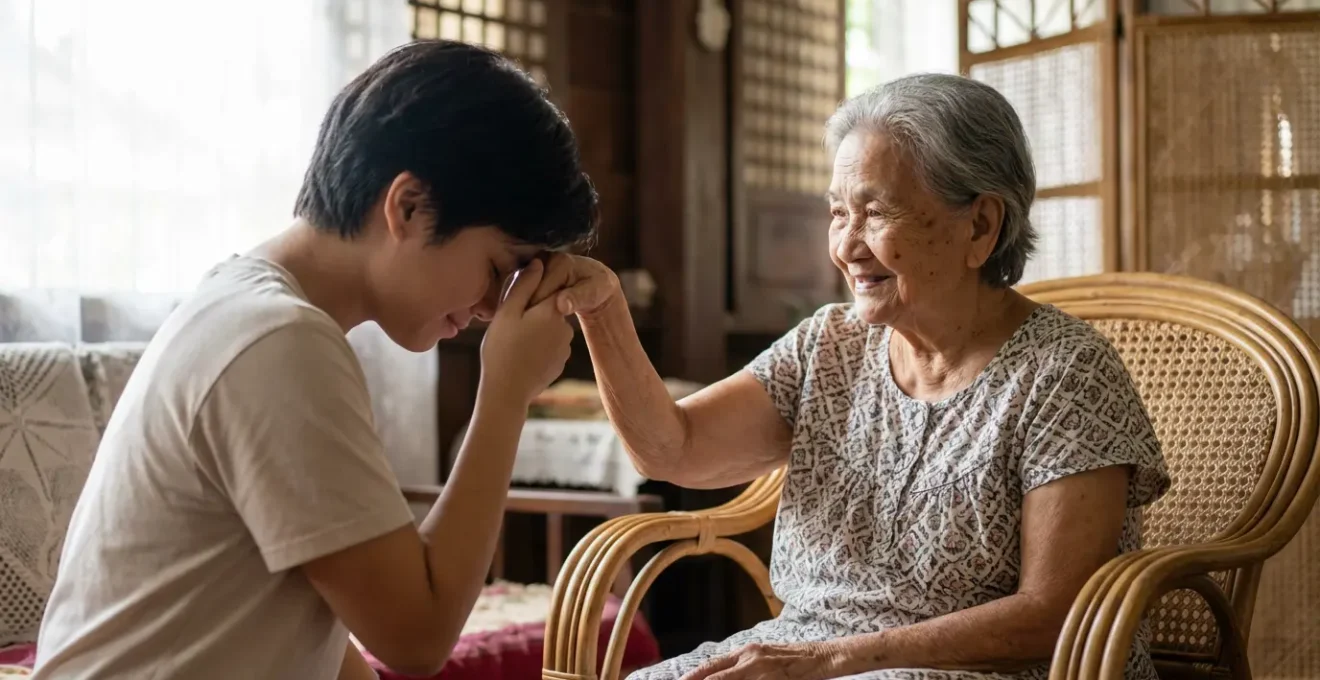
The key to genuinely showing respect in the Philippines isn’t just learning gestures, but understanding the core cultural values of group harmony (pakikisama) and saving face (hiya) that drive social interactions.
- Refusing food can inadvertently cause shame (hiya) for your host, so learning to decline gracefully is a crucial skill.
- A Filipino “yes” can mean “maybe” or “I hear you” to maintain group harmony (pakikisama), requiring you to pay attention to non-verbal cues.
Recommendation: Instead of focusing only on what to do, focus on understanding *why* Filipinos interact the way they do. This will allow you to navigate any social situation with grace and authentic respect.
For any visitor to the Philippines, the desire to be a gracious and respectful guest is paramount. You may have heard of the beautiful gesture of “Mano Po,” where one takes an elder’s hand and presses it to their forehead. It’s a profound symbol of deference that captures the nation’s deep-seated respect for its seniors. This gesture is so ingrained in the culture that it sets the Philippines apart. As cultural expert Emmanuel Abalos noted in an interview with the Voice of Vietnam:
No other cultures in Asia, in Europe or even in America, perform such a gesture of giving a sign of respect by using mano or pagmamano.
– Emmanuel Abalos, Kapisanan ng mga Brodkaster ng Pilipinas (KBP) interview with Voice of Vietnam
However, true cultural fluency goes far beyond mimicking a single action. The real key to connecting with Filipinos and showing genuine respect lies in understanding the invisible currents that shape their social landscape. These are the concepts of pakikisama (group harmony) and hiya (a complex sense of face, shame, and self-esteem). These values influence everything, from how you accept (or refuse) a meal, to the gifts you bring, and even why a “yes” might not always mean yes.
This guide will move beyond a simple list of do’s and don’ts. We will explore the “why” behind Filipino etiquette, empowering you not just to follow rules, but to understand the heart of the culture. By grasping these underlying principles, you’ll be able to navigate social situations with confidence, warmth, and the authentic respect your Filipino hosts deserve.
To help you navigate these cultural nuances, we’ve structured this guide around common situations a visitor might encounter. Each section offers practical insights rooted in a deeper understanding of Filipino values, ensuring you make a wonderful and lasting impression.
Summary: A Practical Guide to Filipino Cultural Etiquette
- Why Is “Pasalubong” Mandatory When Returning from a Trip?
- Fiesta vs. Daily Life: How Does the Vibe Change in Rural Barangays?
- The Risk of Refusing Food Offered by a Filipino Host
- Basic Tagalog Phrases: Which Ones Actually Make Locals Smile?
- When to Avoid Travel During Holy Week to Escape the Crowds?
- How to Enter an Ifugao Village Without Offending the Elders?
- The Risk of Misinterpreting “Yes” When a Filipino Means “Maybe”
- Why Are Malls the Center of Community Life in the Philippines?
Why Is “Pasalubong” Mandatory When Returning from a Trip?
The concept of pasalubong—the tradition of bringing gifts home from a trip for family, friends, and colleagues—is more than just a souvenir-shopping habit. It is a powerful expression of social connection and remembrance. For a visitor, understanding this tradition is key to grasping the Filipino emphasis on community. Forgetting pasalubong isn’t just a minor oversight; it can be interpreted as forgetting the people you left behind, a sign that the social bond has weakened.
This practice is not merely symbolic; it has a significant economic footprint. In fact, shopping accounts for approximately one-third of visitor expenditures in the Philippines, a figure heavily influenced by the cultural expectation of bringing home gifts. But the true value isn’t monetary. The gift itself can be simple—a t-shirt, a local delicacy, or a small trinket. What matters is the act of thinking of others while you were away. It says, “Even though I was gone, you were in my thoughts.”
As a guest invited to a home, arriving with a small gift or a food item to share is a wonderful gesture that aligns with the spirit of pasalubong. It shows you understand the importance of sharing and contributing to the group, immediately positioning you as a thoughtful and appreciative visitor. It is an acknowledgment that you are entering a shared space and are happy to be a part of it.
Fiesta vs. Daily Life: How Does the Vibe Change in Rural Barangays?
To understand the soul of the Philippines, one must experience the contrast between the quiet rhythm of daily life and the explosive energy of a local fiesta. In a rural barangay (village), a typical day might be defined by tranquility—the sounds of nature, the gentle pace of agricultural work, and close-knit, almost private, family interactions. It’s a life characterized by simplicity and routine.
However, when fiesta season arrives, this same quiet village undergoes a spectacular transformation. The entire community becomes an open house. Streets are adorned with colorful banderitas (bunting), music fills the air, and every home prepares a feast, ready to welcome not just neighbors, but complete strangers. The private, family-centric atmosphere dissolves into a vibrant, public celebration where the collective joy of the community takes center stage. This shift highlights a core aspect of Filipino culture: the deep-seated value of communal celebration and hospitality.
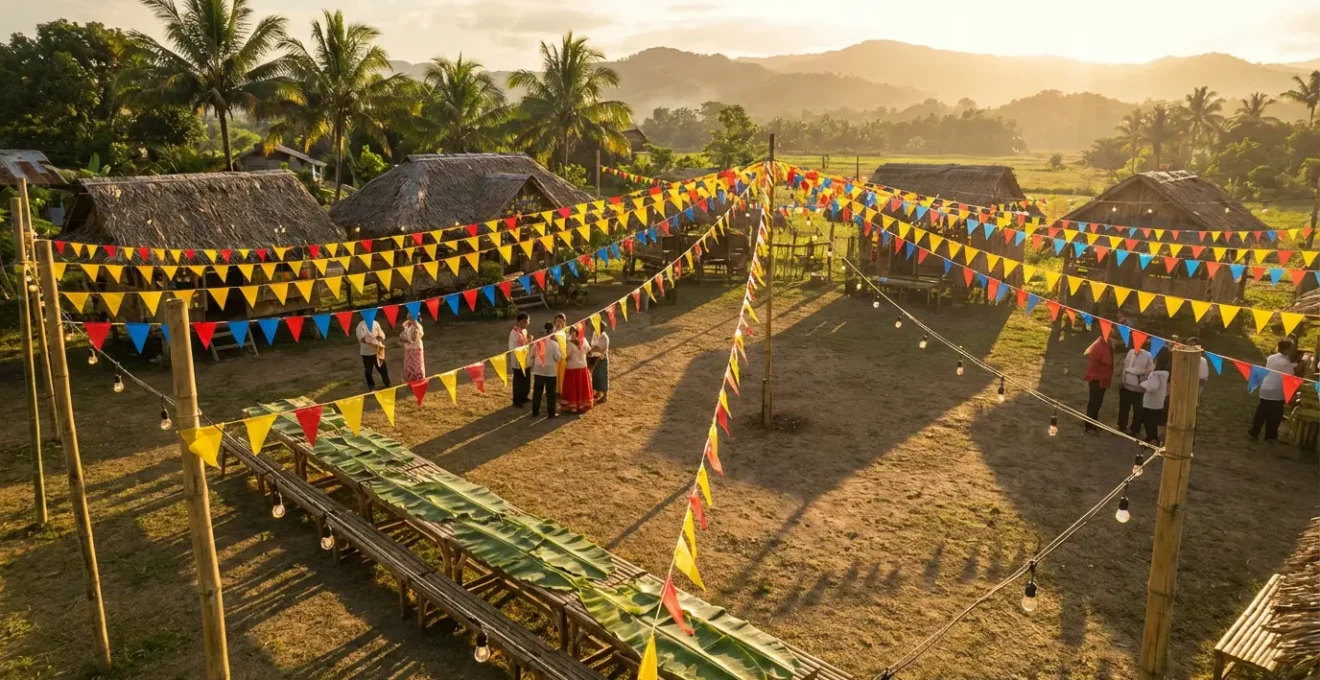
As this scene illustrates, the fiesta is not just a party; it’s the physical manifestation of the community’s spirit. It reinforces social bonds, honors patron saints, and serves as an annual reminder of shared identity and open-handed generosity. For a visitor, being present during a fiesta offers a unique window into this collective spirit. Participating, even by simply walking around and smiling, is a sign of respect for this shared cultural moment.
The Risk of Refusing Food Offered by a Filipino Host
In Filipino culture, offering food is one of the most fundamental expressions of hospitality and care. It is a social contract where the host affirms their ability and desire to provide for their guest. To refuse this offer, especially without a very good reason, is not just turning down a snack; it can unintentionally cause deep hiya (shame or loss of face) for the host. They may feel they have failed in their role as a provider or that their offering was not good enough.
This is rooted in a culture where sharing what one has is paramount, regardless of how little it may be. As noted in an analysis of Filipino practices, rice is a constant staple, and the offering and accepting of food represents a social contract. Refusing it can be seen as a rejection of the host’s generosity and a disruption of social harmony. The host’s primary goal is to make you feel welcome and comfortable, and providing food is the most direct way to do so.
So, what do you do if you are genuinely full, have allergies, or follow a strict diet? Navigating this requires immense tact and grace. An abrupt “No, thank you” is seen as rude. Instead, the goal is to honor the offer while gently declining. This shows that you appreciate the gesture, even if you cannot partake.
Your action plan: The Graceful Refusal Playbook
- Praise the food first: Always start by complimenting the appearance or smell of the food. “That looks absolutely delicious!” shows appreciation for the effort.
- Use the ‘just a little taste’ method: Accept a very small portion to honor the offer. A single bite is often enough to satisfy the social obligation.
- Explain allergies apologetically: If you have a dietary restriction, explain it gently while continuing to praise the food. “I would love to, but I’m unfortunately allergic to shrimp. It looks wonderful, though.”
- Offer to take some ‘for later’: If you are truly full, you can politely ask if you can pack a small amount to take with you. This honors the gift without forcing you to eat.
- Compliment their generosity: Regardless of whether you eat or not, always thank your host for their incredible generosity and praise their cooking skills.
Basic Tagalog Phrases: Which Ones Actually Make Locals Smile?
Many travel guides advise learning a few basic Tagalog phrases, and while this is good advice, its true value is often misunderstood. The goal isn’t to achieve fluency, but to demonstrate respect and a willingness to connect. More important than a wide vocabulary are the small, respectful particles that transform your speech: “po” and “opo.” These are markers of respect used when speaking to elders, strangers, or anyone in a position of authority. “Opo” is a respectful “yes,” while “po” can be added to the end of almost any sentence to show deference (e.g., “Salamat po” for “Thank you”).
Using “po” and “opo” immediately signals that you are making an effort to respect local customs, and this gesture is often more appreciated than flawlessly pronouncing a complex phrase. Beyond these honorifics, the most effective phrases are those that are situational and express genuine appreciation, rather than robotic textbook greetings. Complimenting a place or a meal connects you to the present moment and to the person you are with.
To a visitor, the distinction between phrases that sound natural versus those that sound like you’ve memorized a dictionary can be subtle. The following breakdown clarifies what truly creates a connection.
As this comparative analysis of Tagalog phrases shows, the emphasis should be on respect and relatability, not linguistic perfection.
| Phrases That Connect | Why They Work |
|---|---|
| ‘Po’ and ‘Opo’ | Shows immediate respect, more important than vocabulary |
| ‘Ingat!’ (Take care) | Shows genuine concern and engagement |
| ‘Ang ganda dito!’ (It’s beautiful here) | Situational compliment showing appreciation |
| Natural Taglish mixing (e.g., “Salamat po, that’s very kind.”) | Sounds more relatable and contemporary |
Focus on these connecting phrases, and especially on using “po” and “opo.” It is the clearest and most effective way to verbally communicate your respect and will almost certainly be met with a warm smile.
When to Avoid Travel During Holy Week to Escape the Crowds?
Holy Week, or Semana Santa, is one of the most significant and widely observed holidays in the Philippines. For a traveler, this period presents both unique opportunities and logistical nightmares. Understanding the flow of people during this week is essential for a smooth trip. The entire country seems to go on the move, with a massive exodus from Metro Manila to the provinces as people return to their hometowns to be with family.
This mass migration leads to peak congestion at transport hubs and on major highways. If your goal is to avoid crowds, there are specific days and times to steer clear of travel. The exodus typically begins on Holy Wednesday and peaks on Maundy Thursday evening, when bus terminals and airports become nearly impassable. Conversely, beach destinations like Boracay or the resorts in Batangas become incredibly crowded from Black Saturday through Easter Sunday, as the mood shifts from solemnity to vacation.
However, this period also offers a unique “counter-flow” opportunity. While everyone else is leaving the city, Metro Manila becomes astonishingly quiet. Good Friday in Manila is a rare chance to explore normally congested areas like business districts in near-total peace. Here are some key travel patterns to be aware of:
- The Exodus: Avoid leaving major cities from Holy Wednesday afternoon to Maundy Thursday night.
- The Urban Calm: Good Friday is the ideal day to explore a quiet Metro Manila. Most malls and many businesses will be closed, but it’s perfect for walking and sightseeing in public spaces.
- The Beach Rush: Steer clear of popular beach resorts from Black Saturday to Easter Monday, as they will be at maximum capacity.
- The Return Gridlock: The return journey to Manila creates massive traffic jams, starting as early as 5 AM on Easter Sunday and continuing through Monday.
By planning your movements around these predictable patterns, you can avoid the worst of the crowds and even enjoy a unique, serene experience in the heart of the country’s busiest metropolis.
How to Enter an Ifugao Village Without Offending the Elders?
While “Mano Po” is a widespread Christian Filipino custom, it is crucial to understand that it is not a universal gesture of respect across all of the Philippines’ 7,000+ islands. In the northern highlands of Luzon, home to indigenous groups like the Ifugao, traditions are rooted in pre-colonial animist beliefs. Applying lowland customs here can be seen as ignorant or even disrespectful. The key is contextual respect, not a one-size-fits-all approach.
In many Ifugao communities, the spiritual authority of the Mumbaki (shaman or spiritual elder) can be just as, if not more, important than the political leadership of the barangay captain. Approaching the right person is the first sign of respect. Instead of seeking out a politician, it is often wiser to ask for the community’s elder or a representative who can grant permission to enter and interact with the village. The custom of “mano po” may not even be practiced here; instead, there may be distinct local gestures or a simple, respectful nod may be more appropriate. This variation indicates that customs date back to pre-colonial times and are shared across different cultures in Island Southeast Asia.
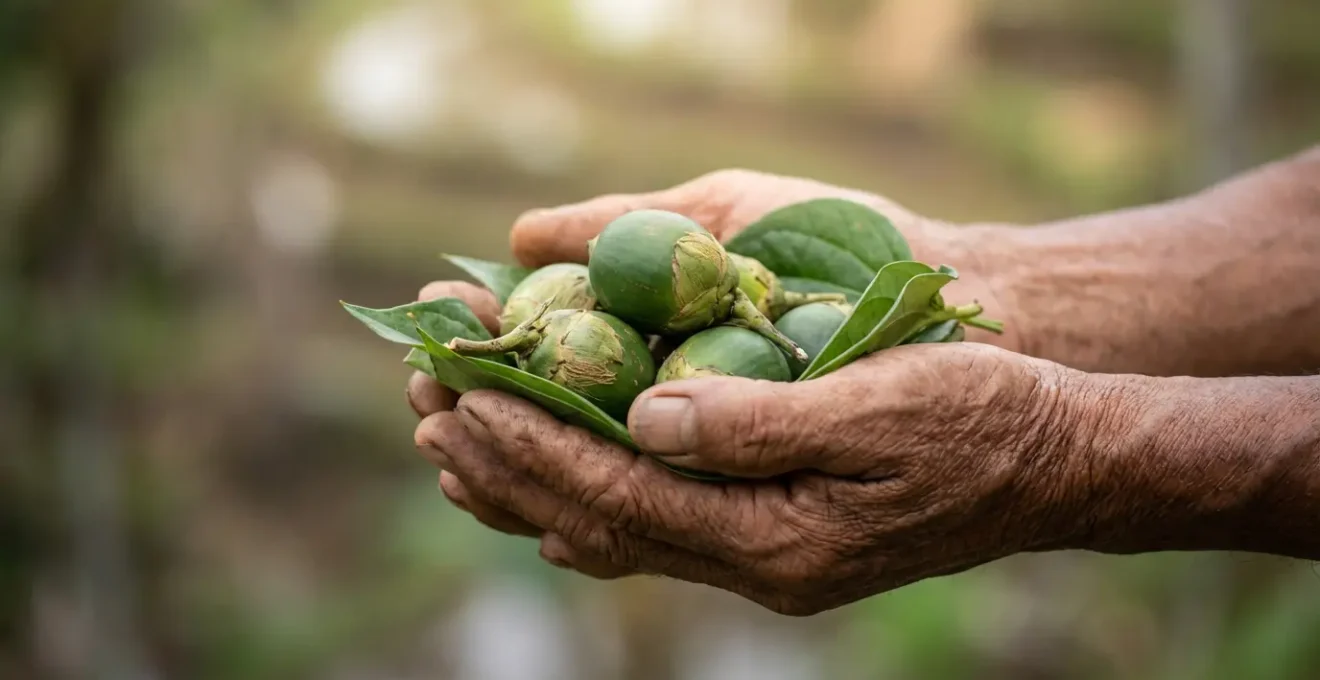
Bringing a pasalubong is still a good gesture, but its form must also be contextual. Generic city goods or tourist trinkets may be inappropriate. Instead, culturally fitting gifts show a deeper level of thought and respect. The following protocol is a good guide:
- Bring practical or culturally significant gifts, such as betel nut (moma) or local tobacco.
- Present your gift to the recognized community elder or the Mumbaki, not necessarily the person with a political title.
- Never photograph elders, homes, or rituals without first asking permission from a community leader. This is a critical sign of respect.
- Inquire politely about the local custom for showing respect instead of assuming “mano po” is the norm.
By showing you have done your research and are deferring to their unique traditions, you are demonstrating the highest form of respect.
The Risk of Misinterpreting “Yes” When a Filipino Means “Maybe”
For many Western visitors, communication can be one of the most confusing aspects of Filipino culture. This is especially true when it comes to the word “yes.” An enthusiastic “Oo!” (yes) is clear, but often you will receive a softer, more ambiguous “yes” that can mean anything from “I agree” to “I heard you” to “I don’t want to say no.” This is not an attempt to be deceptive; it is a manifestation of pakikisama, the cultural value of maintaining group harmony and avoiding conflict.
Delivering a direct “no” can be seen as confrontational and can cause hiya (shame or loss of face) for the person being rejected. To preserve harmony, Filipinos will often opt for an indirect or non-committal response. It is up to the listener to interpret the true meaning based on tone of voice, body language, and context. As a visitor, learning to read these cues is far more important than just listening to the words.
Understanding the different “flavors” of a Filipino “yes” is a crucial skill for any visitor wanting to avoid misunderstandings. This is not about a lack of sincerity but a different cultural priority: the relationship is often more important than the literal truth of the statement.
| Type of “Yes” | Verbal Cue | Body Language Cue | Actual Meaning |
|---|---|---|---|
| Enthusiastic Yes | ‘Oo!’ with energy | Direct eye contact, active nodding | Genuine agreement and commitment. |
| Non-Committal Yes | ‘Sige’ (Okay, let’s see) | Looking away, a slight shrug, a hesitant tone | “Maybe” or “I am open to it but not committing.” |
| Acknowledgment Yes | A simple nod or ‘mm-hmm’ sound | No eye contact, neutral facial expression | “I have heard you,” but does not imply agreement. |
| Pakikisama Yes | A soft ‘yes’ after a noticeable pause | Uncomfortable shifting, avoiding your gaze | “I feel obligated to say yes to avoid conflict, but I likely mean no.” |
When you receive an ambiguous “yes,” the best approach is to ask gentle, open-ended follow-up questions (“What do you think is the best way to do this?”) rather than pressing for a hard commitment. This allows the other person to express their reservations without being forced into a direct confrontation.
Key takeaways
- True respect in the Philippines is demonstrated by understanding cultural values like hiya (face/shame) and pakikisama (harmony), not just by mimicking gestures.
- Communication is often indirect to preserve relationships; learning to read non-verbal cues is more important than just listening to the words.
- The community—be it the family, the barangay, or even the group at a mall—is the central unit of social life, influencing everything from gift-giving to public celebrations.
Why Are Malls the Center of Community Life in the Philippines?
To an outside observer, the Filipino obsession with shopping malls might seem purely commercial. However, their role in society runs much deeper. In the Philippines, malls have functionally replaced the traditional town plaza, becoming the vibrant, air-conditioned centers of community life. Understanding this phenomenon is key to understanding modern Filipino culture, where the line between commercial space and community space is beautifully blurred.
These are not just places for quick transactions. Filipino malls are intentionally designed for “malling”—the cultural activity of spending long hours wandering, socializing, and gathering with family and friends, often without a specific shopping goal. They serve as accessible and democratic public squares where people from all social classes can mingle in a safe and comfortable environment. This role becomes even more critical during the country’s frequent typhoons and intense heatwaves, when malls act as de facto climate refuges for the public.
The integration of community services within these commercial hubs is a testament to their central role. It’s common to find chapels holding Sunday mass, government kiosks for processing official documents, and large atriums hosting community events, concerts, and local festivals. The food court is not a place for a quick bite but an extended family dining room where large groups gather for hours. To truly understand this, one must observe “malling” as the legitimate cultural activity it is:
- Notice how entire families, from grandparents to infants, spend their whole Sunday together within the mall’s ecosystem.
- Recognize that wandering without buying anything is a perfectly normal and accepted social pastime.
- Look for the non-commercial elements: the chapels, the public service booths, the community bulletin boards.
- Appreciate the food court as a social hub for communal dining, not just a fast-food stop.
By viewing the mall not as a temple of consumerism but as a modern-day plaza, you gain a vital insight into how Filipino society adapts and thrives, creating community in the most unexpected of places.
Ultimately, showing respect in the Philippines is an act of empathy. It requires setting aside one’s own cultural assumptions and embracing a worldview centered on community, harmony, and shared humanity. By making an effort to understand these core values, you are offering a gift far more valuable than any pasalubong: the gift of genuine connection.