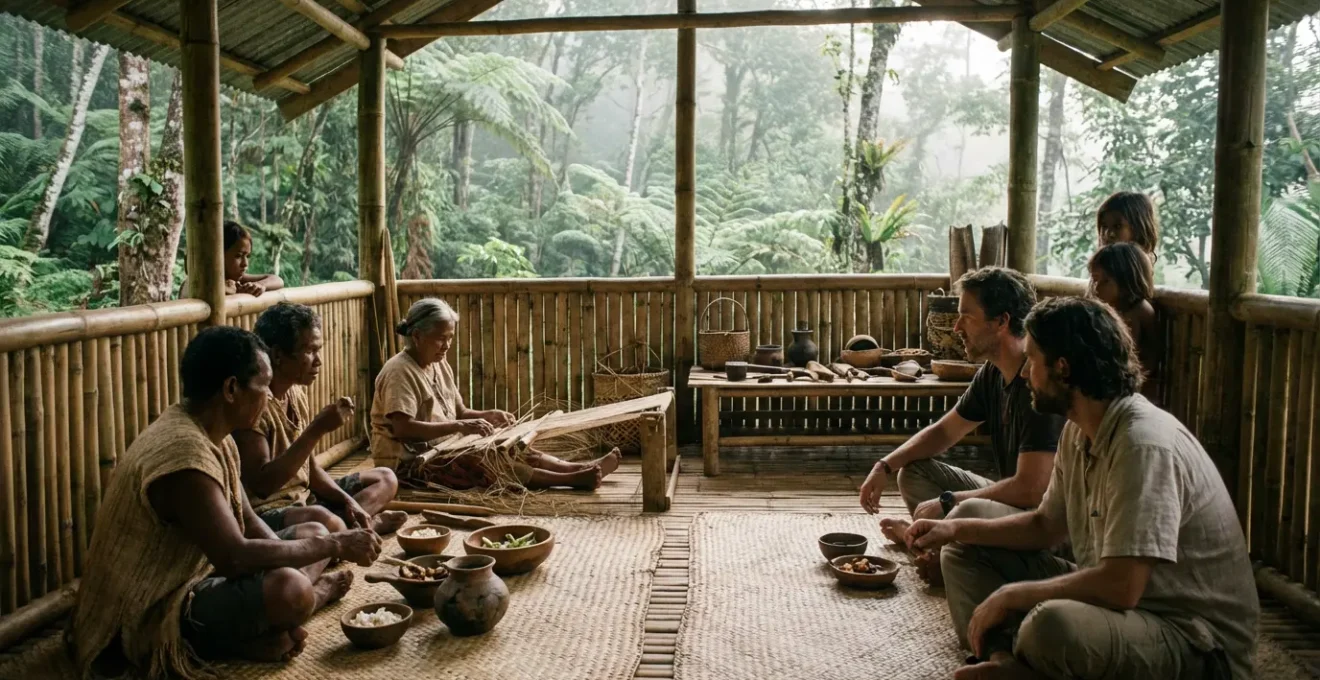
Most travelers believe supporting indigenous communities means buying crafts or volunteering. This article argues that true ethical engagement goes deeper, challenging the very power dynamics of tourism. It’s not about what makes you feel good; it’s about shifting economic control and respect for self-determination directly to the communities themselves, moving beyond the risk of a “human zoo” to foster genuine, reciprocal relationships.
The image of a journey into the ancestral lands of the Aeta people evokes a powerful sense of connection and authenticity. For the socially conscious traveler, it represents a chance to step away from commercial resorts and engage with the original inhabitants of the Philippines. The intention is pure: to learn, to contribute, and to support a culture that has withstood centuries of change. Yet, a nagging question persists, a fear that this well-meaning curiosity could curdle into a form of exploitation—a “human zoo” dynamic where culture becomes a commodity and people become exhibits.
The common advice often feels superficial. We are told to “buy local souvenirs,” “respect the culture,” or even “volunteer for a day.” While not inherently wrong, these actions barely scratch the surface of a deeply complex issue. They fail to address the underlying structures of power, economic leakage, and the potential for tourism to cause structural harm, even when intentions are good. These simple platitudes can inadvertently reinforce a colonial mindset, where the traveler is a benevolent hero and the community is a passive recipient of their generosity.
But what if the entire framework is flawed? What if true ethical tourism isn’t about charitable acts, but about fundamentally rebalancing the power dynamic? This guide moves beyond the simplistic “dos and don’ts.” Its purpose is to equip you with a critical lens, arguing that genuine support for indigenous communities like the Aeta hinges on prioritizing their agency, direct economic sovereignty, and the right to self-determination. It’s about learning to listen rather than just look, and engaging in a way that fosters reciprocity, not extraction.
Throughout this article, we will deconstruct the common pitfalls of indigenous tourism. We will explore how to ensure your financial support is direct and meaningful, understand the profound reasons behind restricted access to ancestral lands, and dismantle the damaging myths of “voluntourism.” Ultimately, this is a call to transform your role from a passive consumer of culture to an active ally in its preservation and sovereignty.
Summary: A Critical Guide to Indigenous Tourism in the Philippines
- How to Ensure Your Payment Goes Directly to the Weaver, Not the Middleman?
- Why Are Some Ancestral Domains Closed to Tourists?
- The Risk of “Voluntourism” in Tribal Schools: How to Help For Real?
- Storytelling Sessions: How to Listen to Elders Instead of Just Sightseeing?
- When to Visit Benguet to Help with the Strawberry Harvest Ethically?
- Volunteering vs. Sightseeing: Which Impact Trip Suits Your 2-Week Stay?
- Why Is Buying Local Souvenirs More Sustainable Than Donating Money?
- Why Does Mass Tourism Threaten the Philippine Ecosystems More Than You Think?
How to Ensure Your Payment Goes Directly to the Weaver, Not the Middleman?
The most direct way to challenge extractive tourism is to follow the money. When you purchase a handwoven basket or a beaded accessory, your payment can either be a powerful act of economic solidarity or an unwitting contribution to a system that siphons profits away from the creators. The “middleman” — a city-based consolidator, a resort gift shop, or an unvetted tour operator — often captures the majority of the value, leaving the artisan with a fraction of the final price. This is not economic support; it is economic leakage, and it perpetuates dependency.
Ensuring your money reaches the right hands requires a deliberate shift in behavior. Instead of buying from a centralized tourist hub, seek out community-run cooperatives or purchase directly from artisans in their own village. Ask questions about the supply chain. A tour operator committed to ethical practices will be transparent about how much of their tour fee is paid directly to the host family or community guides. Look for initiatives where the community itself manages the tourism experience, setting their own prices and controlling the funds.
This model is not a fantasy. Across the Philippines, eco-tourism initiatives are being developed that empower indigenous communities. As highlighted in a case study on Aeta and Ati groups, these programs allow them to share traditional knowledge like herbal medicine and farming skills with visitors. This approach doesn’t just provide a direct source of income; it reinforces the value of their cultural heritage and environment, placing economic sovereignty firmly in their hands. The goal is to participate in an economy of respect, not one of exploitation.
Why Are Some Ancestral Domains Closed to Tourists?
For a traveler accustomed to open borders and the “customer is always right” mentality, encountering a closed-off area can be baffling. When an indigenous community denies access to a trail, a waterfall, or an entire ancestral domain, it is not an act of hostility. It is an assertion of a fundamental right: sovereignty. These lands are not just scenic backdrops for a vacation; they are living, breathing spaces of cultural, spiritual, and ecological significance. They are homes, burial grounds, and sacred sites integral to a community’s identity and survival.
The Philippines legally recognizes these rights. As Dialogue Earth explains in a report on indigenous voices, the Indigenous Peoples’ Rights Act of 1997 (IPRA) established the principle of Free, Prior, and Informed Consent (FPIC). FPIC is a crucial legal safeguard that requires communities to give their consent before any project or access is granted on their lands. This process gives them the power to say “no” to tourism that they deem harmful, intrusive, or disrespectful. It is a direct countermeasure against a long history of marginalization and land grabbing.
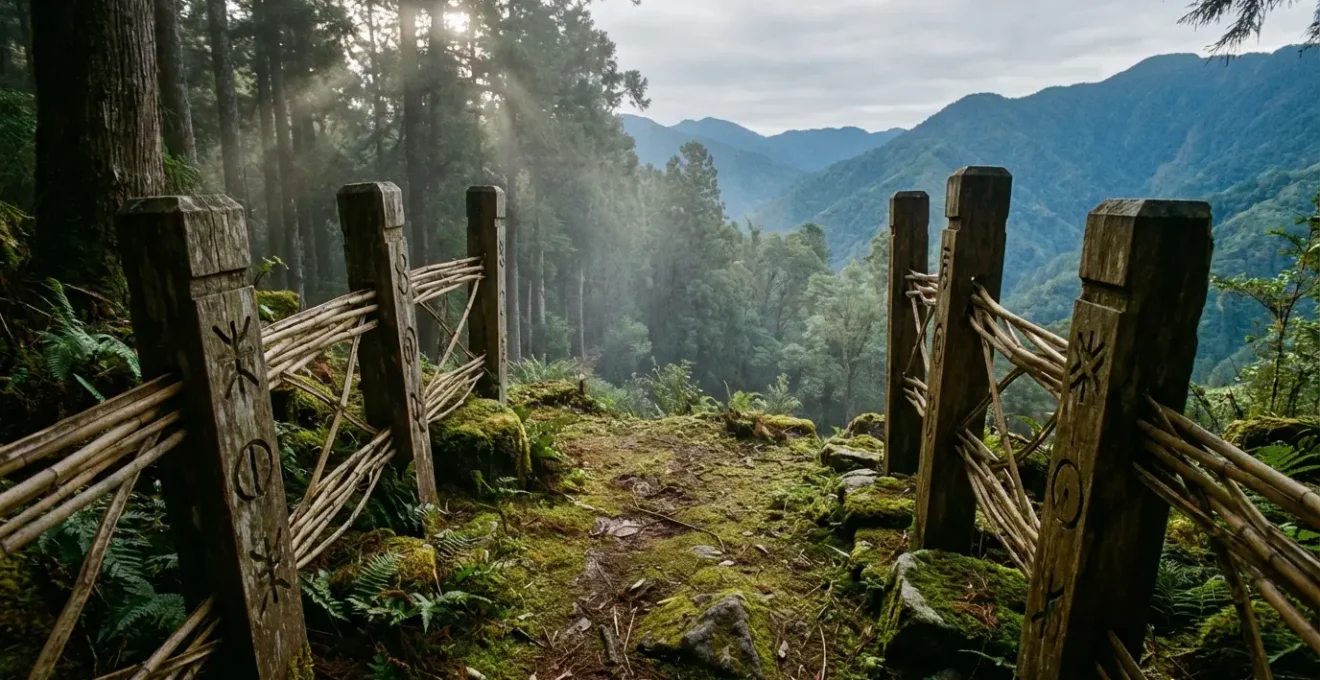
These decisions are not made lightly. A community might close an area to protect fragile ecosystems, perform private ceremonies, or simply to have a space free from the “gaze of consumption”—the feeling of being constantly watched and photographed. The Philippines is home to a vast diversity of indigenous groups, with UN documentation revealing that they are representing 15-20% of the population across more than 50 provinces. Each community has its own rules and protocols. A closed path is a message: this space is not for you. Respecting that boundary is the most basic form of ethical engagement.
The Risk of “Voluntourism” in Tribal Schools: How to Help For Real?
The desire to “give back” is a powerful motivator for many travelers. The image of teaching English to smiling children in a remote village school seems like the perfect blend of adventure and altruism. However, this is the deceptive heart of “voluntourism,” an industry where good intentions often pave the way to structural harm. It’s a massive phenomenon, with industry analysis showing that as many as 10 million international travelers annually participate in such trips.
The core problem is that short-term, unskilled volunteers are not a solution. They disrupt local economies by taking jobs that a local teacher could do. They often lack the training, cultural context, and linguistic skills to be effective. Most damagingly, especially in schools or orphanages, they create cycles of attachment and abandonment. As UNICEF powerfully stated in a report on the issue:
Many volunteers see it as their role to provide love, thus building strong emotional bonds with the children. However, when the volunteers leave, a few weeks or months later, these bonds are broken and the children are once again left alone.
– UNICEF, 2011 Report on Orphanage Tourism
So, how can you help for real? The answer lies in de-centering yourself from the solution. Instead of offering your own unskilled labor, use your resources to empower local, long-term initiatives that are already in place. The focus must shift from a model that benefits the visitor’s resume and conscience to one that genuinely serves the community’s self-identified needs.
Your Action Plan: Ethical Alternatives to “Voluntourism”
- Fund a Local Professional: Instead of teaching a class for a week, fund a local teacher’s salary or professional development training for a year.
- Sponsor Specific Needs: Ask local teachers or community leaders what supplies they *actually* need (e.g., textbooks, science equipment) and fund the purchase rather than bringing random items from home.
- Support Community-Led Programs: Contribute to established initiatives run by the community itself, such as a parent-managed school feeding program or a cultural preservation workshop.
- Offer Your Professional Skills (If Requested): If you are a doctor, engineer, or grant writer, offer your skills for a specific, requested project, not as a drop-in volunteer.
- Foster Long-Term Partnerships: Prioritize relationships over interventions. Supporting a single, community-led organization over many years is far more impactful than a series of one-time visits.
Storytelling Sessions: How to Listen to Elders Instead of Just Sightseeing?
A common pitfall of cultural tourism is its extractive nature. We arrive with cameras and checklists, seeking to capture experiences, stories, and images. This turns the interaction into a transaction, where the traveler is a consumer and the elder is a content provider. To break this cycle, the focus must shift from sightseeing to reciprocity. An invitation to a storytelling session is not just an activity; it’s an honor and a profound opportunity to listen, not just to hear.
For many indigenous cultures, including the Aeta, storytelling is not mere entertainment. It is a vital technology for survival and social cohesion. As documented in cultural studies, stories are the primary mechanism for transmitting values, ecological knowledge, and history from one generation to the next. They teach cooperation, explain the natural world, and reinforce a community’s identity. When an elder shares a story, they are sharing a piece of their cultural soul.
Approaching this with the right mindset is everything. Put the camera away. The best memories are not captured on an SD card. Sit, be present, and give your undivided attention. Show your respect not just with your ears, but with your posture and your patience. Understand that you are a guest in their space. The exchange should not be one-sided. How can you offer something in return? This doesn’t necessarily mean money. It could be sharing a story of your own, helping with a daily task if appropriate, or simply expressing genuine gratitude. The goal is to create a moment of human connection, not a a theatrical performance for a tourist audience. Listening becomes an act of solidarity, acknowledging that this knowledge is a gift, not a product.
When to Visit Benguet to Help with the Strawberry Harvest Ethically?
The idea of helping with a harvest, like the famous strawberry picking in Benguet, seems like an idyllic way to connect with the land and its people. It feels more authentic than simply buying fruit from a stall. But the question, as always, must be: “Who am I really helping?” Applying an ethical lens to this scenario reveals the same potential pitfalls as traditional “voluntourism.” Are you taking a paid job away from a local worker who depends on that seasonal income? Are you actually efficient, or are you a novelty that requires more supervision than your labor is worth?
Instead of assuming your physical help is needed, reframe the engagement around direct economic support and learning. The most ethical way to “help” the harvest is often to be a fantastic customer. Visit during the peak harvest season (typically November to May), but go with the intent to buy directly from the farmers at their farm gates or local community markets. Pay their asking price without haggling, acknowledging the immense labor that goes into every berry. This provides direct, unconditional financial support without disrupting local labor markets.

If you desire a deeper experience, seek out farm-tourism programs that are designed as educational workshops, not volunteer opportunities. In these models, you pay the farmer a fee to learn about their cultivation methods, spend an hour picking for your own basket (which you pay for), and listen to their stories. This positions the farmer as the expert and you as the student. It’s an exchange that values their knowledge and time. This model, similar to the “Spirit of Batanes” initiative which integrates volunteerism as a structured, paid part of an ecotourism product, ensures the host community benefits economically and maintains control.
Volunteering vs. Sightseeing: Which Impact Trip Suits Your 2-Week Stay?
With limited time, like a two-week vacation, the pressure to make a “positive impact” can lead to poor decisions. The choice between volunteering and sightseeing is often presented as a moral binary: one is selfless, the other is selfish. This is a false and dangerous dichotomy. As we’ve seen, poorly structured volunteering can be more harmful than doing nothing at all. Conversely, thoughtful, conscious sightseeing can be a powerful force for good.
The fundamental question to ask is not “How can I help?” but rather, “How can my presence here provide the most benefit with the least harm, as defined by the local community?” This requires an honest assessment of your skills and the nature of your visit. Do you have a professional, medical, or technical skill that a community has explicitly requested for a specific, long-term project? If not, your two-week stay is almost certainly better spent as a conscious sightseer.
A “conscious sightseer” is not a passive observer. They are an economic and cultural ally. They spend their money strategically on locally-owned guesthouses, community-run tours, and direct-from-the-artisan crafts. They pay for knowledge, hiring local guides and attending workshops. They practice respect, learning and following cultural protocols. This approach injects money directly into the local economy without the disruptive and problematic dynamics of short-term volunteering. As international service expert Scott Freeman puts it, the goal must be to move away from a model that primarily benefits the visitor. The focus must be on the locals’ well-being and fostering a longer, more respectful relationship.
Why Is Buying Local Souvenirs More Sustainable Than Donating Money?
Handing out cash to individuals, especially children, can feel like a direct act of charity. However, it is often one of the most damaging things a traveler can do. It can foster a culture of dependency, create conflict within a community, and discourage work or school attendance. Donating to a large, non-specific NGO can also be problematic, as funds are often eaten up by administrative overhead with little transparency about where the money goes. In contrast, buying a locally made souvenir, when done thoughtfully, is a far more sustainable and empowering form of support.
Purchasing a craft is not charity; it is a dignified economic transaction that honors skill, time, and cultural knowledge. It provides direct income to an artisan and their family, allowing them to be self-sufficient. More profoundly, it creates a market-based incentive for the preservation of traditional skills. When younger generations see that weaving, carving, or beading can provide a viable livelihood, they are more motivated to learn these arts from their elders. This act of commerce becomes an act of cultural continuity.
This is not a trivial matter. In many areas, traditional knowledge is under threat. Research on the impact of the Mount Pinatubo eruption shows that over 20 years of ecosystem damage has directly threatened the transmission of Aeta craft knowledge by disrupting access to raw materials. By supporting artisans, you help create a resilient local economy that can weather such challenges. The key is to buy directly, ensuring the full value of your purchase empowers the person whose hands created the piece. This is a model that local governments are beginning to recognize, such as in Nueva Vizcaya where promoting Ifugao handicrafts is seen as a path to sustainable eco-cultural tourism.
Key Takeaways
- True ethical tourism requires shifting power to indigenous communities, not just having good intentions.
- Direct economic support (buying from artisans, using community-run services) is more empowering than charity or “voluntourism.”
- Respecting a community’s right to say “no” to access (FPIC) is a non-negotiable part of ethical engagement.
Why Does Mass Tourism Threaten the Philippine Ecosystems More Than You Think?
Our focus on interpersonal ethics is crucial, but it’s incomplete without zooming out to see the larger system at play. The individual traveler is part of a massive global industry—mass tourism—that exerts immense pressure on fragile environments. The very ecosystems that indigenous communities like the Aeta have stewarded for centuries are often the first casualties of unchecked development driven by tourist demand. This isn’t just about picking up your trash; it’s about understanding how the entire tourism machine can cause irreversible systemic harm.
The evidence in the Philippines is stark. The demand for pristine beaches and vibrant marine life leads to the construction of resorts that destroy mangroves, pollute water sources, and overwhelm local infrastructure. The statistics are sobering. According to monitoring from the Marine Science Institute, only 5.3% of 742 monitored reef stations in the Philippines remain in excellent condition. This degradation is directly linked to coastal development, pollution, and destructive fishing practices, all of which are exacerbated by tourism.
The infamous case of whale shark tourism in Oslob provides a devastating example. The practice of feeding the sharks to guarantee sightings attracts more than 300,000 annual visitors. While economically lucrative in the short term, a scientific study found the site showed clear signs of reef degradation, including lower coral density and higher macroalgal cover compared to untouched areas. This is the tragic irony: the very natural wonder that draws tourists is being destroyed by the industry created to showcase it. For indigenous communities whose survival is inextricably linked to the health of their environment, this is an existential threat.
Therefore, being an ethical traveler means recognizing that your choices—where you stay, what activities you do, which operators you support—are votes for or against this destructive system. It means choosing small-scale, community-owned eco-lodges over mega-resorts and questioning activities that disrupt natural wildlife behavior. It requires understanding that protecting indigenous culture is inseparable from protecting the land, air, and water on which it depends.
The journey toward ethical engagement is not a simple checklist but a continuous practice of critical self-reflection and solidarity. The next step is to translate this awareness into action by meticulously planning your trip with these principles at its core.