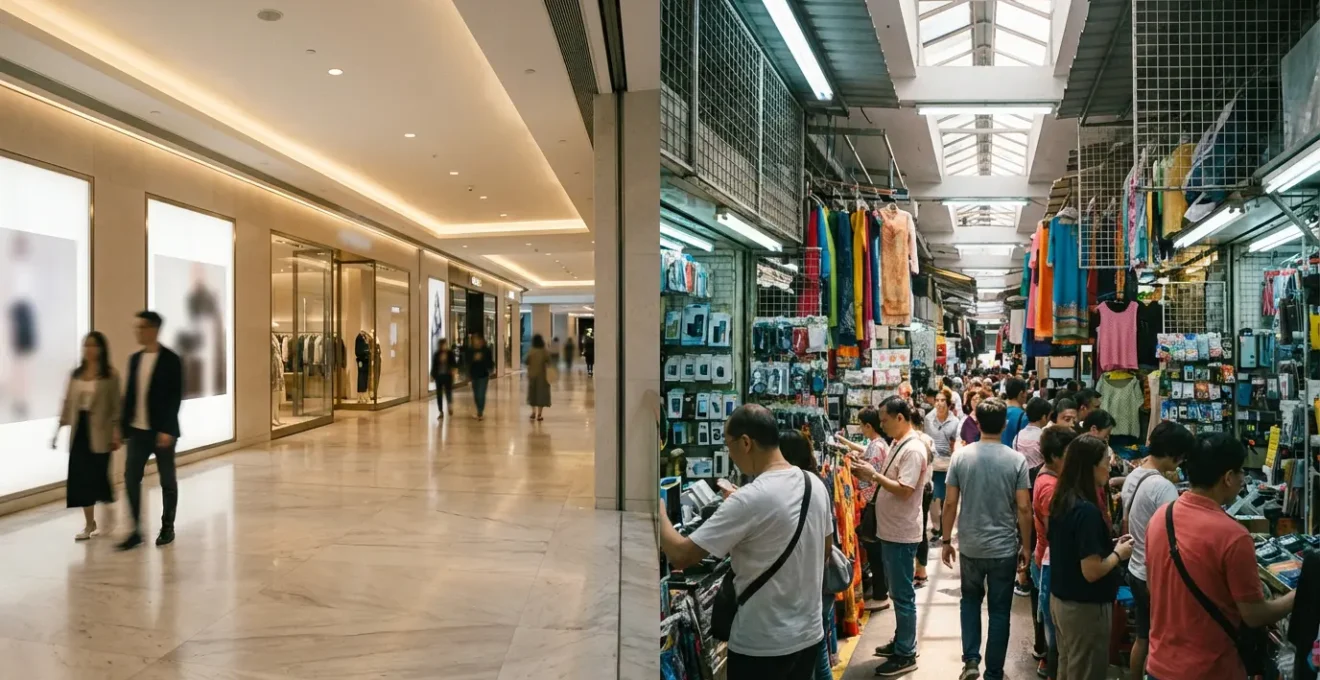
Choosing between SM Malls and Greenhills isn’t about comfort versus chaos; it’s a decision between two distinct Filipino shopping cultures.
- SM Malls function as modern “third places”—all-in-one community hubs for shopping, dining, and even worship.
- Greenhills operates on “relationship commerce,” an interactive marketplace where haggling and building rapport with vendors is key to the experience.
Recommendation: Choose based on whether your priority is the air-conditioned convenience of a community hub or the thrill of an immersive, bargain-driven market.
For any shopper in the Philippines, the choice often boils down to two titans of retail: the ubiquitous, air-conditioned comfort of an SM Supermall or the sprawling, exhilarating chaos of Greenhills Shopping Center’s *tiangge*. At first glance, the decision seems simple—a battle between fixed-price convenience and bargain-hunting adventure. You might think it’s just about choosing between established brands in a cool environment and the potential for a great deal in a bustling flea market.
Most guides will tell you the obvious: malls are for safe, predictable shopping, while Greenhills is the go-to for haggling and replicas. But this surface-level view misses the entire point. The real difference isn’t just about the price tag or the air-conditioning; it’s about engaging with two fundamentally different aspects of Filipino culture. One represents the modern, integrated community center—the “third place” outside of home and work—while the other embodies a long-standing tradition of relationship-based commerce, where the transaction is a social dance.
But what if the key to the best shopping experience wasn’t choosing one over the other, but understanding the unique rituals and unwritten rules of each? This guide moves beyond the basics to explore the cultural DNA of both SM Malls and Greenhills. We will dissect the art of haggling, the nuances of the “suki” system, the reality of “Class A” goods, and why malls have become the heart of community life, helping you decide which shopping journey is truly right for you.
This comprehensive comparison will explore the unique characteristics of each shopping environment. By understanding their distinct roles in Filipino society, you’ll be equipped to make an informed choice that best suits your needs, whether you’re a tourist looking for a deal or a local planning a family weekend.
Summary: SM Malls vs. Greenhills: The Ultimate Shopping Showdown
- How to Haggle Prices in Divisoria Without Offending the Vendor?
- The Risk of Buying “Class A” Luxury Bags at Bargain Centers
- Why Do Malls Become Impassable on Sundays After Mass?
- When to Shop During the “Ber Months” for the Best Christmas Deals?
- Tax-Free Shopping: How to Claim Your VAT Refund as a Tourist?
- The “Suki” System: How to Build Relationships for Better Prices?
- How to Buy Authentic Inabel Fabric Without Supporting Factory Knockoffs?
- Why Are Malls the Center of Community Life in the Philippines?
How to Haggle Prices in Divisoria Without Offending the Vendor?
While the title mentions Divisoria, the art of haggling—or *tawad*—is a universal skill in Filipino bargain centers like Greenhills. It’s less a confrontation and more a form of relationship commerce. In Greenhills, an ecosystem of around 2,000 stalls, vendors expect you to negotiate. The key is to do it with a smile and a respectful tone. Aggressiveness is counterproductive; the goal is to build a friendly rapport, making the vendor *want* to give you a better price. It’s a social interaction, not a battle of wills.
Starting the conversation politely is crucial. Using “po” and “opo” (markers of respect in Tagalog) goes a long way. Instead of demanding a discount, you inquire if one is possible. The famous “walk-away” technique works, but it should be done graciously, with a “Thank you, I’ll think about it” rather than a dismissive turn. Often, this is when the vendor will call you back with their best offer. Remember, for many vendors, this is their livelihood, and a respectful negotiation honors their craft.
To navigate this cultural dance effectively, arming yourself with a few key phrases is essential. Mastering these shows cultural awareness and signals that you’re an engaged and respectful buyer, increasing your chances of success.
- Start with ‘Magkano po ito?’ (How much is this?) – Always use ‘po’ for politeness.
- Follow with ‘May tawad pa ba?’ (Is there a discount?) – This shows you’re ready to negotiate.
- Try ‘Suki price po?’ (Regular customer price?) – Even as a first-timer, this shows cultural awareness.
- Master the polite walk-away: ‘Salamat po, babalik ako’ (Thank you, I’ll come back).
- Close deals with ‘Sige, kunin ko na’ (Okay, I’ll take it) – This shows decisiveness.
Ultimately, successful haggling in the Philippines is about finding a price that both you and the vendor are happy with. It’s a win-win scenario rooted in pleasant interaction, a stark contrast to the fixed-price environment of a mall.
The Risk of Buying “Class A” Luxury Bags at Bargain Centers
Greenhills has a well-earned reputation as a haven for replica luxury goods, but diving into this market requires a clear understanding of the risks. The term “Class A” is often a misleading catch-all for the lowest tier of fakes, while more sophisticated knockoffs are sold as “AAA Grade” or “Mirror Quality.” The allure of a nearly identical designer bag for a fraction of the price is strong, but it’s not without its perils. This reputation is so widespread that Greenhills is listed by the United States Trade Representative as a “notorious counterfeit market.”
The primary risk is not just about owning a non-authentic item, but about quality and potential legal issues. While “Mirror Quality” bags can be incredibly convincing, using near-identical materials and expert craftsmanship, they still lack the durability and investment value of the real thing. For tourists, another risk is customs seizure upon returning home, as many countries have strict laws against importing counterfeit goods. It’s crucial to examine the details closely. The quality of the stitching, the weight of the hardware, and the texture of the material are often the biggest giveaways, as shown below.
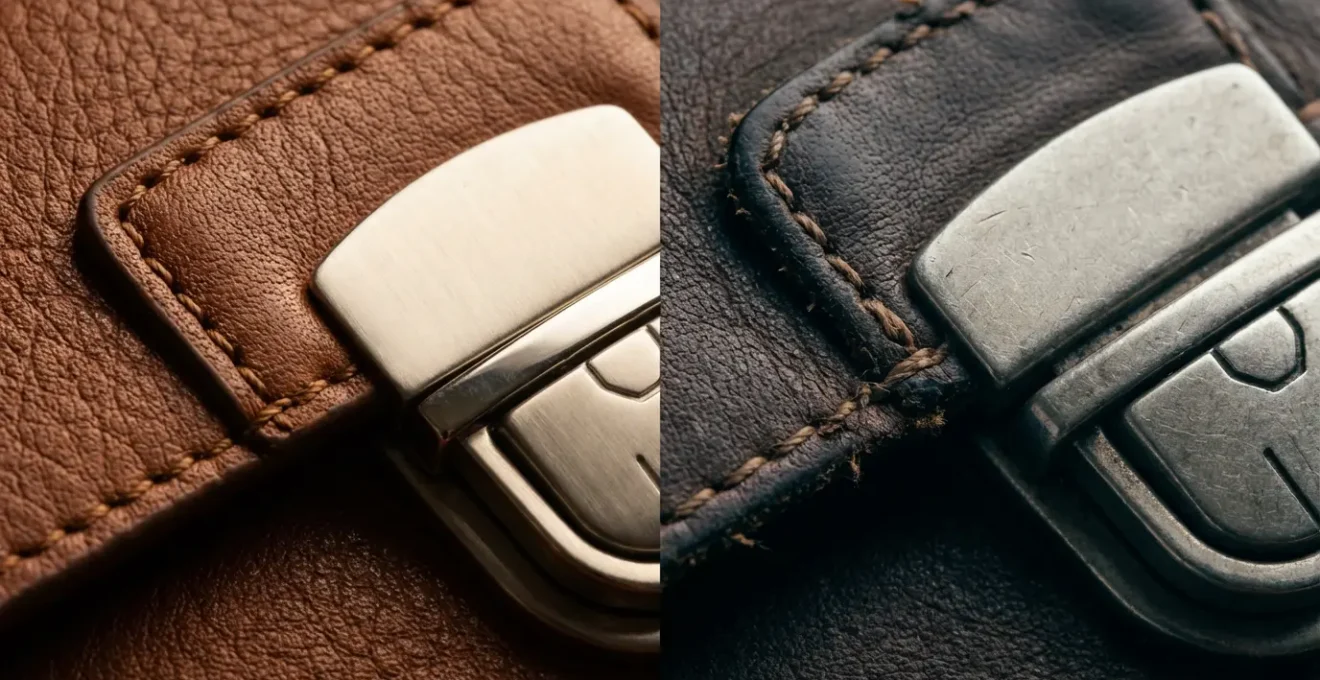
As you can see, the differences are in the micro-details. Understanding the hierarchy of replicas can help you know what you’re paying for. The price often reflects the quality of the materials and the accuracy of the copy, with risks increasing for both the buyer and seller with higher-quality fakes.
This table breaks down the common tiers you’ll encounter, helping you understand the landscape of the replica market.
| Quality Tier | Price Range | Material Quality | Risk Level |
|---|---|---|---|
| Class A | ₱500-₱2,000 | Basic synthetic materials, obvious flaws | High – easily detected |
| AAA Grade | ₱2,000-₱8,000 | Better materials, improved stitching | Medium – customs may confiscate |
| Mirror Quality | ₱8,000-₱20,000 | Near-identical materials, expert craftsmanship | Low detection, high legal risk |
In contrast, shopping at an SM Mall guarantees authenticity. You pay a premium, but you get a genuine product with a warranty, after-sales service, and zero legal ambiguity—a peace of mind that the *tiangge* simply cannot offer.
Why Do Malls Become Impassable on Sundays After Mass?
The phenomenon of a packed SM Mall on a Sunday afternoon is a cornerstone of modern Filipino culture. It’s more than just a weekend shopping rush; it’s a deeply ingrained social ritual. In the Philippines, malls have evolved beyond mere retail spaces to become the de facto community “third place”—a social environment separate from home and work. This is especially true after Sunday Mass, when families flock to the mall not just to shop, but to dine, watch movies, pay bills, and simply spend time together in a comfortable, air-conditioned environment.
This cultural shift is a response to the urban landscape of the Philippines, where public parks and recreational areas are often limited. The mall provides a safe, accessible, and climate-controlled alternative for family and social gatherings. The numbers are staggering; SM Supermalls attract an average of 5.2 million daily visitors, with Sunday being the peak. They have become hubs for social interaction, entertainment districts, and even sanctuaries during natural disasters, solidifying their role as central pillars of community life.
This integration of commerce and community is a stark contrast to Greenhills, which, despite being a bustling hub, primarily serves a transactional purpose. While people socialize there, its main function is as a marketplace. The SM Mall experience, on the other hand, is a full-day family outing—a one-stop destination for both chores and leisure. The Sunday crowd is not just a crowd; it’s a living testament to the mall’s role as the modern-day town square.
So, when you’re caught in the Sunday mall crush, you’re not just in a busy shopping center; you’re witnessing a nationwide cultural practice in action, a weekly pilgrimage that combines faith, family, and consumerism under one giant, air-conditioned roof.
When to Shop During the “Ber Months” for the Best Christmas Deals?
The Philippines is famous for having the world’s longest Christmas season, kicking off as soon as the “Ber months” (September, October, November, December) begin. For shoppers, this is a four-month marathon of deals, decorations, and festive crowds. However, timing is everything. Shopping strategically during this period can mean the difference between getting the best selection at a fair price and fighting through last-minute crowds for picked-over inventory. The atmosphere is undeniably festive, with malls transforming into wonderlands of lights and carols.

Navigating the “Ber months” requires a calendar-based strategy. Each month offers a different advantage, from the freshest stocks in September to the deepest discounts in January. Major sale events like 11.11 (November 11) and Black Friday have become significant fixtures in the Philippine retail calendar, offering substantial markdowns in both malls and online. The weeks leading up to Christmas, especially during the *Simbang Gabi* (dawn masses from December 16-24), see extended mall hours but also the most intense crowds.
For the savvy shopper, here’s a strategic breakdown of the “Ber months” to maximize savings and minimize stress:
- September: The best time for new arrivals and the first wave of Christmas decorations. You’ll find the best selection, though prices are typically at their regular retail value.
- October: Early-bird sales and pre-holiday promotions begin. Look for initial discounts of around 10-20%.
- November 11 (11.11): This is a major online and offline sale event where discounts can reach up to 50% on a wide range of products.
- Late November (Black Friday): International brands in SM Malls offer their deepest discounts, often ranging from 30-70% off.
- December 16-24 (Simbang Gabi): Malls have extended hours and offer last-minute deals, but this period also sees the absolute maximum crowds.
- January 1-15: Post-holiday clearance sales offer the biggest markdowns, with discounts up to 80% off on remaining Christmas-related inventory.
While Greenhills also participates in the festive season, the large, coordinated sales events are a hallmark of the organized retail environment found in SM Malls, offering a more structured and predictable approach to holiday bargain hunting.
Tax-Free Shopping: How to Claim Your VAT Refund as a Tourist?
For international tourists, one of the biggest financial advantages of shopping in a formal retail environment like an SM Mall is the ability to claim a Value Added Tax (VAT) refund. This is a crucial difference from shopping at a *tiangge* like Greenhills, where vendors are typically independent and not part of the VAT refund system. The refund process is available at accredited stores, which are almost always the major department stores and high-end boutiques found within large malls.
The key anchor tenant for this service in SM Malls is The SM Store. As one of the country’s largest department store chains, it is fully equipped to handle VAT refund requests for foreign visitors. This process allows you to get back the 12% VAT on purchased goods, provided you follow the correct procedure and meet the minimum spending requirements. This can lead to significant savings, especially on big-ticket items like electronics, designer clothes, and jewelry.
However, the process requires careful planning and adherence to strict rules. You must request the correct forms at the time of purchase and present your items to customs at the airport *before* checking in your luggage. Failing to follow any step can result in your refund claim being denied. It’s a bureaucratic process, but the potential savings make it worthwhile for diligent shoppers.
Your Action Plan for Claiming a VAT Refund
- Shop only at accredited stores (like The SM Store), not at independent *tiangge* stalls.
- Request VAT refund receipts at the time of purchase. A minimum spend (often around ₱2,000-₱3,000, but confirm with the store) per receipt is usually required.
- Keep all purchased items in their original packaging with the tags still attached. Do not use them before departure.
- At the airport (NAIA), go to the Customs desk for VAT inspection before you check in your luggage, as they will need to see the items.
- Present your passport, flight details, original receipts, and the purchased goods for inspection and stamping.
- After passing through immigration, proceed to the designated VAT refund counter to receive your refund in cash or credited back to your card.
This clear distinction highlights the trade-off: Greenhills may offer lower initial prices through haggling, but SM Malls provide a structured system for tourists to achieve significant savings through official channels.
The “Suki” System: How to Build Relationships for Better Prices?
Beyond the simple act of haggling, the most rewarding shopping experience at Greenhills comes from becoming a *suki*—a loyal, regular customer. The suki system is a cornerstone of Filipino market culture, transforming a purely transactional relationship into a personal one built on trust and reciprocity. When a vendor recognizes you as a *suki*, you unlock a new level of service and pricing that a first-time visitor rarely experiences.
This culture is particularly strong among the Filipino Muslim traders of Maranao ethnicity who represent a majority of the tenants in Greenhills. For these vendors, business is deeply personal. A *suki* is not just a customer, but a valued patron. The benefits are significant: you’ll be offered the “suki price” upfront (often 20-40% lower than the initial asking price), given access to higher-quality items kept in the back, and may even be offered small freebies (*dagdag*) as a token of appreciation. Building this relationship is simple but requires consistency.
As one experienced shopper noted, the key is friendliness and respect. This transforms the negotiation from a battle into a partnership.
Be polite. Filipinos love a friendly face, and haggling here is more art than war.
– David Kane, DavidKaneTravels.com
To become a *suki*, you must be a repeat customer. Visit the same stall, make conversation with the vendor, remember their name, and show genuine interest in their products. Over time, this investment in the relationship pays dividends, creating a shopping experience that is not only more affordable but also more personal and enjoyable. It’s a powerful system that simply doesn’t exist in the anonymous, fixed-price environment of a large mall.
Ultimately, the *suki* system is the heart of “relationship commerce” at Greenhills. It rewards loyalty with tangible benefits, making every return visit more fruitful than the last.
How to Buy Authentic Inabel Fabric Without Supporting Factory Knockoffs?
In the vast marketplace of Greenhills and even within certain mall pop-ups, discerning shoppers can find beautiful, traditional Filipino textiles. One of the most sought-after is Inabel, a handwoven fabric from the Ilocos region known for its durability and intricate patterns. However, its popularity has led to a flood of machine-made, factory knockoffs that mimic its appearance but lack its quality and cultural significance. Buying authentic Inabel means directly supporting the artisan communities that have preserved this weaving tradition for generations.
Distinguishing genuine handwoven Inabel from a factory-made imitation requires a trained eye and touch. Authentic pieces have a heavier feel and slight, charming irregularities in the weave and pattern—the tell-tale signs of human craftsmanship. Factory knockoffs, by contrast, are perfectly uniform, lighter, and feel less substantial. Price is also a major indicator; if a deal seems too good to be true, it likely is. Authentic Inabel is labor-intensive to produce, and its price reflects the skill and time invested by the weaver.
To ensure you’re buying the real thing, it’s best to seek out reputable sellers. In malls like SM, dedicated outlets like “Go Lokal!” stores often feature products sourced directly from artisan communities. At Greenhills, you must be more cautious and ask the vendor about the fabric’s origin. A knowledgeable seller will be able to tell you about the weaving process and the community it came from.
This comparative table highlights the key differences to look for when purchasing Inabel fabric.
| Feature | Authentic Handwoven Inabel | Factory Knockoff |
|---|---|---|
| Texture | Slight irregularities, heavier thread weight | Perfectly uniform, lightweight |
| Pattern | Minor variations in design, charming imperfections | Machine-perfect repetition |
| Price | ₱800-₱3,000 per meter | ₱200-₱500 per meter |
| Source | Go Lokal stores, artisan markets | Mass market stalls |
| Cultural Impact | Supports Ilocos weaving communities | No community benefit |
Choosing authentic Inabel is a vote for cultural preservation. It’s an opportunity to own a piece of Filipino heritage while ensuring that the economic benefits go back to the artisans who keep the tradition alive.
Key Takeaways
- SM Malls are modern “third places,” functioning as all-in-one community hubs that integrate retail, dining, services, and even worship.
- Greenhills operates on “relationship commerce,” where the experience is defined by the interactive arts of haggling and the long-term benefits of the ‘suki’ system.
- Your best choice depends on your goal: the predictable, authenticated, all-in-one convenience of a mall versus the culturally immersive, bargain-driven adventure of the ‘tiangge’.
Why Are Malls the Center of Community Life in the Philippines?
The role of the mall in the Philippines transcends shopping; it is the undisputed center of community life. This is not an accident but a deliberate evolution driven by social, economic, and even religious factors. Economically, the retail industry is a massive pillar of the nation, and it accounts for approximately 15% of the country’s GNP while employing over 5 million people. Malls like those from SM are the engine of this sector, providing not just goods but stable employment and economic activity.
Culturally, they have filled the void of public spaces, becoming the modern-day plaza or town square. In a tropical climate, their air-conditioned interiors offer a comfortable refuge. More profoundly, they have integrated themselves into the very fabric of daily life. A prime example is the inclusion of Catholic chapels within many SM Malls. Branches like SM Megamall and SM North EDSA hold regular masses, turning a trip to the mall into an activity that can be combined with religious observance. This masterstroke of integration solidifies the mall’s position as an indispensable multi-service hub.
This model contrasts sharply with the more singularly focused commercial nature of Greenhills. While Greenhills is a vital economic hub for its thousands of vendors, it doesn’t offer the same breadth of integrated life services. You go to an SM Mall to shop, eat, see a doctor, pay your bills, attend mass, and meet friends—all under one roof. This all-encompassing experience is what cements its role as the true center of the modern Filipino community.
Now that you understand the deep-seated cultural roles of both the all-in-one mall and the traditional marketplace, the final step is to align your personal shopping mission with the environment best suited to deliver it. Whether you seek convenience and community or bargains and banter, the Philippines offers a world-class experience for every type of shopper.