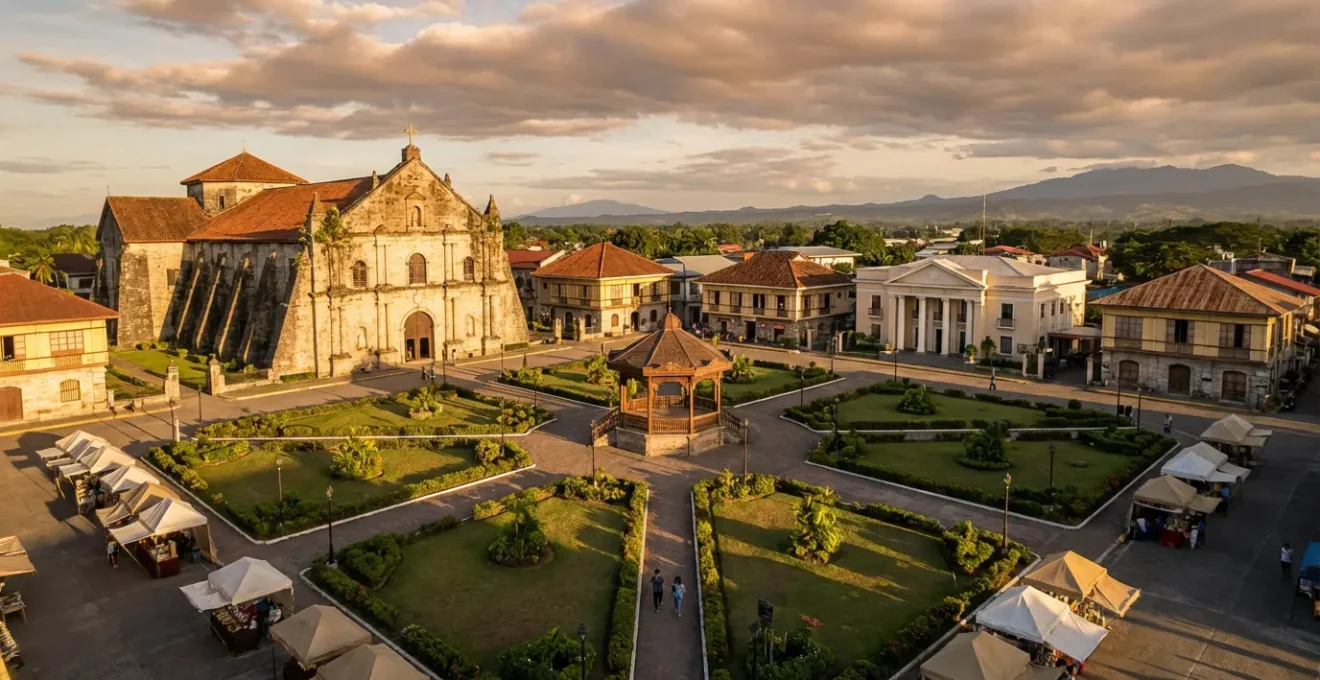
The uniform layout of Philippine plazas is not a historical accident but a living colonial blueprint that continues to define Filipino cultural identity and physical space.
- This blueprint dictated not just urban design but also administrative identity (surnames), social hierarchy (ancestral homes), and even unique religious expressions.
- Modern challenges, from tourism ethics to architectural preservation, are direct negotiations with this enduring Spanish socio-spatial logic.
Recommendation: To truly understand the Philippines, one must learn to read the cultural and historical narratives embedded within the layout of its town plazas.
To the observant traveler in the Philippines, a distinct pattern emerges with startling regularity. Whether in the coastal towns of Luzon or the remote municipalities of the Visayas, the town center, or poblacion, invariably follows a familiar script: a grand church, a municipal hall, a central plaza, and a market, all arranged in a predictable, grid-like fashion. This architectural repetition often leads history enthusiasts to question its origin. Many assume it is merely a practical layout, a simple template replicated for convenience. This perspective, however, misses the profound intentionality behind the design.
The truth is far more complex and revealing. The Philippine town plaza is not just an architectural fossil; it is the physical manifestation of a powerful colonial strategy. It represents a socio-spatial logic designed for control, conversion, and administration that has echoed through centuries. Understanding this “plaza complex” is to decipher a code that unlocks deeper insights into aspects of Filipino culture that seem, at first glance, entirely unrelated. The arrangement of streets and buildings is a story written in stone and space, one that continues to influence everything from family names to religious faith.
This article moves beyond the simple observation of uniformity. We will explore the plaza as a colonial blueprint whose logic radiates outward, shaping disparate facets of Filipino life. By examining the echoes of this blueprint in administrative decrees, architectural adaptations, religious syncretism, and even the challenges of modern heritage tourism, we can piece together a more complete picture of how a 300-year-old urban design continues to pulse at the heart of the nation’s identity.
This exploration will provide a structured view of this enduring legacy. The following sections delve into specific cultural and historical phenomena, each revealing a different facet of the plaza’s far-reaching influence, from the imposition of surnames to the very engineering of its iconic churches.
Summary: The Enduring Legacy of the Spanish Colonial Blueprint
- Catálogo Alfabético: Why Do Many Filipinos Have Spanish Surnames Without Spanish Ancestry?
- How to Visit a Privately Owned “Bahay na Bato” Without Trespassing?
- The Mistake of Thinking Philippine Catholicism Is Identical to Spanish Catholicism
- When to Photograph Vigan’s Calle Crisologo to Avoid the Souvenir Stalls?
- Corregidor vs. Intramuros Dungeons: Which WWII Site Is More Emotional?
- How to Take Photos in Old Churches Without Disturbing Worshippers?
- Spanish vs. American Influence: Which Is More Visible in Modern Manila?
- Why Are Philippine Baroque Churches Built With Huge Buttresses?
Catálogo Alfabético: Why Do Many Filipinos Have Spanish Surnames Without Spanish Ancestry?
The administrative power of the plaza complex extended beyond physical space into the realm of personal identity. A prime example is the widespread presence of Spanish surnames among Filipinos, a phenomenon often misconstrued as evidence of direct Spanish lineage. The reality is rooted in a massive clerical effort orchestrated from the center of colonial power: the 1849 decree by Governor-General Narciso Clavería. Before this, many Filipinos used native-language patronymics, which were deemed confusing and unsystematic by the Spanish administration for tax collection and census purposes.
The solution was the Catálogo alfabético de apellidos, a comprehensive book of surnames. As historical records from the Filipinas Heritage Library show, over 61,000 surnames were systematically distributed across the provinces. This was not a haphazard process but a highly organized one, often reflecting the blueprint of the plaza itself. In the Bicol region, for instance, the alphabet was methodically assigned to towns radiating from the provincial capital. Towns along the coast of Albay and Sorsogon received names starting with A, B, C, and so on, creating a geographical and alphabetical map of administrative control. This top-down imposition demonstrates how the centralized logic of the plaza was used to re-order not just towns, but people.
Consequently, as noted in the historical analysis of the decree, a Spanish surname does not inherently signify Spanish ancestry. It is, more accurately, a marker of a family’s town of origin at a specific moment in history—a permanent, bureaucratic echo of the colonial need for order. This mass re-identification project was a profound act of social engineering, proving that the colonial blueprint was as much about data and demography as it was about bricks and mortar.
How to Visit a Privately Owned “Bahay na Bato” Without Trespassing?
Radiating from the central plaza were the homes of the principalía, the local elite class. These grand houses, known as Bahay na Bato (house of stone), are architectural testaments to the social hierarchy established by the colonial system. Built with stone foundations and hardwood upper floors, their proximity to the church and municipal hall signified wealth and status. Today, many of these ancestral homes remain privately owned, presenting a challenge for history enthusiasts eager to experience this tangible piece of heritage without intruding.
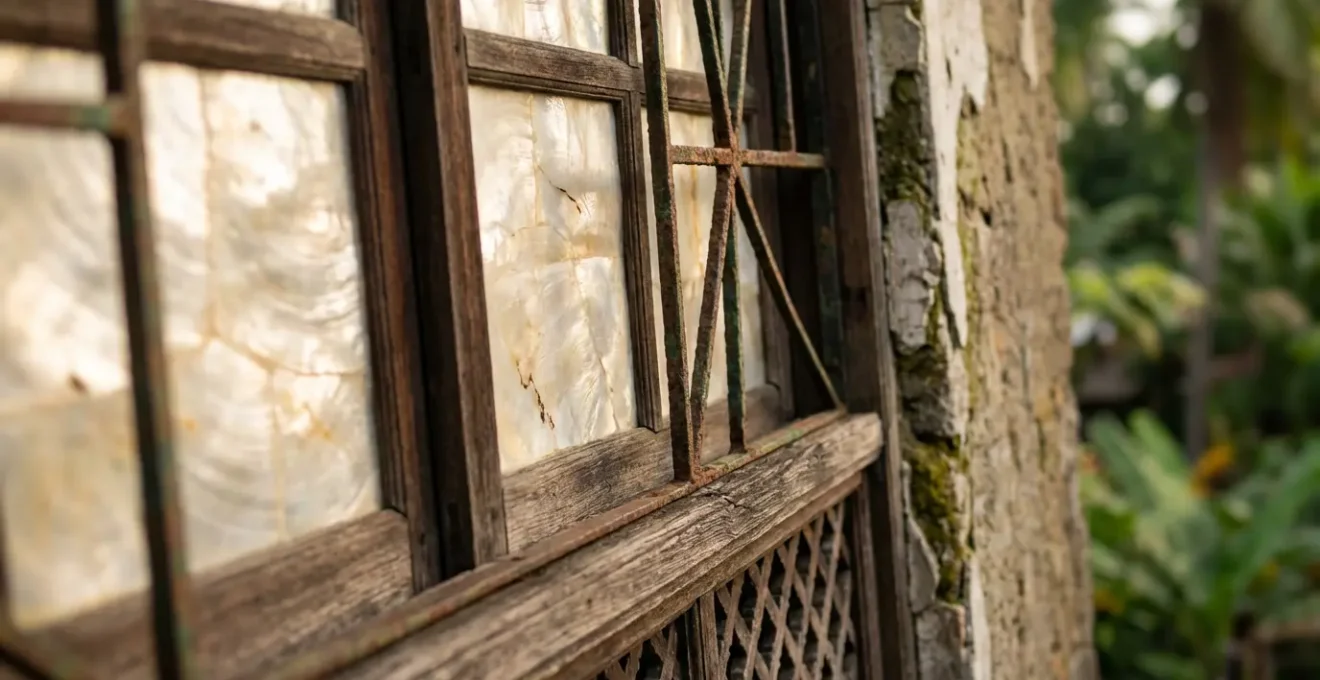
These structures are a living heritage, not just museum pieces. Their distinctive features, like the translucent capiz shell windows and intricate ventanillas, were designed for the tropical climate while projecting European-influenced aesthetics. Visiting them requires respect for their status as private residences. Fortunately, a respectful approach can yield rewarding experiences. Many families have adapted their ancestral homes for modern use, creating legitimate avenues for public access.
Here are several ethical ways to experience the interior of a Bahay na Bato:
- Visit Formal Museums: Reconstructed examples like Casa Manila in Intramuros are open to the public and offer guided tours.
- Look for Adaptive Reuse Locations: In heritage towns like Vigan, Taal, and Silay, many ancestral houses have been converted into restaurants, hotels, or cafés where visitors are welcomed as customers.
- Time Your Visit During Fiestas: Many homeowners traditionally open their doors to the community during local celebrations, offering a rare glimpse into these private spaces.
- Contact Local Tourism Offices: They often organize heritage walks that include pre-arranged visits to select private homes with the owners’ full permission.
The Mistake of Thinking Philippine Catholicism Is Identical to Spanish Catholicism
At the heart of every plaza is the church, the undeniable anchor of the colonial blueprint. Its purpose was the propagation of Catholicism, and while the faith took deep root, it is a profound mistake to assume that Philippine Catholicism is a mere carbon copy of its Spanish counterpart. Instead, the plaza became the stage for a unique form of folk Catholicism—a syncretic faith that blended imported dogma with pre-colonial animist beliefs and community rituals. This process of adaptation occurred over the 333 years of Spanish colonization, creating a spiritual expression that is distinctly Filipino.
The plaza itself is the primary theater for this syncretism. While the church hosts the formal liturgy, the open space of the plaza is where popular devotion unfolds. It is here that town fiestas, dedicated to a patron saint, transform into vibrant community events that often incorporate pre-Christian elements, such as harvest rituals. The Pahiyas Festival in Lucban, where houses are adorned with agricultural produce, is a perfect example of blending veneration for a saint with thanksgiving for nature’s bounty. Similarly, the intense, physical devotion seen in the procession of the Black Nazarene in Manila has roots in indigenous traditions of sacrifice and community ordeal.
This demonstrates how the plaza serves as the stage for uniquely Filipino religious expressions that blend Catholic liturgy with pre-colonial traditions. The physical layout—church at the center, convent nearby, and a large plaza for gatherings—was designed for control, but it was co-opted by the local population to serve their own cultural and spiritual needs. The result is a cultural palimpsest, where one can see the layers of indigenous belief beneath the surface of orthodox Catholicism.
When to Photograph Vigan’s Calle Crisologo to Avoid the Souvenir Stalls?
Vigan’s Calle Crisologo is perhaps the most famous and beautifully preserved street emanating from a classic plaza complex. As a UNESCO World Heritage site, it attracts countless visitors who come to “marvel at landmarks like the Saint Paul Cathedral or stroll through the scenic Calle Crisologo, which features museum-like heritage residences.” However, for the photographer and history enthusiast, this popularity presents a modern dilemma: capturing the timeless atmosphere of the street amidst the commercial activity of souvenir stalls and crowds. The challenge is a direct negotiation between preserving heritage and sustaining a tourist economy.
To capture the authentic spirit of this historic street, timing and technique are everything. The goal is to see the street not as a commercial strip, but as it was—a residential and mercantile hub of a bygone era. This requires avoiding peak hours and focusing on the details that tell the story of the place. The best photographers look for the narrative in the textures: the patina of old wood, the ethereal glow of capiz windows, and the intricate patterns of the ventanillas.
For those seeking to capture Vigan’s soul, here are some proven strategies:
- Shoot during “blue hour” (5:30-6:00 AM): At this time, the cobblestones often glisten with morning dew, the warm streetlights are still on, and the shops are closed, leaving the street empty and atmospheric.
- Visit during light rain: Unpopular with most tourists, a light rain can be a photographer’s best friend, creating beautiful reflections on the wet cobblestones and clearing the streets.
- Seek elevated perspectives: Shooting from the upper-floor windows of heritage hotels that line the street offers unique, crowd-free vantage points.
- Focus on details: Instead of wide shots of the crowded street, create intimate compositions focusing on the architectural craftsmanship.
By employing these techniques, one can bypass the surface-level tourist experience and connect with the deeper historical essence of the place, creating images that reflect its true character.
Corregidor vs. Intramuros Dungeons: Which WWII Site Is More Emotional?
The Spanish colonial blueprint, embodied by Intramuros (“within the walls”) in Manila, dominated the Philippines for over three centuries. However, the 20th century brought violent disruptions, most notably World War II. Two of the most poignant WWII sites in the Philippines, the dungeons of Intramuros and the ruins of Corregidor Island, both evoke powerful emotions, but they do so in vastly different ways. They represent the clash and collapse of two successive colonial eras—the Spanish and the American—and offer contrasting experiences of historical trauma.
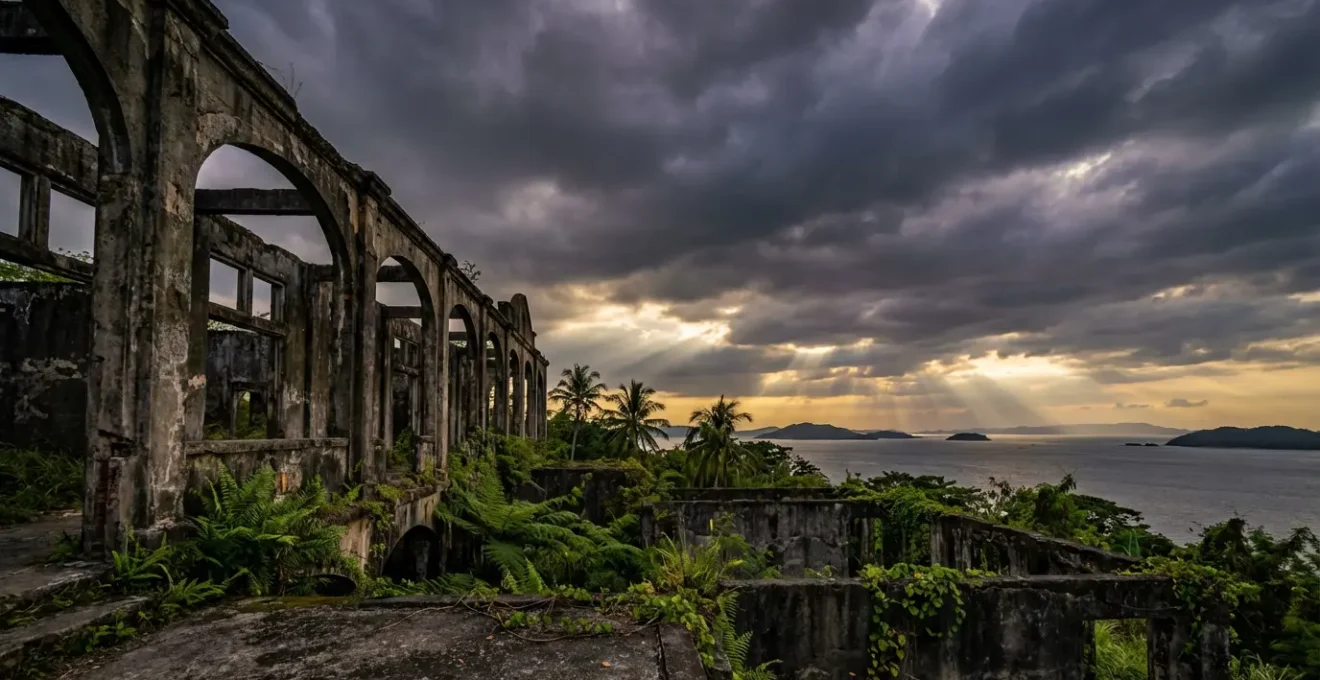
Intramuros, the original heart of Spanish Manila, evokes a sense of intimate suffering and claustrophobia. Its dungeons, located within the ancient walls, were sites of imprisonment and death for civilians and prisoners of war. The experience is one of darkness, damp air, and confinement, a visceral connection to individual human tragedy at the tail end of a long colonial history. Corregidor, in contrast, elicits a feeling of awe and loneliness. As a fortified American military bastion at the mouth of Manila Bay, its ruins speak to the grand scale of modern warfare and the failure of a colonial defense system. The experience is one of wind blowing through skeletal barracks, panoramic sea views, and the overwhelming sense of abandonment. The following table, based on historical and architectural analysis from sources like the architectural history of the Philippines, breaks down this emotional and physical contrast.
| Aspect | Intramuros Dungeons | Corregidor Island |
|---|---|---|
| Type of Emotion | Claustrophobia, intimate suffering | Awe of military scale, loneliness |
| Historical Layer | End of 300-year Spanish era | Failure of American colonial defense |
| Physical Experience | Damp air, darkness, confined spaces | Wind through ruins, panoramic sea views |
| Primary Victims | Civilians and POWs | Military defenders |
| Preservation Status | Partially restored walls and structures | Preserved ruins and tunnels |
How to Take Photos in Old Churches Without Disturbing Worshippers?
The baroque churches at the center of each plaza are more than just historical monuments or tourist attractions; they are active and deeply sacred spaces. For many Filipinos, these churches are sites of intimate, personal prayer and spiritual conversation. An intrusive photographer, no matter how well-intentioned, can violate this sacred atmosphere. Therefore, for the history enthusiast wishing to document the stunning architecture of these churches, cultural sensitivity and a strict code of ethics are essential. The goal is to capture the beauty of the space without becoming a disruption to its primary, spiritual function.
The key is to separate the activity of tourism from the act of worship. This means being acutely aware of mass schedules and the presence of individuals in prayer. The best approach is to operate with stealth and respect, focusing on architectural details—the massive buttresses, the hand-carved retablos, the ceiling frescoes—rather than on the people who use the space for its intended purpose. Adopting a mindset of a guest in a sacred home, rather than a consumer of a tourist product, is paramount.
Photographer’s Code of Ethics for Sacred Spaces
- Check Schedules: Check mass times online or with locals and avoid visiting during services. Plan your shoot for at least 30 minutes before or after worship.
- Go Silent: Use your camera’s silent or electronic shutter mode to eliminate all mechanical sounds. If your camera is loud, do not shoot.
- Respect Sacred Zones: Never set up tripods or pose for photos in the central nave or near the altar where people are praying. Stay to the side aisles.
- Show Gratitude: Make a small donation in the collection box. This is a gesture of respect and contributes to the building’s maintenance.
- Time it Right: The quietest time for photography is usually on weekday afternoons, between 2 PM and 4 PM, when the church is often empty.
Spanish vs. American Influence: Which Is More Visible in Modern Manila?
The urban fabric of Manila is a quintessential cultural palimpsest, a city where two major colonial legacies—Spanish and American—are visibly layered and often in direct competition. While the Spanish influence is older and more deeply embedded, the American period introduced a radically different vision for the city. Deciding which is “more visible” depends entirely on where and how one looks. The contrast is stark: the Spanish legacy is in the dense, organic, plaza-centric grids, while the American legacy is in grand boulevards and monumental civic planning.
The sheer duration of influence is a key factor; the length of Spanish colonization (333 years) dwarfs the American period (48 years). This gave the Spanish model time to become the default template for urban life. However, during their tenure, the Americans sought to remake Manila into a “uniquely European city in the tropics.” This vision was spearheaded by architect Daniel Burnham, a leading figure in the “City Beautiful” movement, who designed wide avenues, grand parks like Rizal Park, and neoclassical government buildings. This introduced a new socio-spatial logic based on sanitation, civic grandeur, and automobile transport, directly challenging the pedestrian-scaled, spiritually-centered Spanish plaza complex.
Today, both influences coexist. Spanish influence is felt in the everyday—in the Catholic faith, the fiesta culture, and the loanwords that pepper the Tagalog language (mesa, silya, kusina). American influence dominates in the official spheres of life—in the legal and democratic institutions, the public education system, and the use of English in business and higher education. The following table highlights these contrasting legacies:
| Aspect | Spanish Influence | American Influence |
|---|---|---|
| Urban Layout | Plaza-centric grid patterns, plaza complex model | Wide boulevards, City Beautiful movement |
| Architecture | Churches, bahay na bato, fortifications | Art Deco buildings, public schools, civic structures |
| Language | Everyday vocabulary (mesa, silya, kusina) | Business, legal system, higher education |
| Social Structure | Catholic faith, fiesta culture, family values | Democratic institutions, public education system |
| Examples | Intramuros, Plaza Miranda | Rizal Park, Burnham’s Manila plan |
Key Takeaways
- The standardized Philippine plaza is a deliberate colonial blueprint designed for socio-political control, not just a practical layout.
- This blueprint’s logic influenced non-architectural aspects of Filipino culture, including surnames, religious practices, and social hierarchies.
- Understanding this historical framework is crucial for respectfully engaging with the Philippines’ living heritage as a modern traveler or enthusiast.
Why Are Philippine Baroque Churches Built With Huge Buttresses?
The monumental churches that anchor every town plaza are not simply European designs transplanted to the tropics; they are remarkable works of engineering and vernacular adaptation. The most striking feature of these structures, particularly in regions like Ilocos, is the presence of enormous, thick buttresses flanking their walls. These are not merely decorative. They are the defining characteristic of a unique architectural style known as “Earthquake Baroque,” a direct response to the Philippines’ location within the Pacific Ring of Fire, a region of intense seismic activity.
As the architectural historian Alicia Coseteng first articulated, Earthquake Baroque is a pragmatic reinterpretation of the European Baroque style, adapted for survival. Spanish missionaries and Filipino builders quickly learned that the tall, slender, and highly ornamented churches of Europe were ill-suited to a land of frequent and violent tremors. In response, they designed lower, wider, and massively reinforced structures. The famous Paoay Church in Ilocos Norte is the primary example of this style. A look at Paoay Church’s structural engineering reveals 24 massive buttresses, some measuring up to 1.67 meters (5.5 ft) thick, that provide crucial structural support against lateral earthquake forces.
This spirit of seismic adaptation extended to other architectural elements. Another brilliant innovation was the construction of bell towers detached from the main church building. The Paoay bell tower, for instance, stands at a distance from the church. This was a deliberate design choice to prevent the tower from collapsing onto the main church nave during an earthquake, a common and catastrophic failure point in earlier designs. This practical solution, repeated in other seismically active regions, showcases the builders’ empirical understanding of physics and their capacity for life-saving innovation. These churches are thus a testament to a fusion of foreign aesthetics and local environmental realities.
By learning to read the stories told by the plaza, the surnames, and the stones of the churches, the observant traveler can gain a far deeper appreciation for the complex and resilient culture of the Philippines. Your next visit to a small town can become an act of historical discovery.