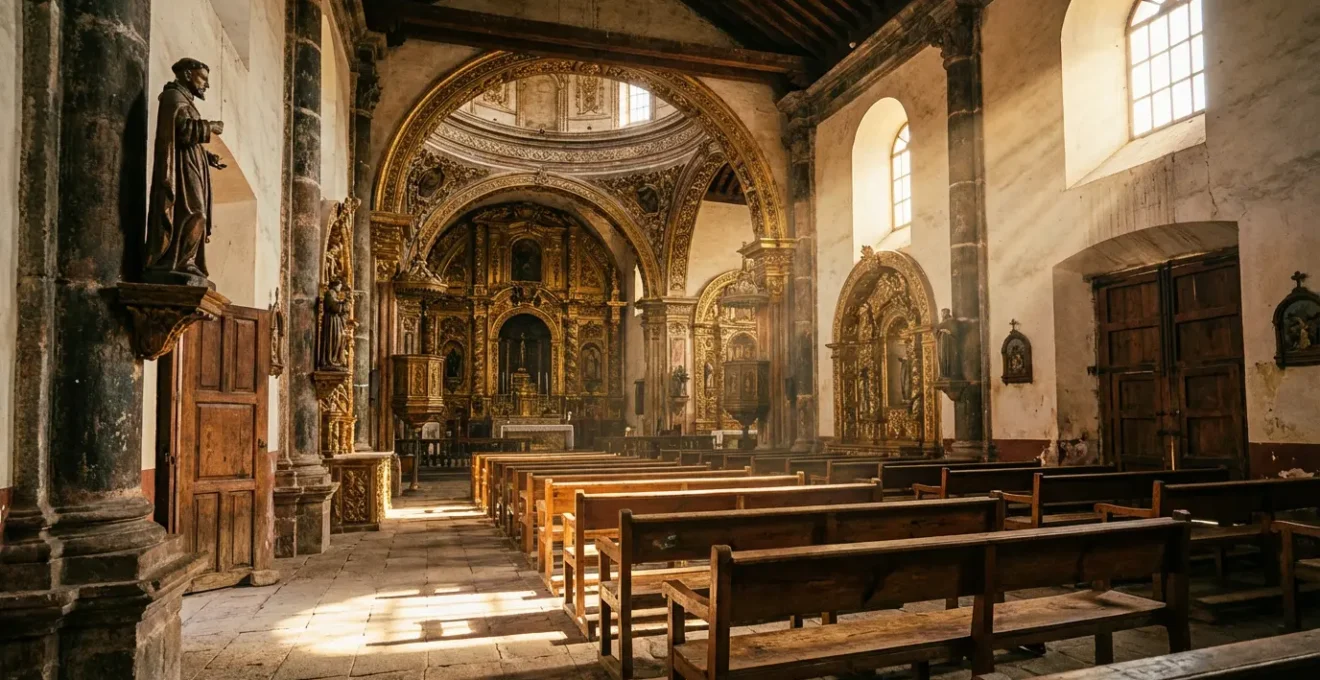
Authenticity in heritage is not a single standard; it’s a spectrum from the meticulously reconstructed to the organically lived-in.
- Intramuros offers a powerful, curated authenticity—a resurrected fortress city that feels like walking through a meticulously researched history book.
- Vigan presents a fragile, lived-in authenticity—a preserved town where daily life unfolds within centuries-old ancestral homes.
Recommendation: Choose Intramuros for a concentrated, monumental dose of history. Choose Vigan for an immersive, atmospheric journey into a past that is still breathing.
For the history lover standing at a crossroads in Manila, the choice is a profound one. Do you immerse yourself in the walled city of Intramuros, a bastion of colonial power right at your doorstep? Or do you embark on the long eight-hour journey north to Vigan, a city seemingly frozen in time? The question of which is “more authentic” is common, but as a conservation architect, I propose it’s the wrong question. Authenticity is not a simple metric but a rich and varied tapestry.
Many will compare the two based on their photogenic qualities—the cobblestones of Calle Crisologo versus the formidable walls of Fort Santiago. This perspective, while visually rewarding, misses the deeper architectural narrative. We must look beyond the surface and ask what kind of historical truth each site offers. Intramuros tells a story of resilience and reconstruction, a city brought back from near-total obliteration. Vigan, on the other hand, tells a quieter story of continuity and domesticity, of a heritage that persists not in a museum but in the daily lives of its people.
This guide moves beyond a simple comparison. We will analyze the very texture of authenticity at each location. We will explore the challenges of preserving these spaces, from the quiet act of taking a photograph in a living church to the immense forces of nature that threaten their existence. This is not about declaring a winner, but about understanding the different forms of historical experience they represent. It’s about deciding whether you wish to witness history resurrected or history lived.
This article provides an in-depth, comparative look from a conservationist’s perspective to help you understand the unique character of each site. By exploring the practicalities of visiting and the philosophical questions they raise, you can make an informed choice about which journey will best satisfy your quest for the past.
Summary: A Tale of Two Colonial Treasures
- How to Take Photos in Old Churches Without Disturbing Worshippers?
- Why Are Some UNESCO Heritage Churches Crumbling Despite Status?
- The Risk of Entering Ruins Without a Safety Helmet or Guide
- Guided Tour vs. Audio Guide: Which Is Better for Fort Santiago?
- When to Walk the Walls of Intramuros for the Best Sunset View?
- How to Visit Corregidor Island to Understand the WWII Pacific Theatre?
- How to Visit a Privately Owned “Bahay na Bato” Without Trespassing?
- Why Is the Country Named After a Spanish King Despite Its Asian Location?
How to Take Photos in Old Churches Without Disturbing Worshippers?
Respectful photography in active heritage churches requires treating the space as a place of worship first and a photo opportunity second. This means prioritizing silence, stillness, and an awareness of others over capturing the perfect shot. The key is to be an unobtrusive observer, using natural light and focusing on details rather than disruptive wide shots during moments of prayer.
In both Vigan and Intramuros, churches like the San Agustin Church are not just historical monuments; they are active parishes. The architectural narrative of these buildings includes the soft echo of prayers and the gentle wear on the pews. To capture this ‘lived-in’ sanctity, a photographer must become part of the quiet atmosphere. This involves scouting for times outside of Mass and other services, moving slowly, and disabling all camera sounds. The goal is to document the space without altering its sacred function.
The practice of heritage documentation has evolved to prioritize this respect. Early projects set the standard for a balanced approach, ensuring that the need for historical records did not infringe upon the spiritual life of the community. As the Ayala Museum’s historical documentation project showed, it is possible to create a valuable archive while maintaining reverence. This mindset is crucial for any visitor with a camera, transforming the act of photography from a tourist activity into a form of quiet appreciation.
Your Checklist for Respectful Church Photography
- Scout the church schedule beforehand – avoid mass times, confession hours, and special ceremonies. Mid-afternoon on weekdays (2-4 PM) typically offers the quietest windows.
- Enter silently and observe for 2-3 minutes before taking any photos. Look for ongoing prayers or meditation and choose a different area if someone is present.
- Use natural light exclusively – position yourself to capture window light, candlelight reflections, or ambient illumination without flash.
- Focus on architectural details and textures – capture the worn texture of prayer kneelers, intricate wood carvings, ceiling patterns, or column details rather than wide shots.
- Move slowly and deliberately – avoid rapid movements, keep equipment silent (turn off camera beeps), and limit yourself to 10-15 minutes maximum.
Why Are Some UNESCO Heritage Churches Crumbling Despite Status?
A UNESCO World Heritage designation is a prestigious honor, not a magical shield. These sites remain vulnerable to the same forces as any other structure: natural disasters, the slow decay of time, and a critical lack of funding for continuous maintenance. The status helps attract attention but does not guarantee the immense financial resources required for conservation, especially in a country within the Pacific Ring of Fire.
The Philippines’ Baroque churches, including those in Vigan’s vicinity, are masterpieces of “Earthquake Baroque” architecture, designed with buttresses and separate bell towers to withstand seismic activity. However, even these ingenious designs have their limits. The damage inflicted upon Vigan’s heritage structures by the magnitude-7.0 earthquake in 2022 is a stark reminder of this fragility. An estimated 1.6 billion pesos ($27.3 million) in damage was caused, severely impacting around 100 ancestral homes and the city’s cathedral.
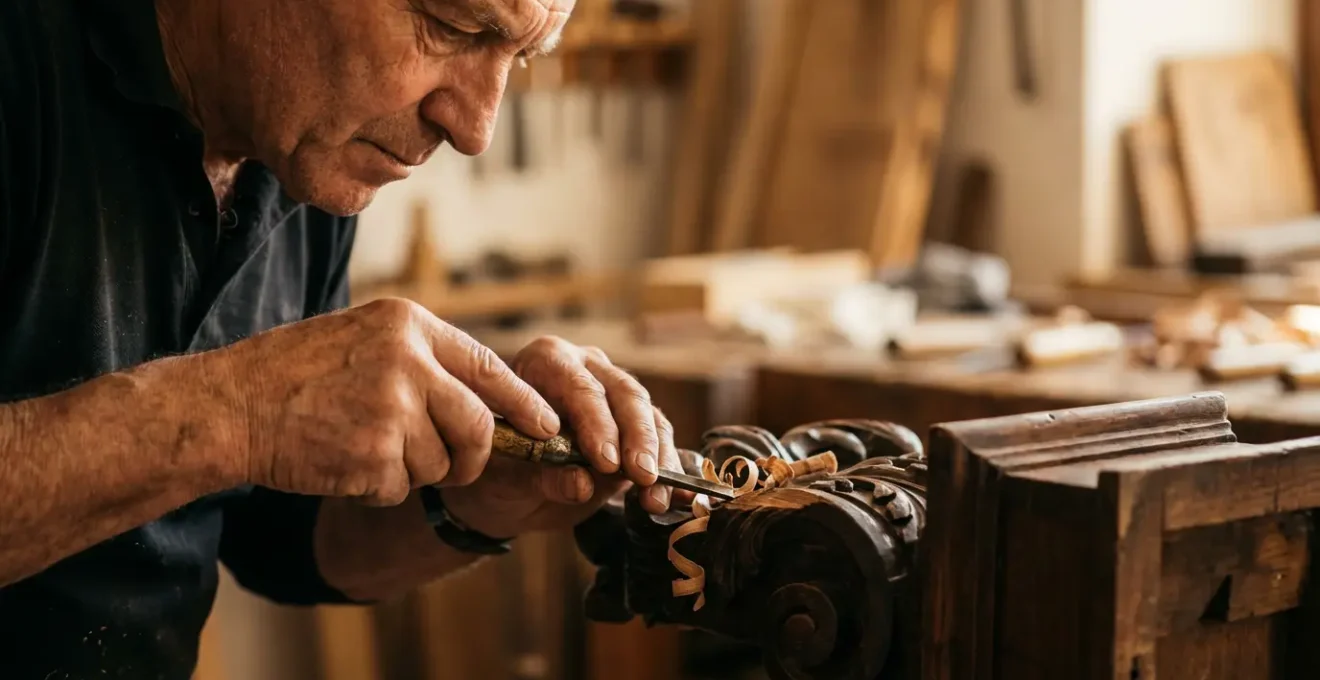
The challenge is compounded because many of these properties are in private hands. For homeowners, securing the funds for authentic restoration is often impossible, creating a gap between the will to preserve and the means to do so. This is where the “lived-in authenticity” of a place like Vigan becomes its greatest vulnerability. Unlike a state-funded museum, its survival depends on a complex ecosystem of private owners, local government, and limited national support. The patina of time can quickly turn from charming to catastrophic without constant, expert intervention.
The Risk of Entering Ruins Without a Safety Helmet or Guide
The primary risk of exploring ruins without proper guidance or safety gear is underestimating their instability. What appears to be a solid wall or floor could be structurally compromised by centuries of weather and seismic stress. Unmarked hazards like covered wells, loose masonry, and fragile floors are common, and standard travel insurance may not cover accidents in restricted areas.
From a conservation architect’s perspective, historic ruins are not playgrounds; they are active sites of decay that demand respect for both personal safety and the structure’s integrity. The “look but don’t touch” rule is paramount. Oils and pressure from hands can accelerate the deterioration of ancient stone and wood. Following designated pathways is not merely a suggestion but a critical safety measure to avoid unseen dangers. The most compelling ruins are often the most fragile, and a legitimate guide, authorized by bodies like the National Historical Commission, is trained to navigate these risks.
The allure of capturing a unique photo in a forbidden section is a dangerous temptation. Barriers and “No Entry” signs are placed based on expert structural assessments. Ignoring them is not adventurous; it’s a gamble with your safety and the site’s future. The very identity of these heritage locations is tied to their physical form, even in a state of ruin.
The identity of Vigan is not the same without these historic ancestral houses and structures. They are important to Vigan because [the city] used heritage conservation as a driver for development.
– Christian Nico Pilotin, Vigan City Architect, UNESCO Heritage Emergency Fund Report
This sentiment highlights that every piece of a heritage site contributes to its overall narrative. Preserving it means interacting with it responsibly, recognizing that the most authentic experiences are often the safest and most respectful ones.
Guided Tour vs. Audio Guide: Which Is Better for Fort Santiago?
The choice between a human guide and an audio guide in Fort Santiago depends on your primary goal. For factual information delivered at your own pace, an audio guide is efficient and affordable. However, for a deeper, more emotional connection to the site’s history, a human guide is unparalleled. They provide not just facts, but context, narrative, and the ability to answer spontaneous questions.
Fort Santiago, the historical core of Intramuros, is a place dense with stories of heroism and tragedy. An audio guide provides the “what”—dates, names, and events. A skilled human guide delivers the “why” and “how,” weaving these facts into a compelling architectural narrative. They can point to a specific moss-covered stone and share an anecdote that isn’t in any official script, connecting the monumental structure to the human lives it shaped.
This table compares the practical aspects of each option, based on offerings from the Intramuros Administration and local tour operators:
| Aspect | Human Guide | Audio Guide | Hybrid Approach |
|---|---|---|---|
| Cost | PHP 1,000-1,750 per person | PHP 150-200 rental | PHP 1,200-1,950 total |
| Duration | 2-3.5 hours structured | Self-paced (1-4 hours) | 4-5 hours comprehensive |
| Depth of Information | Stories, emotions, Q&A interaction | Factual, dates, standard script | Facts plus personalized insights |
| Flexibility | Fixed route, group pace | Choose your path, repeat sections | Customized questions after foundation |
| Local Insights | Current events, personal anecdotes | Pre-recorded, may be outdated | Both historical and contemporary |
The Enduring Legacy of Theatrical Storytelling
The late, great Carlos Celdran revolutionized Manila’s heritage tours by transforming them into performance art. His “Walk This Way” tour was a masterclass in theatrical storytelling, bringing 450 years of history to life with passion and wit. He proved that a guide’s personality and narrative skill could transform a simple walk into an unforgettable experience, inspiring a new generation of guides who understand that history is best remembered when it is felt.
For a site like Fort Santiago, whose authenticity is meticulously reconstructed, a human guide is the key to breathing life back into the stones. They bridge the gap between the restored artifact and its tumultuous past.
When to Walk the Walls of Intramuros for the Best Sunset View?
For the most spectacular sunset view from the walls of Intramuros, timing is everything. The ideal moment is not just at sunset itself, but during the “golden hour” leading up to it and the “blue hour” immediately following. This window, typically between 5:15 PM and 6:30 PM during the dry season (November to February), offers the most dramatic light for photography and atmosphere.
The experience is an architectural dialogue between past and present. From atop the ancient stone ramparts, particularly near the Baluarte de San Andres, you witness the sun setting behind the modern Manila skyline. The warm, raking light of the golden hour accentuates the texture of the centuries-old walls, casting long shadows and highlighting the patina of time. This is the moment when the reconstructed grandeur of Intramuros feels most alive, bathed in a light that connects it to the centuries of sunsets it has witnessed.
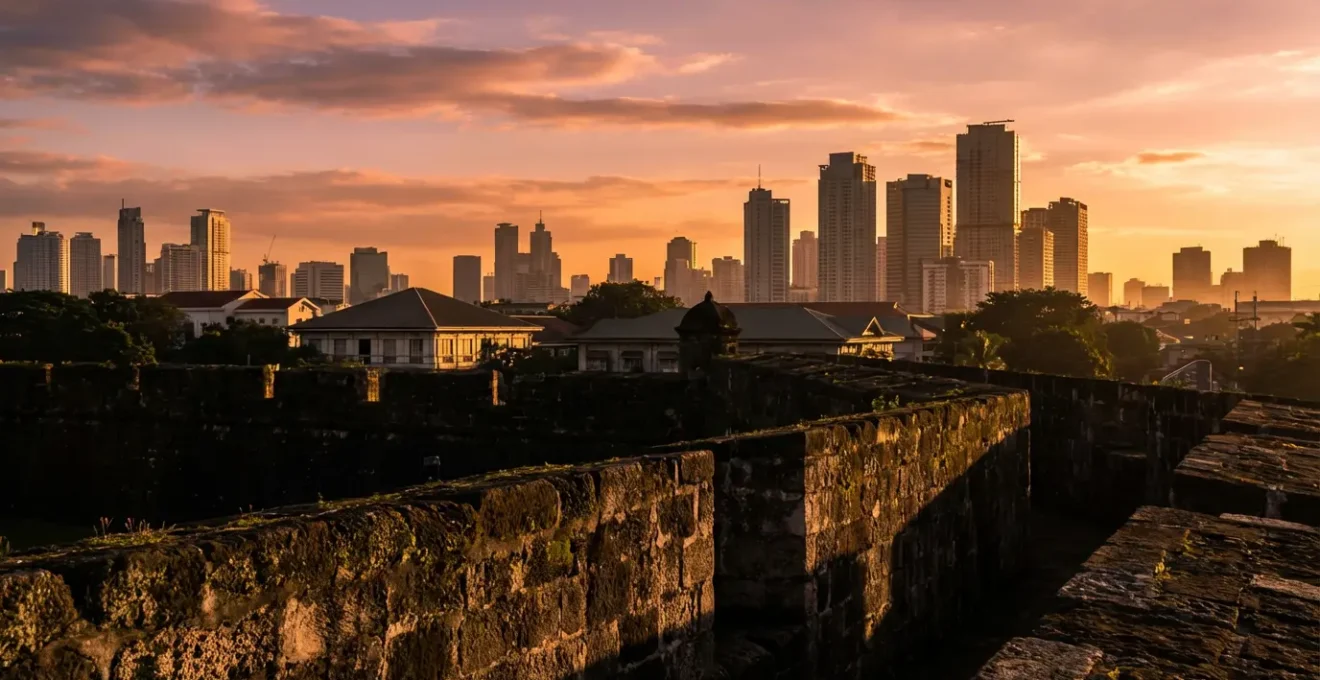
As the sun dips below the horizon, don’t leave. The “blue hour” begins, painting the sky in deep indigos and violets. This is when the city lights start to twinkle, creating a stunning contrast between the dark, silent fortifications and the vibrant, modern city beyond. The clearest skies are generally from November to February. A slight haze, common in March and April, can diffuse the light and create even more intense oranges and reds.
For a complete experience, consider concluding your walk at a nearby rooftop bar like The Bayleaf’s Sky Deck. This provides an elevated perspective, allowing you to watch the final vestiges of light fade as Intramuros settles into its nocturnal silhouette, a sleeping giant in the heart of a bustling metropolis.
How to Visit Corregidor Island to Understand the WWII Pacific Theatre?
To truly understand Corregidor’s role in the Pacific War, one must visit with a thematic lens, approaching it not as a collection of ruins but as a narrative landscape. Instead of a random tour, focus your visit on specific themes like “The Last Stand,” “The Life of a Soldier,” and “The Fall and Return.” This approach transforms the decaying barracks, gun emplacements, and tunnels into chapters of a powerful story.
While Vigan and Intramuros speak of colonial life, Corregidor Island offers a different, starker architectural narrative—that of 20th-century conflict. Its authenticity lies in its raw, unrestored state of ruin. The shell-pocked concrete and skeletal buildings are not a failure of conservation; they are the primary artifacts. Standing in silence inside the Malinta Tunnel early in the morning, before the crowds arrive, allows you to feel the immense weight of the history contained within its dark corridors.
To deepen the experience, contextual preparation is vital. Watching a historical film like John Ford’s ‘They Were Expendable’ (1945) before your visit can help populate the empty ruins with the faces and stories of those who served there. For the most profound impact, consider the overnight stay. After the day-trippers depart, the island takes on a haunting isolation. It’s in this quiet that you can best contemplate the strategic importance of this small island and the immense human drama that unfolded upon it.
How to Visit a Privately Owned “Bahay na Bato” Without Trespassing?
Visiting a privately-owned “Bahay na Bato” requires a delicate balance of genuine interest and profound respect for privacy. The key is to do your research beforehand, use official channels like the local tourism office, and approach with politeness. Never assume a home is open to the public; look for subtle cues like heritage plaques or small “visitors welcome” signs.
This is where Vigan’s “lived-in authenticity” becomes a tangible challenge for the curious traveler. Unlike the public monuments of Intramuros, many of Calle Crisologo’s most beautiful homes are still private residences. The best way to gain access is to demonstrate your sincere interest in heritage architecture, not just a desire for a photo op. Learning and using key architectural terms like ‘ventanilla’ (small windows below the main sill) or ‘calado’ (carved wooden fretwork) in your communication can signal a deeper appreciation.
In the digital age, social media is a powerful tool. Searching for the house’s name on Facebook or Instagram might lead to an official page or contact person. The most successful models for access, like the Syquia Mansion in Vigan, operate on a semi-public basis. The family opens parts of the home for tours during specific hours, charging a modest fee that directly supports the immense cost of maintenance. This creates a sustainable symbiosis between tourism and preservation. When in doubt, a polite, well-worded message sent in advance is always the best approach.
Key Takeaways
- Authenticity is a spectrum: Intramuros offers a curated, reconstructed history, while Vigan provides a lived-in, organic heritage experience.
- Preservation is an active struggle: UNESCO status does not make these sites immune to natural disasters or the immense costs of maintenance, especially for privately-owned structures.
- Respect is paramount: Whether photographing a church, exploring ruins, or visiting a private home, the visitor’s primary role is to be an unobtrusive and respectful observer.
Why Is the Country Named After a Spanish King Despite Its Asian Location?
The Philippines is named after King Philip II of Spain because the name was bestowed during the height of Spanish exploration and colonization, and it has persisted through subsequent historical periods as a symbol of a unified national identity. The name, given by explorer Ruy López de Villalobos in 1543, was a political act to claim the archipelago for the Spanish Crown, cementing a colonial legacy that would last over 300 years.
This name is perhaps the ultimate layer of colonial imprint, a permanent part of the national identity that transcends the physical architecture of Intramuros or Vigan. It reflects a history where a collection of disparate islands, each with its own local culture and language, was unified and defined by an external power. The name “Filipino” itself evolved from a term for Spanish-born people in the islands to encompass the native inhabitants who now form the nation.
The persistence of the name is a subject of ongoing discussion, reflecting the complex relationship the nation has with its colonial past. Contemporary debates about renaming the country to ‘Maharlika,’ a pre-colonial term for nobility, highlight a desire to decolonize the national identity and reclaim a pre-Hispanic heritage. However, others argue that the name “Philippines” has, over centuries, been imbued with a new, independent meaning forged through revolution and the creation of a unique national character. It is a testament to how identity is not static but is constantly being negotiated, built upon the foundations of history, however complicated they may be.
Ultimately, the choice between Vigan and Intramuros is a choice between two powerful historical narratives. To make the most informed decision for your journey, consider which type of story you want to hear—the epic of a city resurrected by meticulous effort, or the quiet, continuing tale of a town where the past is the present.