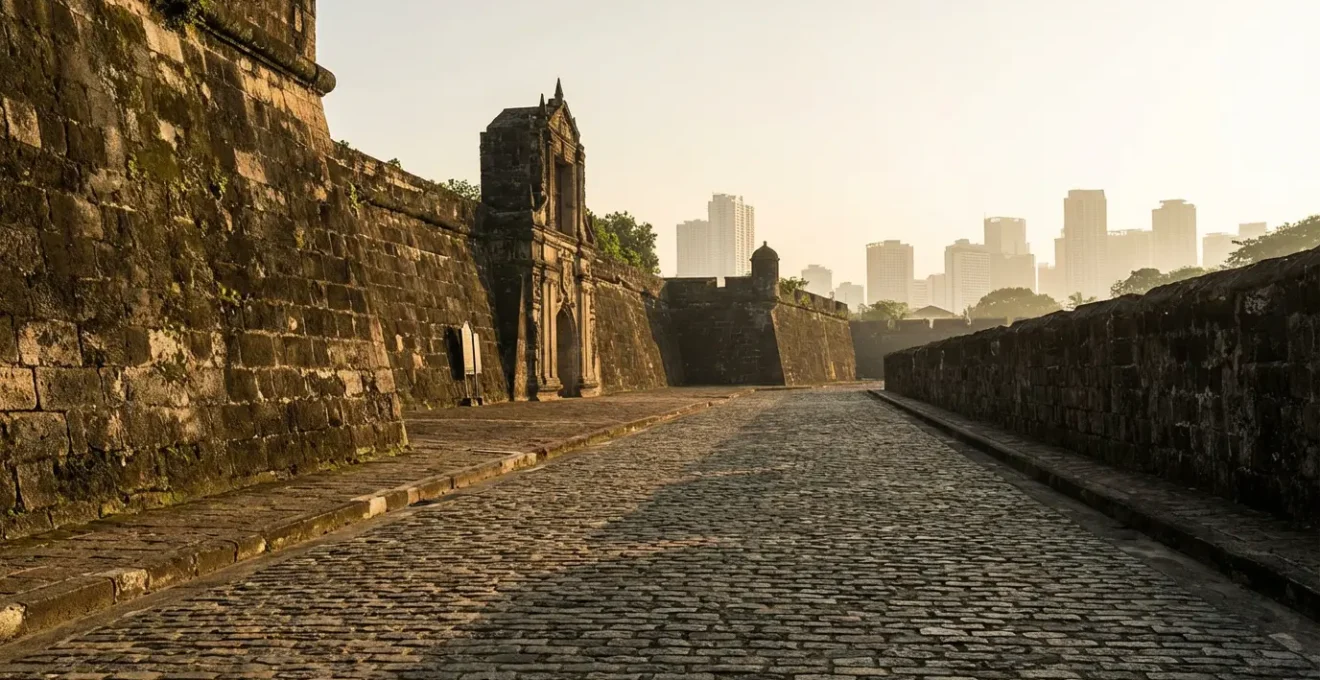
Manila’s chaos is daunting on a short layover, but Intramuros offers a direct shortcut to understanding the city’s soul, making it the most rewarding use of your limited time.
- Strategic planning, like avoiding peak traffic and using the unique Pasig River Ferry, makes the journey entirely manageable.
- While modern districts offer safety and comfort, they lack the unique historical character and cultural depth found only within the Walled City.
Recommendation: Skip the generic city tour and immerse yourself in living history for a truly unforgettable layover experience.
You’re sitting in Ninoy Aquino International Airport, watching the clock. You have hours to kill, a whole city throbbing just beyond the terminal walls, but a single word holds you back: traffic. Manila. The name itself conjures images of gridlock, chaos, and a city too overwhelming for a short stopover. The common advice is to stay put, to not risk the legendary jams for a fleeting glimpse of the capital. Many believe a quick tour is impossible, a logistical nightmare better left unexplored. They might suggest that if you must venture out, stick to the predictable gleam of the business districts.
But what if that chaos is precisely why you must go? What if the key to understanding Manila isn’t in avoiding its complexities, but in finding its heart? This guide proposes a different perspective. We argue that Intramuros, the ancient Walled City, is not just another tourist spot. It is the very urban DNA of the Philippines, a living time capsule that makes sense of the sprawling metropolis around it. It is not a detour from your journey; it is a shortcut to the heart of a nation.
Forget what you’ve heard about the impossibility of a Manila layover tour. With the right strategy, you can bypass the worst of the chaos and step directly into the soul of the city. This article will serve as your logistical and historical guide, showing you not only why Intramuros is the single most essential place to visit, but also exactly how to do it efficiently and safely, transforming your transit time into a profound cultural experience.
Summary: Your Strategic Guide to Conquering Manila for Intramuros
- When to Travel on EDSA to Avoid the Legendary Traffic Jams?
- Makati or BGC: Which Business District Is Better for Walking and Safety?
- How to Use the LRT/MRT Without Getting Crushed at Rush Hour?
- Tagaytay vs. Antipolo: Which Day Trip Offers the Best View and Breeze?
- The “Friendly Stranger” Scam: How to Identify It in Tourist Areas?
- When to Use the Pasig River Ferry to Skip Manila Traffic?
- Art Deco in Manila: Where to Find the Hidden Gems of the 1930s?
- Chain Hotel vs. Boutique Heritage: Which Luxury Stay in Manila Has More Soul?
When to Travel on EDSA to Avoid the Legendary Traffic Jams?
The first rule of Manila is to respect its arteries, and the most notorious of all is EDSA. This highway is not just a road; it’s a living, breathing organism that dictates the city’s rhythm. To a transit passenger, it represents the biggest gamble. However, understanding its pulse is the key to a successful sortie into the city. The problem is not just perception; it’s a matter of volume. An MMDA report from 2024 revealed that over 400,000 vehicles use EDSA daily, far exceeding its designed capacity of 300,000. This is the “chaos” you’ve been warned about.
But chaos has patterns. The morning rush, from 7:00 AM to 9:00 AM, is a torrent of commuters heading into the business districts. The evening exodus, from 5:00 PM to 8:00 PM, is even more intense, with Friday nights achieving a near-mythical state of gridlock. Your mission is to operate in the windows between these peaks. A trip to Intramuros planned between 10:00 AM and 3:00 PM is not just possible; it’s surprisingly efficient. If your layover forces a rush-hour journey, consider alternative routes like the C5 Road, but the ultimate strategy is timing. Leaving even 30 minutes outside peak hours can transform an agonizing crawl into a manageable drive.
Think of it not as traffic, but as the city’s heartbeat. By timing your travel to its calmer rhythms, you are not just saving time; you are demonstrating a mastery of the local environment, a prerequisite for any truly rewarding travel experience. This strategic approach turns the city’s greatest obstacle into a solvable puzzle.
Makati or BGC: Which Business District Is Better for Walking and Safety?
The standard, “safe” advice for a layover often points towards the polished business districts of Makati or Bonifacio Global City (BGC). They are sold as clean, secure, and walkable oases. And in many ways, they are. BGC, with its wide, ground-level sidewalks and visible security, feels like a piece of Singapore dropped into Metro Manila. Makati’s Central Business District offers a network of elevated walkways that allow you to traverse its core without touching street level. For a traveler concerned with safety and predictability, these areas are undeniably appealing.
However, they answer a question you shouldn’t be asking. You are not in Manila to find a replica of a global business hub; you are here to find Manila itself. These districts, for all their convenience, lack a crucial element: soul. Their curated urbanism and predictable layout offer comfort at the cost of character. This is where the contrast with Intramuros becomes stark.
This comparison shows a clear choice: do you want sterile safety or authentic discovery?
| Aspect | Makati | BGC |
|---|---|---|
| Walkability | Elevated walkways, covered passages in CBD, but requires navigation of stairs | Ground-level sidewalks, wheelchair accessible, marshalls at crossings |
| Safety Day | Generally safe in business areas, watch for pickpockets in crowded spots | Very safe with visible security, well-lit streets |
| Safety Night | Safe in Greenbelt/Legazpi, variable in Poblacion | Uniformly safe, though quieter after 10 PM |
| Public Spaces | Ayala Triangle Gardens, weekend markets | Open fields, public art installations |
| Character | Organic grit, spontaneous discoveries | Curated urbanism, predictable but sterile |
While Makati and BGC provide a sanitized version of urban life, Intramuros offers a journey. Its centuries-old walls contain not just buildings, but stories, secrets, and the raw, unfiltered identity of a nation. Choosing Makati or BGC for a short trip is like reading the dust jacket of a book; visiting Intramuros is like diving into the first chapter.
How to Use the LRT/MRT Without Getting Crushed at Rush Hour?
If road traffic is Manila’s circulatory system, the LRT and MRT train lines are its central nervous system—fast, direct, but prone to overwhelming surges. For the uninitiated, a rush hour journey can feel like a contact sport. The sheer density of people, a testament to the city’s massive working population, can be intimidating. This is the reality of the daily commute for millions of Filipinos, a display of incredible patience and resilience.
The key to using the train system is, once again, strategy. Peak hours, from 6:00 AM to 9:00 AM and 4:00 PM to 8:00 PM, are when the platforms are at their most crowded. If you must travel during these times, a few local tricks can make the experience bearable. Boarding at a station just before a major hub like Taft or Cubao can help you secure a spot before the main wave of passengers embarks. For female travelers, the designated women-only car offers a more comfortable and secure space during these intense periods.
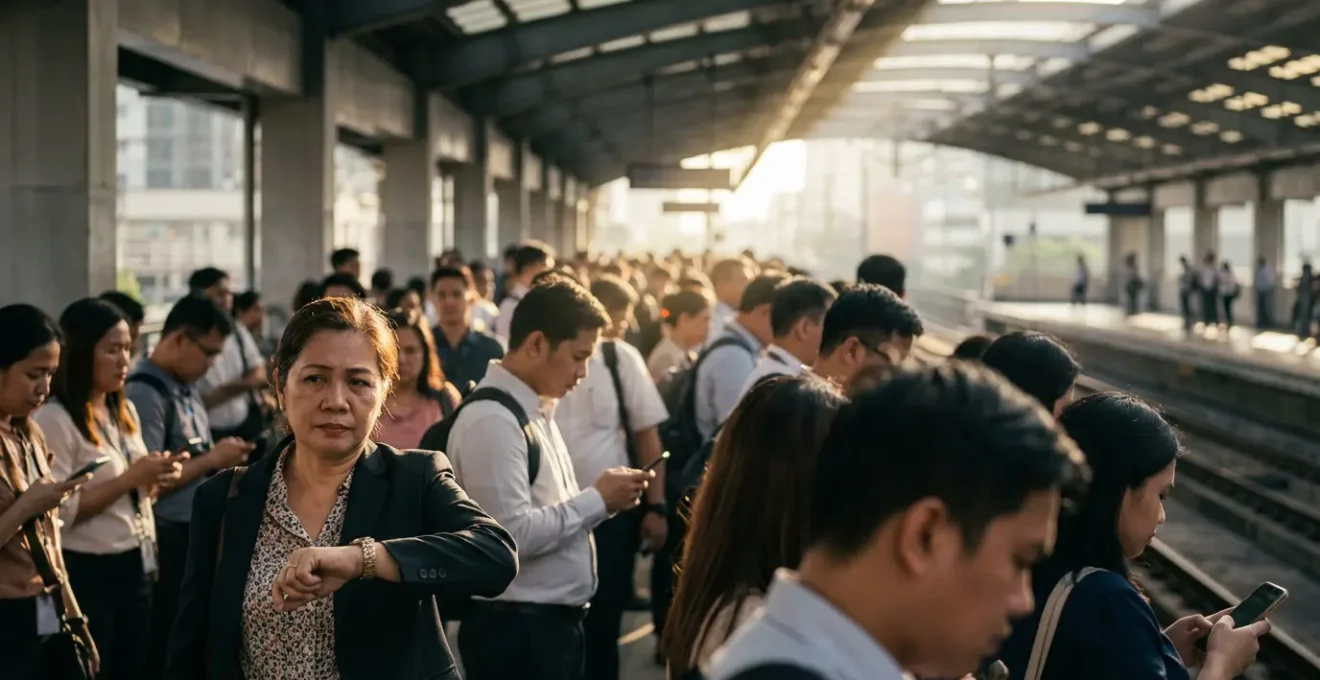
As you can see, navigating public transport requires a bit of local know-how. Always ensure your Beep card has ample balance (at least PHP 100) to avoid getting stuck at the exit gates; reloading at 7-Eleven or other convenience stores is a great way to skip long lines at the station. While the train system doesn’t lead directly into Intramuros, it connects you to hubs where a short taxi or Grab ride can complete your journey. For instance, taking the LRT-1 to Central Terminal station places you a short walk from the city walls. This system, while challenging, is a viable tool in your logistical arsenal.
Tagaytay vs. Antipolo: Which Day Trip Offers the Best View and Breeze?
When locals seek respite from the city’s heat and hustle, two names invariably come up: Tagaytay and Antipolo. Tagaytay, with its stunning panoramic views of the Taal Volcano and lake, offers a cool breeze and a resort-like atmosphere. Antipolo, closer to the city, provides breathtaking views of the Manila skyline, especially at night, and is home to a thriving arts scene, centered around the Pinto Art Museum. Both are fantastic escapes that offer a different perspective on Luzon.
However, for a passenger on a limited layover, they are a trap. The travel time alone makes them impractical. A trip to Tagaytay can easily consume 2-3 hours each way, turning your “day trip” into a race against the clock dominated by time spent in a vehicle. Antipolo is closer, at 1-1.5 hours, but still represents a significant time commitment that eats into your precious exploration window. These destinations are designed for full-day excursions, not quick layover adventures.
The logical fallacy is comparing these options to a trip into the city center. Intramuros is not a “day trip” in the same category. It is the city’s core. A well-planned journey to the Walled City can have you walking its historic ramparts in under an hour from the airport during off-peak times. While Tagaytay and Antipolo offer an escape from Manila, Intramuros offers an immersion into its very essence. It is the most efficient, rewarding, and historically significant use of a few hours in the capital, providing a deep sense of place that a distant viewpoint cannot match.
The “Friendly Stranger” Scam: How to Identify It in Tourist Areas?
Any great historical city attracts its share of opportunists, and Manila is no exception. A primary concern for any first-time visitor is safety, particularly regarding scams. The most infamous of these is the “Friendly Stranger” or “Tanim-Bala” scam, which preys on the politeness and naivety of tourists. Understanding its mechanics is the best defense and allows you to walk with confidence, not fear. The scam is a simple piece of social engineering that unfolds in predictable stages, almost like a theatrical play.
It usually begins in a high-traffic tourist area like Rizal Park or just outside the walls of Intramuros. The opening lines are disarmingly personal: “I work at your hotel,” “You look familiar, are you from Canada?” or “It’s my one day off, I’m celebrating my sister’s wedding tomorrow.” This is designed to lower your guard. The script then progresses to an invitation for a “special” local experience—visiting a “family home,” playing a “local card game,” or joining a “fiesta.” The endgame is always to pressure you into losing money in a rigged game or to extort cash for “hospitality.”
Your power lies in recognizing the script and refusing to play a part. A firm but polite “No, thank you” while continuing to walk is almost always sufficient. If they are persistent, stating “I’m late to meet my tour group” creates a reason for departure they cannot easily argue with. By being aware of these tactics, you are not being paranoid; you are being prepared. This knowledge transforms you from a potential target into an informed traveler.
Your Action Plan: Recognizing and Avoiding Tourist Scams
- Identify Red Flag Openings: Be wary of overly familiar opening lines from strangers, such as ‘I work at your hotel’ or invitations to a ‘special family event’. These are common hooks.
- Know the Common Locations: Be extra vigilant in high-traffic tourist spots like Rizal Park, the area around Mall of Asia, and near the main entrances of Intramuros.
- Recognize the Script: The pattern is almost always: overly friendly approach → invitation to a private home/bar for a ‘local experience’ → introduction of a rigged card game or inflated drinks bill.
- Prepare Your Exit Strategy: Have a firm but polite refusal ready. “No, thank you” while walking away is effective. If needed, use an excuse like, “I’m late to meet friends/my tour.”
- Practice Proactive Prevention: The best defense is to avoid engaging in the first place. Be polite but dismissive of unsolicited approaches from overly friendly individuals in these zones.
When to Use the Pasig River Ferry to Skip Manila Traffic?
What if there was a way to completely bypass Manila’s infamous traffic, enjoy a scenic journey, and be delivered to the doorstep of history? There is: the Pasig River Ferry. This underutilized transportation system is the single greatest secret weapon for any time-crunched traveler. The ferry glides along the historic Pasig River, the ancient commercial highway of the city, offering a unique and blissfully traffic-free perspective of Manila.
The ferry service acts as a direct link between the modern city and its historical heart. You can board at Guadalupe station, easily accessible from Makati and BGC, and cruise down the river. The journey itself is a tour. You’ll pass Malacañang Palace, the presidential residence, and see the city’s gritty, authentic riverside life. The key stops for a historical tour are Escolta, for accessing the 1930s architectural gems of what was once Manila’s premier shopping street, and Plaza Mexico, the station for Intramuros. Stepping off the ferry here feels like arriving in a different century.
The best time to use the ferry is in the early morning, between 6:00 AM and 8:00 AM, when the light is beautiful and the air is cooler. It’s a cash-only system, so be prepared with small bills for the incredibly affordable fare (typically PHP 15-30). While you should always check the schedule, as service can be suspended due to weather, planning your trip around the ferry transforms the logistical challenge of getting to Intramuros into one of the highlights of the visit. It is, without a doubt, the most stylish and intelligent way to travel.
Art Deco in Manila: Where to Find the Hidden Gems of the 1930s?
While Intramuros is the heart of Spanish colonial history, Manila’s story doesn’t end there. Just across the river from the Walled City lies a treasure trove of another era: the glorious Art Deco architecture of the 1930s. The district of Escolta, once the “Queen of Manila’s Streets,” was the city’s vibrant commercial and social hub during the pre-war American period. Today, its decaying grandeur offers a poignant glimpse into a golden age.
A self-guided walking tour of this area is a perfect complement to a visit to Intramuros, showcasing a different chapter of the city’s life. You can start at the magnificent First United Building, a beautifully preserved example of Art Deco design. Nearby, the skeletal remains of the Capitol Theater and the intricate facade of the Calvo Building whisper stories of a glamorous past. These streamlined, geometric structures stand in stark contrast to the baroque stone churches of Intramuros, revealing the city’s layered identity. For the most impressive collection, a visit to the campus of the Far Eastern University (FEU) reveals a stunning ensemble of Filipino Deco, integrating local motifs into the international style.
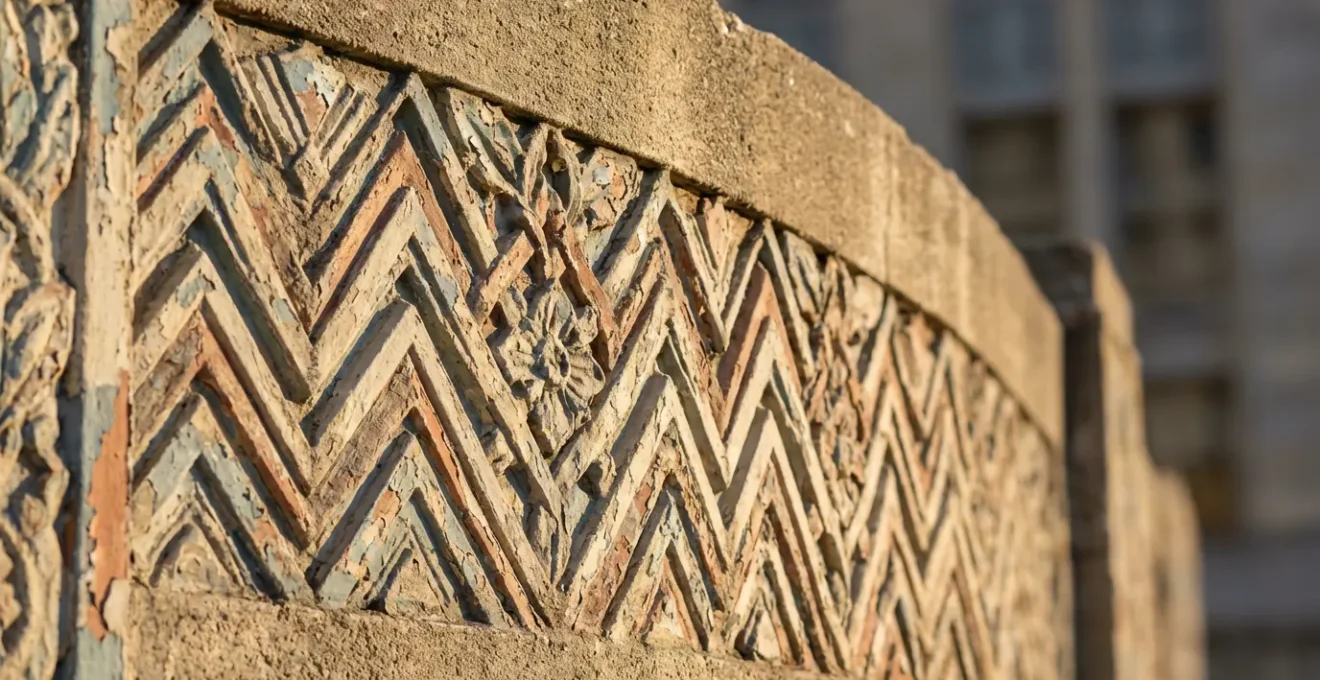
Perhaps the most spectacular of all is the Metropolitan Theater (MET), a masterpiece of tropical Art Deco by architect Juan M. Arellano. After decades of decay, this national treasure has been meticulously restored and recently reopened, its vibrant colors and stylized Filipino flora and fauna motifs shining once more. Exploring these gems proves that Manila’s history is not a monolith. Intramuros is the foundation, but the city’s soul is a rich tapestry woven from many different eras, each with its own architectural signature.
Key Takeaways
- Intramuros is more than a historic site; it’s a “shortcut” to understanding the complex soul of modern Manila, making it the most valuable use of a short layover.
- Manila’s infamous traffic and chaotic transport are manageable with strategic timing (avoiding 7-9 AM and 5-8 PM peaks) and using smart alternatives like the Pasig River Ferry.
- While modern districts like BGC and Makati offer predictable safety, they lack the authentic character and “living history” that make an Intramuros visit a unique and profound cultural experience.
Chain Hotel vs. Boutique Heritage: Which Luxury Stay in Manila Has More Soul?
Your journey into the city’s soul doesn’t have to end when you check into your hotel. In fact, your choice of accommodation can be the final, crucial element of your immersion. Manila offers the full spectrum of luxury, from the gleaming glass towers of international chains in BGC and Makati to the intimate, story-filled boutique hotels nestled in historic districts. For the traveler seeking more than just a comfortable bed, the choice is clear.
A stay at a major chain hotel like the Shangri-La or Conrad offers a globally consistent standard of excellence. The service is professional and scripted, the amenities are world-class, and the experience is one of predictable luxury. However, as the Manila Heritage Hotels Association notes, this experience can feel disconnected from the city itself. As they state in their 2024 guide, a heritage stay offers a profoundly different value proposition.
A chain hotel in BGC could be anywhere in the world, while a heritage hotel in Malate or Intramuros immerses you immediately in Manila’s specific history and identity.
– Manila Heritage Hotels Association, Boutique Heritage Hotels Guide 2024
Picture waking up not to the hum of a business district, but to the sound of church bells from a 400-year-old cathedral. Imagine starting your day with a walk on the ancient city walls as the sun rises, followed by a traditional Filipino breakfast in a restored colonial courtyard. This is the experience offered by hotels like The Henry or the White Knight within or near Intramuros. Here, the architecture is a character, and the staff’s stories are part of the service.
| Aspect | Chain Hotels (Shangri-La, Conrad) | Boutique Heritage (The Henry, White Knight) |
|---|---|---|
| Service Style | Professional, scripted, consistent globally | Personal, narrative-driven, stories from staff |
| Location | BGC/Makati business districts | Within or near Intramuros historic walls |
| Morning Experience | International buffet, gym, business center | Church bells, sunrise wall walks, local breakfast |
| Architecture | Modern glass towers, could be anywhere | Restored colonial buildings, unique details |
| Best For | Business travelers, predictable luxury | Cultural immersion, photography, history buffs |
Choosing a heritage hotel is the ultimate commitment to experiencing the city’s living history. It transforms your stay from a simple transaction into the final chapter of your journey into Manila’s soul.
To make the most of your Manila layover, the next logical step is to move from theory to practice. Plan your visit to Intramuros not as a tentative detour, but as the primary mission of your time in the city.