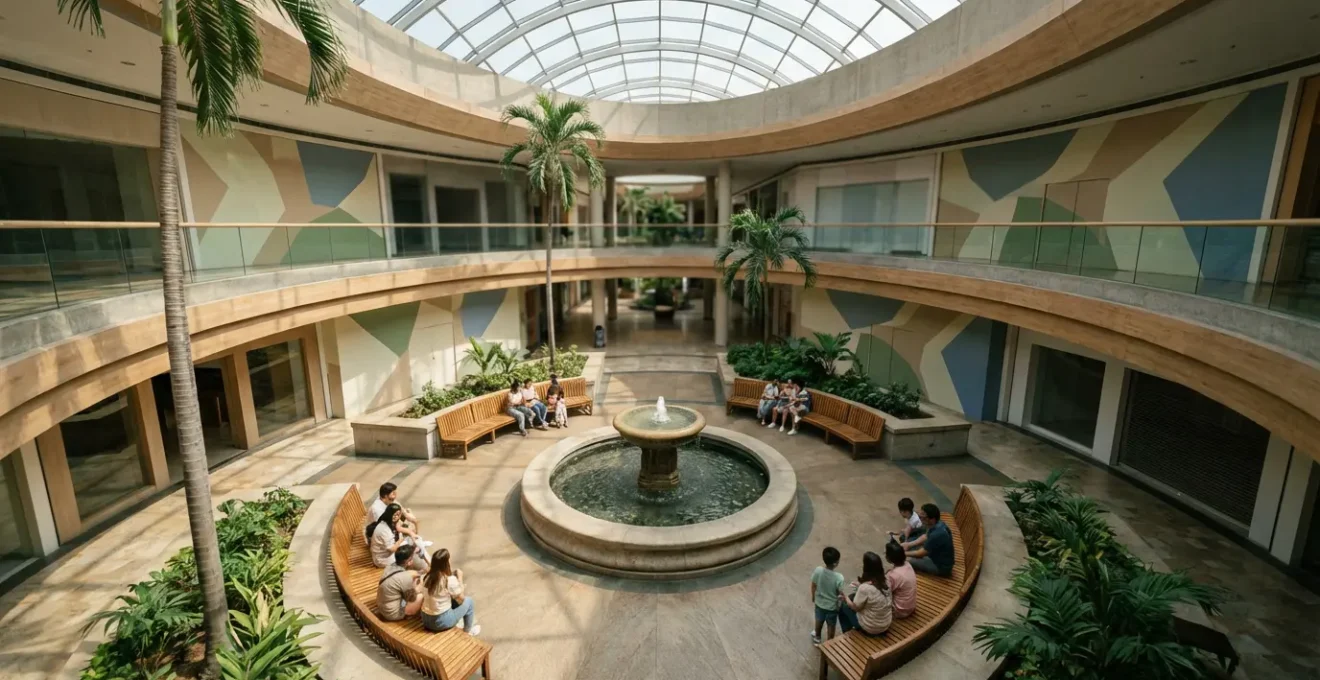
Contrary to the belief that Philippine malls are merely for shopping, they function as a complete substitute for traditional public life, serving as the nation’s de facto community centers.
- Malls are not just commercial spaces but integrated ecosystems that include housing, healthcare, spiritual centers, and workplaces.
- This shift is a direct response to a tropical climate and a historical deficit in public infrastructure like parks and community squares.
Recommendation: To understand contemporary Filipino society, observe the social dynamics within a major mall—it offers a more accurate insight than almost any other public space.
For many Western travelers arriving in the Philippines, a striking paradox defines the urban landscape: a noticeable scarcity of public parks and squares, contrasted with the overwhelming ubiquity of colossal shopping malls. The immediate conclusion is often tied to the sweltering tropical heat and a national love for shopping. While true, these explanations only scratch the surface of a much deeper socio-cultural phenomenon. The air-conditioned corridors are less about simple comfort and more about a fundamental shift in the very concept of public space.
The reality is that malls in the Philippines have transcended their commercial purpose. They have become the nation’s privatized town plazas—complex, climate-controlled ecosystems where the entirety of community life unfolds. This is not simply a trend but an infrastructural substitution, a response to a void in urban planning where private enterprise has stepped in to provide the services, security, and social arenas that a traditional public sphere would otherwise offer. From spiritual worship and professional work to exercise and social gatherings, the mall has absorbed the functions of the city square, the community center, and even the local park.
This analysis will deconstruct the Filipino mall, not as a collection of stores, but as a central pillar of modern life. We will explore the economic forces driving mall-integrated living, its role as a critical infrastructure hub for digital nomads, its function as a “third place” for work and leisure, and its surprising position as a center for both spiritual and physical wellness. Understanding this dynamic is essential to comprehending the contemporary Filipino way of life.
Summary: The Mall as a Micro-City in the Philippines
- Condo Living vs. House and Lot: Which Is Better for Expats in Manila?
- How to Get High-Speed Internet as a Digital Nomad in the Islands?
- The Risk of Underestimating Inflation in Major Philippine Cities
- Co-working Spaces vs. Coffee Shops: Which Is More Viable for Daily Work?
- When to Exercise Outdoors to Avoid the Urban Heat Island Effect?
- Why Do Malls Become Impassable on Sundays After Mass?
- Where to Find US Grocery Brands When You Are Homesick?
- SM Malls vs. Greenhills Tiangge: Which Shopping Experience Is for You?
Condo Living vs. House and Lot: Which Is Better for Expats in Manila?
For many expats in Manila, the choice between a condominium and a traditional house and lot is less about square footage and more about access to a curated lifestyle. The modern Philippine dream, especially in dense urban centers, is inextricably linked to mall proximity. Condominium developments in central business districts (CBDs) are not just sold as homes, but as entry points into a self-contained, walkable ecosystem with a mall at its core. This premium on convenience and security has created a real estate phenomenon where “mall-adjacent value” dictates market prices.
This trend is a direct manifestation of the mall as a privatized public sphere. Residents pay a premium for the privilege of having dining, shopping, entertainment, and even essential services within a secure, climate-controlled bubble, bypassing the city’s notorious traffic and unpredictable public spaces. The high demand for this integrated lifestyle is reflected in the housing market, with prices soaring in developments that offer seamless mall integration.
Case Study: The ‘Mall-Adjacent Value’ in Bonifacio Global City and Rockwell
The value of mall integration is starkly evident in Manila’s high-end districts. Bonifacio Global City exemplifies this ‘mall-adjacent value’, with 60sqm units costing between ₱17-27 million ($286,000-$459,000). Buyers are paying for the modern, planned-city environment where malls are integrated into the fabric of daily life. Meanwhile, Rockwell Center commands even higher prices—₱21-33 million ($357,000-$561,000) for similar sizes—precisely because of its exclusive and renowned mall ecosystem, which attracts affluent buyers seeking this ultimate form of mall-integrated luxury.
Furthermore, this ecosystem extends to services like healthcare. As Pacific Prime Philippines notes, clinics near business hubs offer more flexible hours and shorter wait times, with many expats scheduling appointments through apps. This centralization of life’s necessities solidifies the condo-mall nexus as the most efficient living arrangement for professionals in Manila.
How to Get High-Speed Internet as a Digital Nomad in the Islands?
For a digital nomad, reliable internet is non-negotiable, and in the Philippines, the quest for connectivity inevitably leads back to the mall. While fiber internet is the goal for any long-term stay, the installation process can be notoriously slow. This makes the mall the critical first and last resort for anyone needing to stay online. It serves as the primary point of sale for essential backup tools and a reliable workspace when home connections fail.
Upon arrival, a nomad’s first stop should be a mall’s “cyberzone” or telco center. Here, one can immediately purchase a prepaid 5G SIM card from providers like Globe or Smart and a portable 5G pocket WiFi device. These tools are the lifeline during the often lengthy wait for a fixed-line installation. The mall is not just a place to buy the hardware; its food courts and coffee shops, equipped with public WiFi and power outlets, become impromptu offices, demonstrating the mall’s role as a fundamental piece of the country’s digital infrastructure.

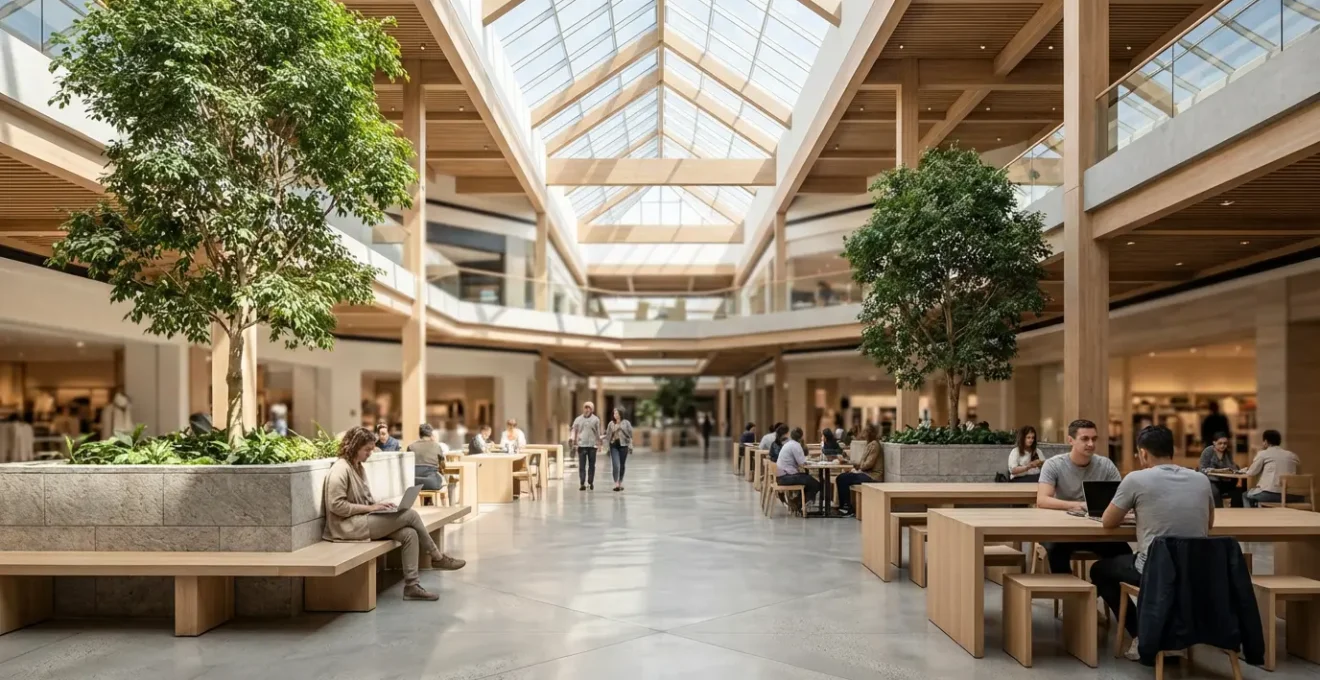
As the image illustrates, the “work-from-mall” culture is a common sight. The bright, clean, and air-conditioned environment of a mall food court provides a surprisingly productive atmosphere. This reality underscores a key survival tip for any remote worker in the country: always have a mall-based backup plan for connectivity.
Your Action Plan: Securing Reliable Internet
- Initial Order: Place your fiber internet order on the same day you sign your lease to start the 2-4 week installation countdown immediately.
- Immediate Backup: Visit a mall telco center to get a prepaid 5G SIM card from Globe or Smart to ensure you have a data connection from day one.
- Mobile Hub: Purchase a 5G pocket WiFi device from a mall’s electronics section (e.g., Cyberzone) for a mobile and robust backup connection.
- Quality Test: Spend time in various mall food courts and coffee shops during off-peak hours to test the quality and speed of their public WiFi networks.
- Lease Confirmation: Before signing any rental agreement, confirm with your preferred Internet Service Provider (ISP) that their fiber service is available and has been successfully installed in that specific building.
The Risk of Underestimating Inflation in Major Philippine Cities
While the Philippines can offer a lower cost of living compared to many Western countries, underestimating the impact of inflation can quickly derail an expat’s budget. The mall, as the primary hub of consumption, serves as the most tangible barometer of economic shifts. It is where national statistics on inflation translate into the real-world cost of a grocery basket, a meal, or a cup of coffee. While the Philippine Statistics Authority data reveals a 3.2% average inflation rate for 2024, down from 6% in 2023, this headline figure masks significant volatility in specific sectors, particularly food.
For expats and travelers, this means that budgeting based on a single, stable figure is risky. The prices of imported goods found in mall supermarkets are particularly susceptible to currency fluctuations and supply chain issues. More critically, the cost of local produce can experience dramatic swings. A savvy resident learns to watch the prices in the mall’s grocery section not just for their weekly budget, but as an indicator of broader economic trends.
The following data from the Philippine Statistics Authority highlights how different food categories can move in opposite directions, making a nuanced understanding of inflation essential.
| Item | Sept 2024 | Sept 2025 | Change |
|---|---|---|---|
| Overall Food Inflation | 1.4% | 0.8% | -0.6pp |
| Vegetables & Tubers | 10.0% | 19.4% | +9.4pp |
| Rice | -17.0% | -16.9% | +0.1pp |
| Oils & Fats | 8.9% | 9.3% | +0.4pp |
As the table shows, a decrease in overall food inflation can hide a nearly 10-point surge in the cost of vegetables and tubers. This demonstrates that financial planning in the Philippines requires a granular, on-the-ground awareness that can only be gained by observing the price dynamics within the central marketplace: the mall.
Co-working Spaces vs. Coffee Shops: Which Is More Viable for Daily Work?
The global rise of co-working spaces has also reached the Philippines, but here they face a unique and formidable competitor: the mall itself. For many freelancers, entrepreneurs, and digital nomads, the choice is not simply between a dedicated co-working membership and a coffee shop. The mall offers a compelling third option that is deeply embedded in the local culture of “tambay” (lingering). It functions as a vast, free, and socially acceptable “third place” for productivity, often proving more viable than conventional options.
A co-working space requires a fixed membership fee, while working from a coffee shop implies a social contract of continuous purchasing. The mall, however, presents no such obligation. One can occupy a table in a food court for hours with minimal or no spending, benefiting from free air-conditioning, relative safety, and access to a wide variety of food options. With industry data confirming the Philippines has over 850 malls nationwide, this option is not just accessible but ubiquitous.
Case Study: SM Malls’ ‘Workplays’ and the ‘Work-From-Mall’ Trend
Major mall operators have not only noticed this trend but have actively embraced it. SM Supermalls, one of the country’s largest chains, launched “Workplays” co-working areas within their malls. This initiative is a direct acknowledgment of the mall’s role as a productivity hub. It formalizes the organic “work-from-mall” behavior that stems from the ‘tambay’ culture, where the climate-controlled environment is seen as a public good. For a bootstrapping digital nomad, the mall is often the most financially pragmatic choice, offering a functional workspace without the fixed costs of a co-working space or the social pressure of a cafe.
This dynamic illustrates the mall’s function as an infrastructural substitute. In the absence of free, accessible public libraries or community centers suitable for work, the mall has filled the void, becoming the default office for a generation of mobile workers.
When to Exercise Outdoors to Avoid the Urban Heat Island Effect?
In Manila and other major Philippine cities, the “urban heat island” effect is not a theoretical concept but a daily reality. Intense humidity and temperatures, amplified by concrete and asphalt, make outdoor exercise during most of the day not just uncomfortable but potentially dangerous. While early morning or late evening hours offer some respite, many residents have turned to an unconventional but highly practical solution: the mall. The mall has become a climate-controlled wellness center, providing a safe and comfortable environment for physical activity.
This phenomenon is most visible in the early mornings, before stores even open. Groups of “mall walkers,” often seniors, can be seen striding through the wide, cool corridors, getting their daily steps in a predictable and safe environment. This organized activity highlights the mall’s role as a substitute for safe, walkable public parks. The mall provides a flat, well-lit, secure, and, most importantly, air-conditioned track that is accessible year-round, regardless of the weather outside.
The mall’s role in fitness extends beyond just walking. Many malls house modern gyms, and some even host public fitness classes like Zumba in their atriums or open spaces. This integration of health and wellness activities further cements the mall’s status as a central community hub, catering to every aspect of a resident’s life.
- 5:00-7:00 AM: Join mall walking groups in the climate-controlled corridors before the shopping crowds arrive.
- 10:00 AM-12:00 PM: Utilize the on-site mall gym facilities, which are often less crowded during late morning hours.
- 3:00-5:00 PM: Participate in public Zumba or dance classes held in the open-air atriums of certain malls.
- 7:00-9:00 PM: Engage in an evening mall walk as a cool-down activity when outdoor temperatures begin to drop but humidity may still be high.
- Weekends: Some large-scale malls, like the SM Mall of Asia, offer rooftop running tracks for a unique urban workout experience.
Why Do Malls Become Impassable on Sundays After Mass?
For an outsider, the sheer density of a Philippine mall on a Sunday afternoon can be bewildering. The phenomenon is a direct result of the mall’s most profound role: serving as the modern town plaza and spiritual center. The country’s deep-seated Catholic faith has not been left at the door of consumerism; instead, it has been fully integrated into it. Most major malls contain chapels or even full-sized churches, and Sunday worship flows seamlessly into the day’s primary social activity: malling.
The weekly ritual for millions of Filipino families is to attend Mass *at the mall*, and then spend the rest of the day there for a family lunch, shopping, and entertainment. The post-Mass exodus from the chapel floods directly into the mall’s atriums and hallways. As University of the Philippines anthropologist Dr. Nestor Castro states in an urban anthropology study, “There really needs to be mass in malls because that’s become part of our culture. The mall is an all-in-one place where you can find everything.”
The mall is an all-in-one place where you can find everything.
– Dr. Nestor Castro, University of the Philippines Urban Anthropology Study
Case Study: The Greenbelt Chapel Phenomenon
The Santo Niño de Paz Chapel, nestled within the upscale Greenbelt mall complex, is a prime example of this fusion. It celebrates multiple masses daily, with schedules doubling on Sundays. During peak times, the crowd of worshippers extends far beyond the chapel’s physical boundaries, spilling out into the shopping areas. It is not uncommon to see people standing outside luxury boutique windows, participating in the service from afar. This powerfully illustrates how malls have transformed from purely commercial venues into vital spiritual and community centers, where fulfilling religious obligations is the precursor to the quintessential Filipino family’s Sunday leisure time.
This Sunday convergence solidifies the mall’s identity as the true heart of the community, a place where faith, family, and commerce are not just adjacent but deeply intertwined.
Where to Find US Grocery Brands When You Are Homesick?
For expats experiencing a bout of homesickness, the cure can often be found in the familiar taste of a favorite snack or grocery item from home. In the Philippines, the place to find these comforts is, once again, the mall. Specifically, the premium supermarkets located within high-end malls in areas with large expatriate populations serve as “cultural embassies”, stocking shelves with imported goods that act as a bridge to home.
Given that demographic data indicates that Makati City hosts the country’s largest expat community due to its concentration of multinational corporations, the malls in this area are particularly well-equipped. Supermarkets within establishments like Power Plant Mall or Shangri-La Plaza dedicate significant shelf space to international brands, from American breakfast cereals and European chocolates to specific condiments and snacks.
Case Study: Premium Supermarkets as Cultural Bridges
High-end malls such as Power Plant Mall and Shangri-La Plaza deliberately include premium supermarkets that cater specifically to the tastes of expats and “balikbayans” (Filipinos returning from abroad). These import sections function as more than just grocery aisles; they are cultural spaces. For expats, they are a source of comfort and familiarity. For affluent locals and balikbayans, shopping for US or European brands can be a subtle signal of worldliness and economic standing. This dynamic creates a unique cultural marketplace where the act of grocery shopping becomes a form of identity expression, reinforcing the mall’s role as a complex social and cultural arena.
These carefully curated import sections are a testament to the mall’s ability to cater to niche demographic needs, further cementing its indispensability for both the international community and the local population that aspires to a global lifestyle.
Key takeaways
- Malls are not just for shopping; they are fully integrated ecosystems providing housing, infrastructure, and social services.
- The extreme climate and a lack of public parks have made climate-controlled malls the default public space for social, spiritual, and even physical activities.
- The mall functions as a “third place” for work and a “modern town plaza” for community life, a role proven by its integration of chapels, co-working spaces, and fitness groups.
SM Malls vs. Greenhills Tiangge: Which Shopping Experience Is for You?
To truly grasp the unique nature of the Filipino mall, it is useful to contrast it with a more traditional shopping environment like the Greenhills Shopping Center’s “tiangge” (bazaar). The difference between the sprawling, orderly predictability of an SM Supermall and the chaotic, high-energy haggling of Greenhills crystallizes the mall’s role as a curated and controlled public sphere. An SM Mall represents a privatized, sanitized version of a city center, while Greenhills offers a taste of a more traditional, unregulated marketplace.
SM Malls, and others like them, are defined by their immense scale and uniformity. These are not just large buildings; they are mega-structures of staggering proportions. To put it in perspective for a Western visitor, architectural analysis reveals that at least 5 Philippine malls exceed 4 million sq ft in gross leasable area, making them significantly larger than the famous Mall of America (2.7 million sq ft). This scale allows for a highly controlled environment with fixed prices, standardized storefronts, broad walkways, and a pervasive sense of security. It is a predictable and frictionless experience.
The Greenhills tiangge, in contrast, is an experience of sensory overload. It is a labyrinth of small stalls where prices are fluid, haggling is expected, and the thrill of the hunt is part of the appeal. It is vibrant, crowded, and less predictable. While it is also indoors and air-conditioned, its ethos is that of a bustling market, not a serene civic center. The contrast highlights what Filipinos seek in the modern mall: not just commerce, but order, security, and the comfort of a regulated environment—the very qualities often lacking in the chaotic urban spaces outside its walls.
To truly understand the contemporary Philippines, one must therefore look past the storefronts and recognize the mall for what it is: the functional and symbolic heart of community life. The next logical step is not just to visit, but to observe—to see how faith, family, work, and wellness converge in this uniquely Filipino public sphere.